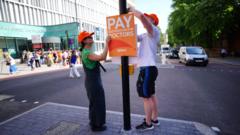
The deadlock might finally be breaking. After months of empty clinics and thousands of cancelled appointments, the British Medical Association (BMA) and the government are headed back to the negotiating table. It's about time. For anyone who's tried to book a GP appointment or waited ten hours in an A&E ward lately, this isn't just a political headline. It's a matter of survival for the health service.
The dispute over junior doctor pay has been a slow-motion car crash. We've seen wave after wave of industrial action, with both sides digging in their heels while patients caught the fallout. But the tone changed this week. There’s a sense that the adults have finally entered the room, or at least, they’ve realized that neither side can win a war of attrition where the only loser is the public. If you found value in this post, you might want to check out: this related article.
Why the Previous Standoff Failed Everyone
The core of the problem wasn't just a number on a spreadsheet. It was a complete breakdown in trust. The government previously insisted that a double-digit pay rise was "unaffordable" and would fuel inflation. Meanwhile, junior doctors—who, let’s be honest, are often highly skilled professionals with years of debt—pointed to a 26% real-terms pay cut since 2008.
When you lose a quarter of your purchasing power over fifteen years, you don't just feel underpaid. You feel insulted. For another angle on this event, check out the latest update from BBC News.
Previous rounds of talks collapsed because they were performative. The government would offer a "final" deal that didn't move the needle, and the BMA would respond with more strike dates. It was a cycle of ego and optics. This new round of talks feels different because the political pressure has shifted. With an election on the horizon and waiting lists stubbornly high, the government can't afford a summer of chaos.
The Numbers That Actually Matter in These Negotiations
Most people see the headline "35% pay demand" and think it’s a crazy ask. But when you break down the actual hourly rate of a first-year doctor, the math tells a different story. We’re talking about people making life-or-death decisions for less than what some coffee shop managers earn.
If the government wants to stop the "brain drain" to Australia and New Zealand, they have to address the "pay restoration" argument. It's not just about greed. It's about retention. It costs the taxpayer roughly £250,000 to train a single doctor. Losing them to a hospital in Brisbane because they can't afford a mortgage in Reading is a massive waste of public investment.
Recent data from the General Medical Council (GMC) shows an increasing number of doctors are applying for Certificates of Good Standing—the paperwork needed to work abroad. That’s a flashing red light for the NHS. These talks need to move past the immediate percentage increase and look at long-term structural changes to how medical professionals are valued.
What a Realistic Deal Looks Like
Don't expect the BMA to get their full 35% in one go. That’s never been the likely outcome. However, a multi-year deal—similar to what we’ve seen in other sectors—could be the bridge.
A successful negotiation will likely involve:
- An immediate "catch-up" payment to address the current cost-of-living spike.
- A guaranteed 3-to-5-year roadmap for further increases.
- Reform of the pay review body (DDRB) to ensure it stays truly independent.
- Improvements to "non-pay" factors like better rotas and parking (yes, doctors still pay to park at their own jobs).
The health secretary knows that every day of a strike costs the NHS roughly £15 million in lost activity and agency staff cover. Over time, it's actually cheaper to pay the doctors more than it is to keep paying for the strikes. That’s the leverage the union is using, and it’s finally starting to work.
The Patient Factor and the Backlog
We can't talk about these negotiations without mentioning the seven million people waiting for elective care. Every strike day adds thousands to that list. While the BMA ensures emergency cover remains in place, the "routine" stuff—hip replacements, cataract surgeries, diagnostic scans—grinds to a halt.
Public sympathy is a finite resource. Early on, polls showed strong support for the doctors. But as the dispute dragged on, that support started to wobble. People want their doctors to be paid well, but they also want their surgeries. The BMA knows this. They need a win they can sell to their members before the public mood turns sour.
Breaking the Cycle of Industrial Action
The restart of talks is a signal that both sides have found a "landing zone." In high-stakes labor disputes, you don't go back to the table unless there’s a secret handshake or a back-channel agreement that a deal is actually possible.
The government has softened its rhetoric. We’re hearing less about "unreasonable demands" and more about "finding a fair solution." This shift is vital. You can't negotiate with someone you're publicly demonizing.
If you’re a patient waiting for a procedure, keep a close eye on the BMA's Twitter feed and the Department of Health's press releases over the next 48 hours. If they announce a "period of intensive talks" without immediate strike dates, it’s the best news the NHS has had in a year.
Stay informed by checking the official BMA member updates and cross-referencing them with independent health think tanks like the Nuffield Trust or The King's Fund. They provide the context that government spin often leaves out. If you have an upcoming appointment, don't cancel it unless you're contacted directly by the hospital. Most trusts are still trying to operate as normally as possible during the negotiation window.