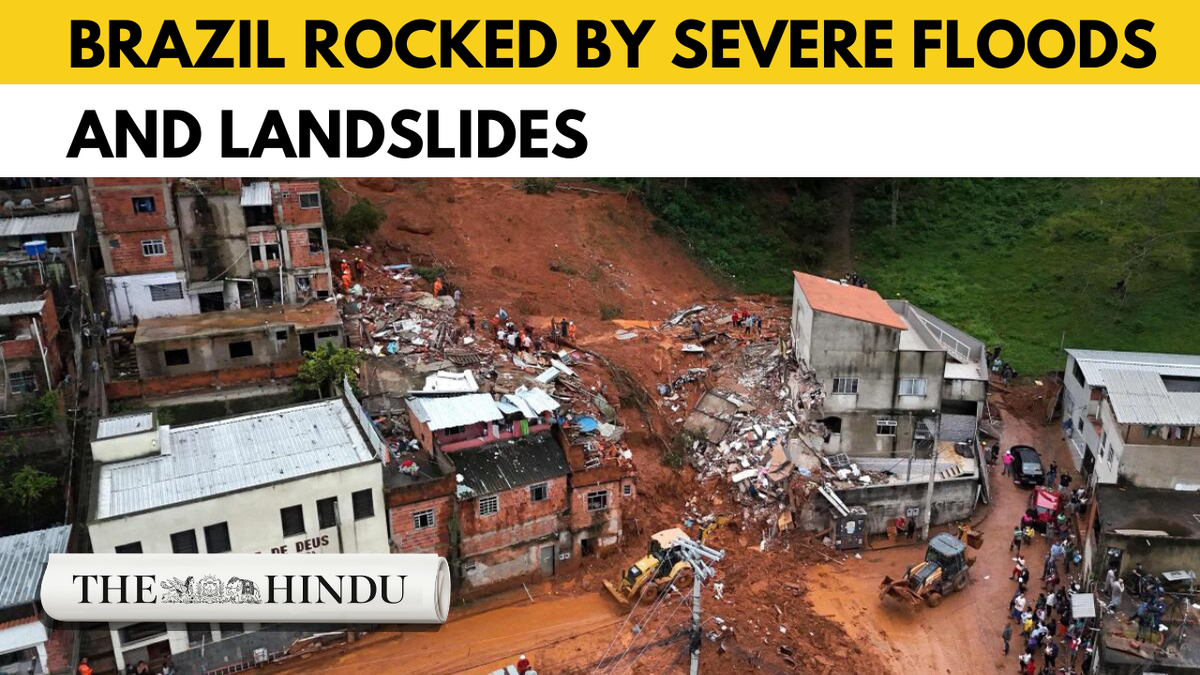
The mud doesn't care about your politics. It doesn't care about urban planning theories or budgetary constraints once it starts sliding down a hillside in Minas Gerais or Rio de Janeiro. Right now, southeastern Brazil is once again digging itself out from under a catastrophic mix of torrential rain, flash floods, and lethal landslides. We see these headlines every year. The footage is always the same—brown water rushing through living rooms, cars tossed like toys, and the frantic search for survivors in the red clay.
But here’s the thing. We need to stop calling these "natural" disasters. They’re predictable consequences of a collision between intensifying weather patterns and a stubborn refusal to fix how people live in these cities. If you’re looking at the latest images from the region and thinking this is just a freak weather event, you're missing the point entirely.
The Geography of a Death Trap
Southeastern Brazil is a topographical nightmare for heavy rain. You've got steep mountain ranges like the Serra do Mar and the Serra da Mantiqueira sitting right next to densely populated urban centers. When a cold front stalls over the Atlantic, it pumps moisture into these hills. The water has nowhere to go but down.
In cities like Belo Horizonte, Petrópolis, and the northern stretches of São Paulo, the earth is literally saturated. Geologically, many of these slopes are composed of a layer of soil sitting on top of slick rock. Add enough water, and that soil loses its grip. It becomes a liquid. It’s a physical certainty.
The problem isn't just the rain. It’s the "concrete jungle" effect. We’ve paved over the natural drainage. We’ve channeled rivers into narrow concrete pipes that were designed for the rainfall levels of 1970, not 2026. When those pipes hit capacity, the streets become the new riverbeds. It happens in minutes. You don't get a "warning" in the traditional sense; you just get a wall of water.
Why the Favelas Bear the Brunt
It’s easy to look at the destruction and ask why people build houses on the side of a cliff. That’s a lazy question. People live there because they have no other choice. Brazil’s housing crisis is the silent engine behind the death toll in every flood.
Informal settlements, or favelas, often occupy the land that nobody else wanted—the steepest slopes and the lowest floodplains. There is no formal drainage. There are no retaining walls built to engineering standards. When the government fails to provide affordable, safe housing in the flatlands, they effectively sign the death warrants of everyone living on the hillside.
The Climate Math is Changing
We can't talk about these floods without looking at the numbers. The National Institute of Meteorology (INMET) has been tracking a clear shift. The "summer rains" (chuvas de verão) aren't just getting more frequent; they’re becoming more violent. We’re seeing a month’s worth of rain fall in three or four hours.
This isn't a "once in a hundred years" event anymore. These are now "once every three years" events. The infrastructure is screaming under the pressure. The soil in states like Espírito Santo and Rio is so constantly wet during the peak season that even a moderate storm can trigger a slide.
The Cost of Inaction
Every time this happens, the economic impact is staggering. It’s not just the billions of Reais in property damage. It’s the loss of productivity, the destruction of bridges that cut off entire agricultural sectors, and the massive strain on the public health system.
- Infrastructure Repair: Rebuilding roads that will likely wash away again in two years.
- Emergency Response: The high cost of helicopter rescues and temporary shelters.
- Long-term Displacement: Thousands of "climatic refugees" who lose everything and end up in even more precarious situations.
The Warning Systems are Breaking
Brazil actually has a pretty decent monitoring system called CEMADEN (National Center for Monitoring and Early Warning of Natural Disasters). They’re good at what they do. They can tell you exactly which hillside is at risk.
The breakdown happens in the "last mile." How do you get that information to a family living in a tin-roof house with no siren nearby? In many cases, the sirens don't work, or people have become so desensitized to "heavy rain" alerts that they don't evacuate until it’s too late.
Then there’s the issue of municipal budgets. Civil Defense departments are chronically underfunded. They have the data, but they don't have the boots on the ground to move people out of harm's way before the first crack appears in the soil. It’s a failure of logistics and political will, not a failure of science.
Stop Rebuilding the Same Mistakes
We have a habit of cleaning up the mud, painting the walls, and waiting for the next storm. That has to stop. Urban "sponge" concepts—parks designed to flood, permeable pavement, and massive underground reservoirs—are being discussed in cities like São Paulo, but the pace of implementation is pathetic compared to the pace of the changing climate.
We need a radical shift in how these cities are managed. This means:
- Massive re-greening of hillsides to stabilize the soil.
- Strict bans on new construction in high-risk zones, backed by actual housing alternatives.
- Modernizing the drainage system to handle the "new normal" of extreme precipitation.
If you live in these areas, don't wait for the government to tell you it's dangerous. Learn the signs of an impending landslide. Watch for new cracks in your walls, doors that suddenly won't close, or "bulges" in the ground. If you see water trickling out of the base of a slope where it used to be dry, get out.
Check the CEMADEN alerts daily during the rainy season. Support local organizations that focus on urban resilience. The rain is going to keep coming, and it’s going to keep getting heavier. We can either adapt our cities or keep digging graves.