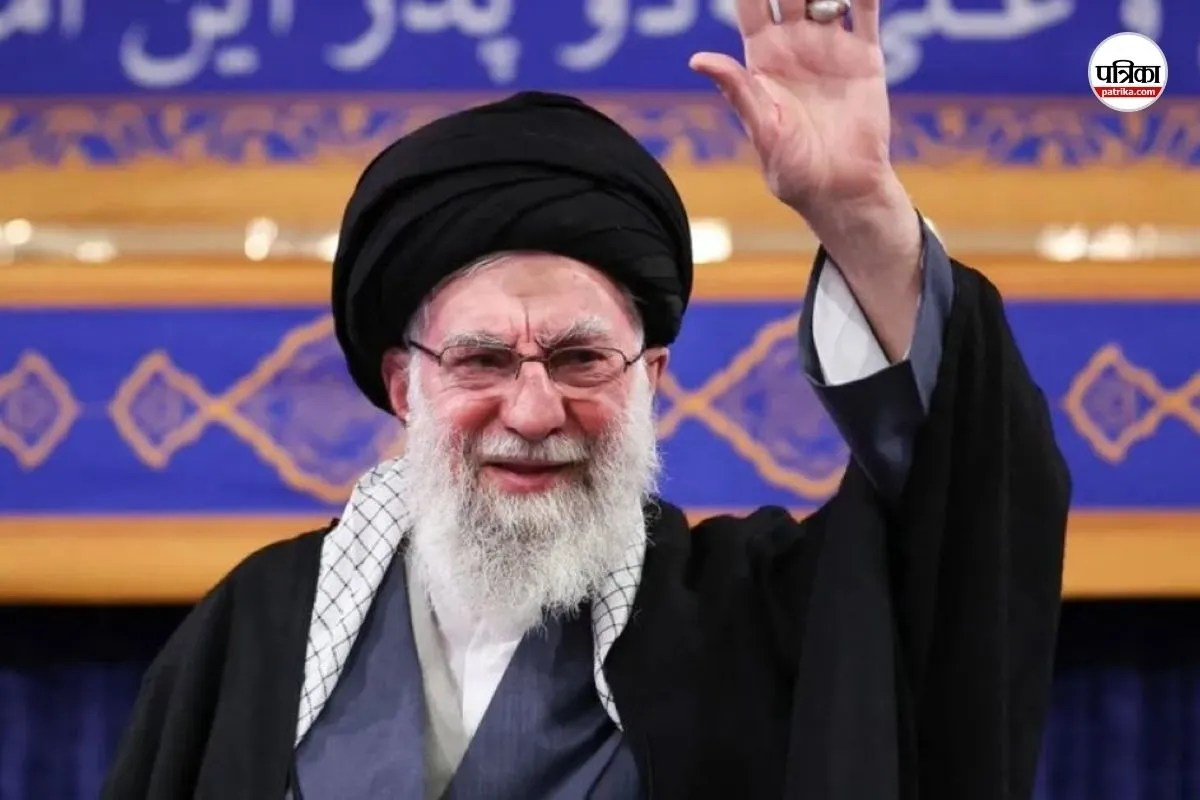
The Middle East is currently balancing on a razor's edge where the biological clock of one man, Supreme Leader Ali Khamenei, carries more weight than any diplomatic treaty or military doctrine. While markets often price in the immediate volatility of missile exchanges between Iran and Israel, they consistently underestimate the structural collapse that follows a total power vacuum in Tehran. If the Supreme Leader were to exit the stage now, amidst an active hot war with Israel, the result would not be a simple transition of power. It would be a systemic rupture that threatens to take the global energy market down with it.
The premise is straightforward but the consequences are tangled. We aren't just talking about a change in leadership. We are talking about the potential for a multi-front civil war within the Iranian security apparatus at the exact moment the Israeli Defense Forces (IDF) are looking for an opening to dismantle Iran’s nuclear infrastructure. This intersection of internal instability and external aggression is the ultimate "black swan" for the global economy.
The Myth of a Smooth Transition
Official Iranian protocol dictates that the Assembly of Experts must choose a successor immediately. In reality, the process is an opaque cage match between the Islamic Revolutionary Guard Corps (IRGC) and the traditional clerical establishment. For decades, Khamenei has acted as the ultimate arbiter, balancing these factions to ensure no single entity becomes too powerful.
With him gone, the glue dissolves.
The IRGC has spent the last decade morphing from a military wing into a sprawling business conglomerate that controls nearly a third of the Iranian economy. They have every incentive to bypass the clerics and install a puppet leader or transition to a direct military junta. If the clerics resist, the resulting internal friction creates a window of vulnerability. Israel knows this. Washington knows this. The markets, however, seem to think the oil will keep flowing regardless of who sits in the seat of the Jurist.
Why the Hormuz Strait Becomes a Graveyard
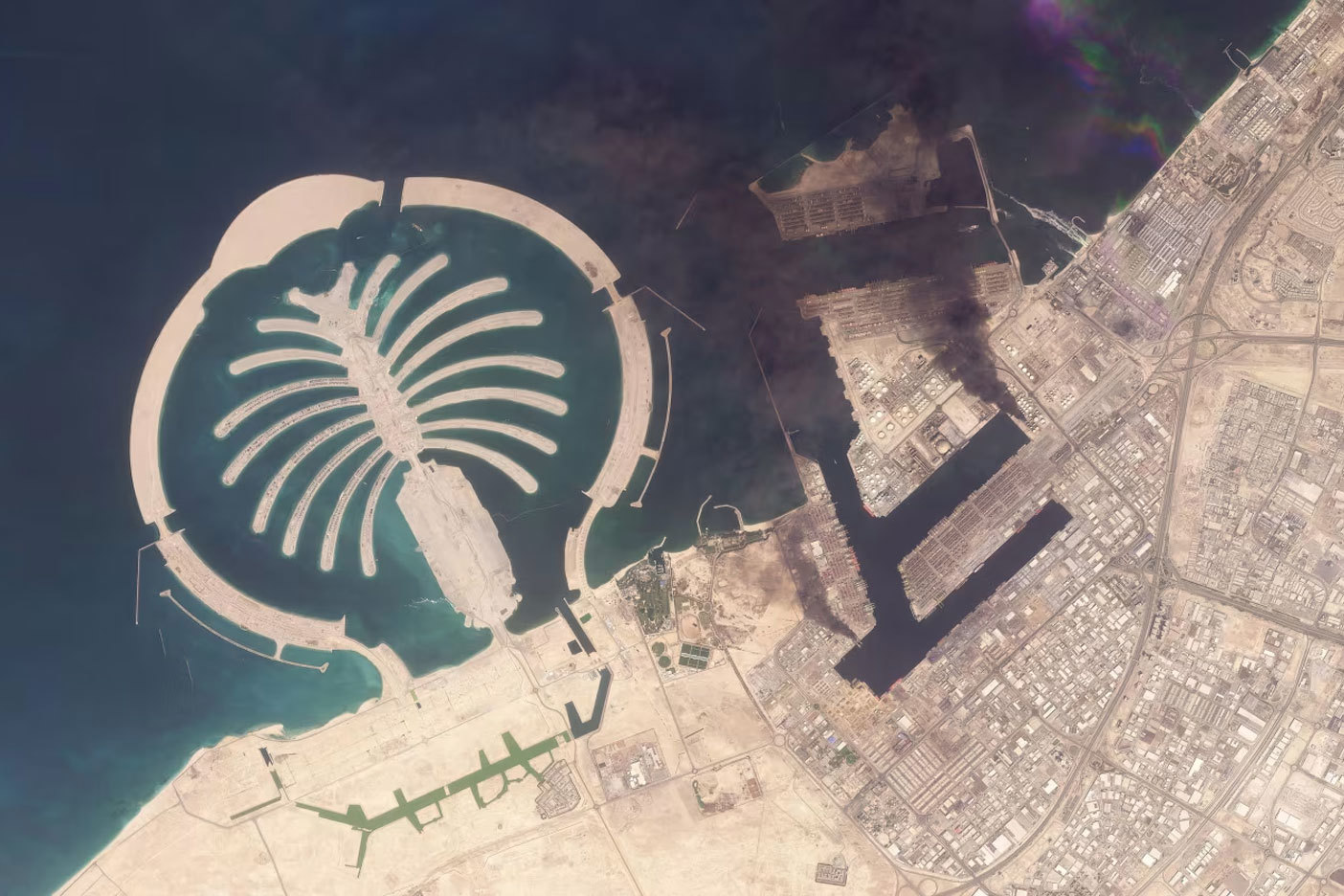
The Strait of Hormuz is the most significant chokepoint in the global oil trade. Approximately 20 percent of the world’s petroleum liquids pass through this narrow strip of water every single day. In a post-Khamenei power struggle, the IRGC may feel the need to prove its "revolutionary" credentials or distract from domestic chaos by flexing its muscles in the Persian Gulf.
A single scuttled tanker or a coordinated drone swarm in the Strait would send Brent Crude prices into a vertical climb. We are not talking about a five-dollar bump. Analysts at major financial institutions have modeled scenarios where a sustained closure of the Strait pushes oil well past 150 dollars per barrel.
- Global Inflation: Higher energy costs act as a regressive tax on every sector of the economy.
- Supply Chain Shattering: The cost of shipping goods from Asia to Europe would double or triple as ships are forced to reroute around the Cape of Good Hope.
- Currency Devaluation: Developing nations that rely on oil imports would see their currencies crater against the dollar, triggering sovereign debt defaults.
This isn't theory. We saw the precursor to this during the "Tanker War" of the 1980s. The difference today is the sophistication of the weaponry. Today’s IRGC possesses precision-guided ballistic missiles and "suicide" underwater UUVs that can disable a supertanker with surgical accuracy.
The Israeli Calculus of Opportunity
Israel views the Iranian regime not as a political rival, but as an existential threat. The current conflict has already stripped away the veneer of "strategic patience." If Tehran falls into a succession crisis, the Israeli security cabinet will face a choice: wait for the dust to settle or strike while the command-and-control structure is in disarray.
An Israeli strike on Iranian soil during a leadership transition would almost certainly target the Kharg Island oil terminal. This facility handles roughly 90 percent of Iran’s oil exports. Destroying it would bankrupt the incoming regime overnight. While that serves Israel's security goals, the collateral damage to the global economy would be staggering. China, the primary buyer of Iranian "teapot" refinery oil, would be forced to compete for supply in the open market, driving prices up for everyone else.
The China Factor and the Shadow Trade
For years, Iran has bypassed Western sanctions through a "ghost fleet" of tankers. This shadow economy keeps the regime afloat and provides China with discounted energy. A leadership vacuum in Tehran threatens this arrangement. If a more radical, IRGC-led faction takes over, they may demand higher prices or use energy exports as a direct geopolitical weapon against the West, ignoring the quiet understandings previously brokered by Beijing.
China’s reaction to a destabilized Iran is the great unknown. They need the oil, but they hate instability. If Beijing senses that their energy security is at risk, they may intervene diplomatically or even through increased naval presence in the region. This turns a regional conflict into a direct friction point between superpowers.
The Failure of Modern Risk Assessment
Wall Street and the City of London are remarkably bad at pricing in "regime collapse" in the Middle East. They prefer to look at production quotas and inventory reports. They ignore the reality that in a theocracy, the economy is a tool of the faith and the military.
If the IRGC decides that the only way to maintain internal control is to trigger a regional war, they will do it. They do not answer to shareholders. They do not care about the S&P 500. Their primary directive is survival of the system, and history shows that dying regimes often try to take the world down with them.
The internal rot within Iran—sky-high inflation, a collapsing currency (the Rial), and a disillusioned youth—means that any successor will inherit a tinderbox. Khamenei’s death is the match. The resulting fire will not be contained within the borders of the Islamic Republic. It will manifest in the gas prices in Ohio, the heating bills in Berlin, and the manufacturing costs in Vietnam.
The Dead End of Strategic Reserves
Western nations often point to the Strategic Petroleum Reserve (SPR) as a safety net. This is a delusion of scale. The SPR is designed to mitigate short-term supply disruptions, not a fundamental reorganization of Middle Eastern power. If the Strait of Hormuz is closed or the Iranian oil infrastructure is leveled, the SPR would be a bucket of water in a forest fire.
We are looking at a scenario where the "security premium" on oil becomes the dominant factor in global economics for a decade. The transition to green energy, while noble, is not happening fast enough to decouple the world from the whims of the IRGC’s hardliners.
The most dangerous moment in any dictatorship is the transition of power. When that transition occurs during a war, with an adversary like Israel poised to strike, the "stability" of the global market becomes a fairy tale we tell ourselves to avoid panic.
Monitor the movements of the 14th Floor of the Central Bank of Iran and the deployment patterns of the IRGC’s Navy in Bandar Abbas. These are the only indicators that matter now. Everything else is just noise. Prepare for the end of the era of predictable energy. The era of the "War Premium" is back, and this time, there is no easy exit strategy.