The headlines are predictable, lazy, and fundamentally wrong. Every time a missile crosses the Gulf or a drone hums over the horizon, the Western press corps rushes to draft the same obituary: "The Dubai Dream is Over." They point to the shiny glass towers and the artificial islands, whispering that a single kinetic event will send the world’s capital fleeing back to London or New York.
They don't understand how capital works. And they certainly don't understand Dubai.
Geopolitical tension isn't the "crack" in the façade. It is the fuel in the engine. While pundits speculate on whether Iran’s regional maneuvering will "shatter" Dubai’s status as a safe haven, the reality on the ground tells a more aggressive story. Risk is the very reason Dubai exists. If the Middle East were as stable as Scandinavia, there would be no reason for a hyper-growth, zero-tax hub to exist in the desert. Dubai isn't a fragile vase; it is a high-yield hedge against regional volatility.
The Misconception of the "Fragile Safe Haven"
The "lazy consensus" argues that Dubai’s economy is a house of cards built on the illusion of absolute peace. The logic goes like this: Dubai is a playground for the wealthy; wealthy people hate bombs; therefore, bombs will kill Dubai.
It’s a linear, Grade-A failure of analysis.
In reality, capital doesn't flee the region during times of friction—it consolidates. When Iraq, Lebanon, Syria, or Yemen destabilize, the money doesn't always head to the Cayman Islands. It moves to the nearest functional bank, the nearest operational port, and the nearest airport where the planes actually take off on time. Dubai is the beneficiary of every failure in its neighborhood.
I’ve spent fifteen years watching "smart money" pivot. When the regional temperature rises, the Burj Khalifa doesn't look like a target to the billionaire class in Cairo, Tehran, or Riyadh; it looks like a lighthouse. The city’s "shiny façade" isn't a mask. It’s a signal of intent. It says: We are the only ones here who have figured out how to stay out of the mud.
The Mathematics of Proximity and Neutrality
Let’s talk about the logistics of the "airstrike" narrative. Military analysts love to discuss the range of ballistic missiles, but they ignore the range of economic interests.
The UAE, and Dubai specifically, has mastered the art of "Multi-Vector Neutrality." This isn't the passive neutrality of Switzerland; it is an active, aggressive refusal to be anyone’s puppet. By maintaining deep trade ties with China, security partnerships with the U.S., and backdoor diplomatic channels with Iran, Dubai has made itself too useful to destroy.
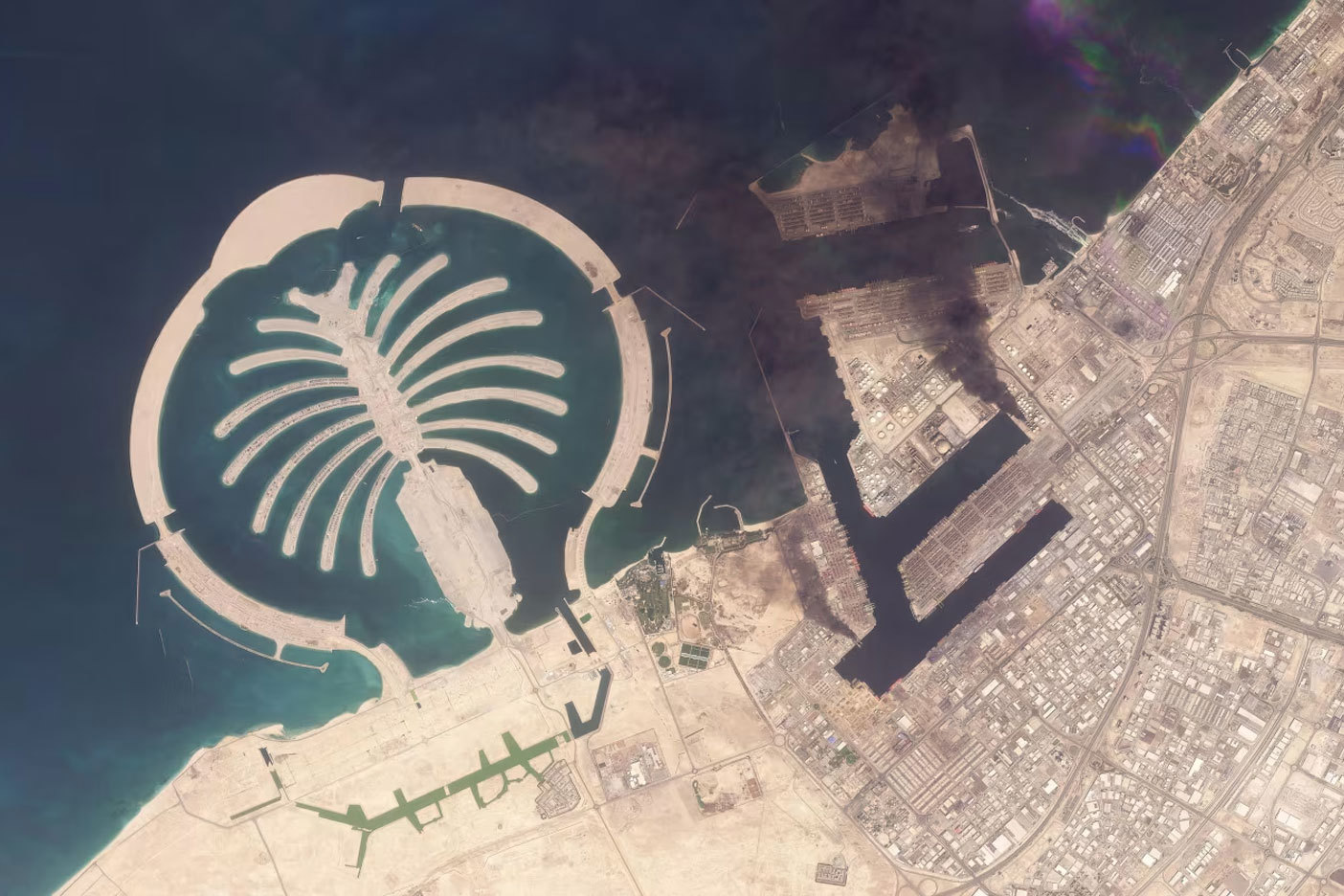
Consider the $Jebel Ali$ port. It isn't just a harbor; it is a global choke point for logistics. If you strike Dubai, you aren't just hitting a "glitzy" city; you are severing the supply lines for half the emerging markets on the planet. Even the most hawkish actors in the region know that burning down the regional clearinghouse is a form of economic suicide.
The "cracked façade" theory fails to account for the Sunk Cost of Globalism.
- Real Estate Absorption: Even during the peak of regional tensions in 2023 and 2024, Dubai's property market didn't just survive—it broke records.
- Aviation Dominance: Emirates Airline isn't just a carrier; it’s a diplomatic tool. It connects the Global South in a way that bypasses Western hegemony.
- The "Golden Visa" Effect: By decoupling residency from employment, the UAE has locked in human capital. People aren't just visiting; they are digging in.
Why the "Safe" Argument is the Wrong Question
People ask: "Is Dubai safe from Iran?"
That is the wrong question. The right question is: "Where else are you going to go?"
If you are an entrepreneur in the MENA region or an investor looking for exposure to Africa and South Asia, your options are dwindling. Europe is a high-tax museum. The U.S. is increasingly weaponizing the dollar and using sanctions as a primary foreign policy tool. Singapore is crowded and expensive.
Dubai wins by default. It is the last "Open City."
The "fragility" that critics harp on is actually Agility. When the 2008 crash hit, they said Dubai was done. When oil prices plummeted in 2015, they said the same. When the pandemic grounded the world in 2020, the obituaries were already written. Each time, the city didn't just recover; it re-engineered its entire value proposition.
The Industry Insider’s Truth: We Want the Friction
This is the part the travel brochures won't tell you: A peaceful, democratic, and boring Middle East is actually a threat to Dubai’s business model.
Dubai thrives on being the Contrast. It is the exception to the rule. If the rest of the region suddenly became a beacon of Swiss-style stability, Dubai’s "Safe Haven" premium would evaporate. The city’s value is directly proportional to the chaos outside its borders.
The airstrikes and the rhetoric are marketing. They remind the wealthy in unstable regimes exactly why they need a penthouse in the Marina and a bank account in the DIFC. Every time a regional power flexes its muscles, the DIFC sees a spike in new firm registrations. It’s the ultimate contrarian indicator.
The Real Risks (And They Aren't Missiles)
If you want to dismantle the Dubai story, stop looking at the sky. Start looking at the ledger.
The true threat to the "facade" isn't an Iranian drone. It’s the shift in global tax transparency. The OECD’s push for a global minimum corporate tax is a far greater "crack" in the foundation than any regional skirmish. Dubai’s superpower was its status as a fiscal vacuum. As it introduces corporate tax—albeit at a low $9%$—it enters a new phase where it must compete on merit, not just on "zero."
Furthermore, the rise of Riyadh as a direct competitor is a structural challenge that missiles can't replicate. Saudi Arabia is trying to build a "Dubai on steroids" with Neom and its various "Vision 2030" projects. For the first time, Dubai has a neighbor that isn't just a source of capital, but a rival for it.
However, even here, the contrarian view wins. Competition usually expands the market rather than diluting it. A more active Saudi economy means more regional flow, and Dubai is perfectly positioned as the sophisticated "front office" for the Saudi "back engine."
Addressing the "People Also Ask" Fallacies
"Is it still safe to invest in Dubai real estate?"
Most people ask this because they fear a price bubble or a war. They miss the point. You don't buy Dubai real estate for 50-year capital appreciation. You buy it for the Yield and the Optionality. It is a liquid asset in a world of frozen ones. If you're looking for a "safe" 2% return, go buy a German Bund and watch your purchasing power die. You come to Dubai to play offense, not defense.
"Will Dubai be targeted in a regional war?"
War is bad for business, but "perpetual tension" is great for it. Total war is a low-probability, high-impact event that would reset the entire global economy, not just the UAE. Betting on the total destruction of Dubai is essentially betting on the collapse of global energy markets and international logistics. If that happens, your London apartment and your NYSE portfolio aren't going to save you anyway.
The Survival of the Most Adaptive
The competitor’s article focuses on the "shiny façade" as if it’s a thin veneer of gold leaf over a rotting structure. They see the luxury cars and the Michelin stars and assume it’s decadence.
They are wrong. It’s Infrastructure.
The "façade" is the most advanced logistics and digital framework in the Eastern Hemisphere. You can incorporate a company in 48 hours. You can move millions of dollars with a phone call. You can fly to 1500 destinations. That isn't "shiny"—it’s functional.
The West loves a "fall from grace" story. It makes people in stagnating economies feel better about their own decline. But Dubai isn't a morality play. It’s a business. And business is booming because the world is getting riskier, not safer.
If you are waiting for the "crack" to appear before you move, you've already lost. The crack is where the light gets in—and in this case, the light is the flow of global capital moving away from legacy powers and toward the only city-state with the guts to stay open when the world is closing its doors.
Stop looking for the end of the dream. The dream was never about peace. It was about being the only place left standing when the peace ends.
Pack your bags or stay in the "safety" of your decaying suburbs. Dubai doesn't care. It’s too busy building the next tower while the missiles fly elsewhere.
The façade isn't cracking. It's being reinforced with the very capital that is fleeing the "stability" you think you still have.