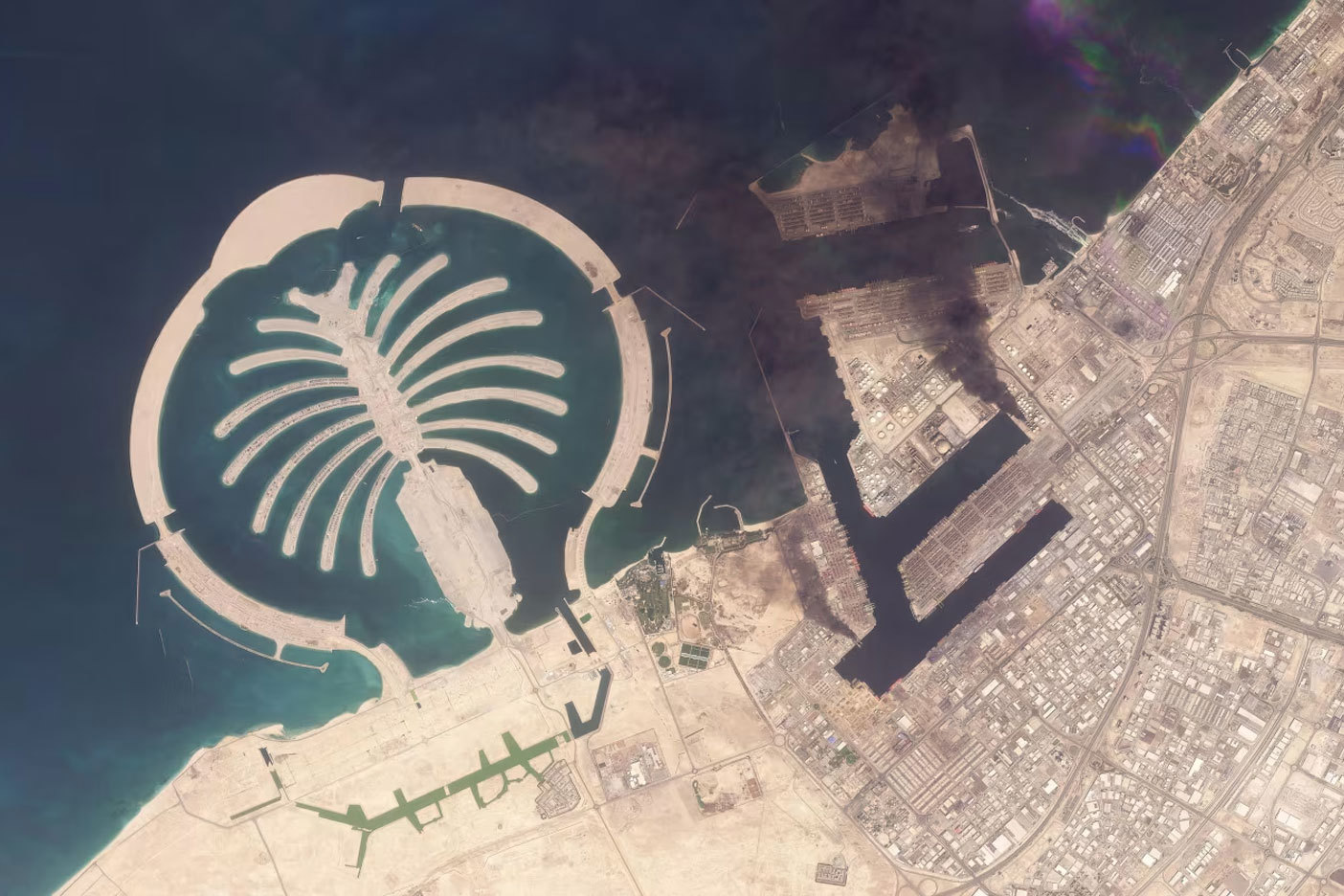
The global energy market is currently operating under a delusion that 206,000 extra barrels of oil can fix a broken geography. On Monday, March 2, 2026, Brent crude surged nearly 8% to $78.55, while West Texas Intermediate jumped to $72.00. These numbers are not just market fluctuations; they are the first tremors of a systemic collapse in energy logistics following U.S. and Israeli strikes on Iranian infrastructure and the subsequent retaliatory chaos in the Persian Gulf.
Investors are asking if oil will hit $100. The answer is that price is becoming secondary to physical access. The primary crisis is not a shortage of crude in the ground, but the sudden, violent closing of the world’s most critical maritime throat.
The Myth of Spare Capacity
OPEC+ recently announced a production increase of 206,000 barrels per day starting in April. This was intended to signal stability to a nervous world. In reality, it is a drop in the ocean that fails to address the structural paralysis of the Strait of Hormuz. Roughly 15 million barrels of oil—20% of global consumption—pass through this 21-mile-wide channel every single day.
When the Iranian Revolutionary Guard Corps (IRGC) broadcasts via VHF radio that "no ship is allowed to pass," the technical ability of Saudi Arabia or the UAE to pump more oil becomes irrelevant. If the tankers cannot leave the Gulf, the oil does not exist for the global market.
Current intelligence suggests that while Iran has not "officially" closed the strait, the risk environment has done the work for them. Insurance premiums for transiting the region have turned prohibitive. Major shipping giants like Hapag-Lloyd have already signaled a halt to transits. A vessel that cannot be insured is a vessel that stays at anchor. We are witnessing a voluntary blockade driven by actuarial math rather than just naval mines.
Chokepoints and Dark Fleets
The "why" behind this escalation is deeper than a simple border skirmish. Iran has been navigating tightening sanctions for years, relying on a "shadow fleet" of aging tankers to move roughly 1.4 million barrels per day to buyers in China. By late February 2026, those exports were already under immense strain.
The U.S. and Israeli strikes on February 28 targeted the very command structures that manage this illicit trade. Iran’s retaliation—striking vessels like the MKD Vyom near the Gulf of Oman—is a message to the West that if Tehran cannot sell its oil, no one else in the Gulf will either.
Consider the tactical shift here. In previous decades, conflict in the Middle East usually meant an interruption at the wellhead. Today, it means an interruption of the algorithm. Global supply chains are leaner than they were in the 1970s. We rely on just-in-time delivery for everything from refined gasoline in the UAE to LPG in India. India, for instance, imports 85% of its LPG via the Strait of Hormuz and maintains almost zero strategic reserves for it. If the strait remains contested for more than a week, the inflationary shock will hit the kitchen tables of New Delhi and Mumbai before it even registers at a Texas gas station.
The China Factor
There is a quiet variable in this equation that most analysts are ignoring: the strategic reserves of China. While the West worries about pump prices, Beijing has been quietly scooping up "distressed" Iranian barrels for months, filling its own strategic stockpiles.
If Iranian exports to China are permanently severed by the conflict, China will be forced into the open market to compete with Europe and India for non-Middle Eastern crude. This creates a secondary price spike that has nothing to do with the physical war and everything to do with a sudden, massive shift in buyer behavior. We are looking at a scenario where Brent could easily clear $90 based solely on a Chinese bidding war for Atlantic Basin crude.
Infrastructure is Not a Safety Net
There is a frequent argument that pipelines will save us. Saudi Arabia’s East-West Pipeline (Petroline) can move about 5 million barrels per day to the Red Sea, bypassing the Strait of Hormuz. The UAE has similar infrastructure leading to Fujairah.
However, these pipelines are fixed targets. They are also already running near capacity. Moving an additional 10 million barrels of stranded "Strait oil" through these pipes is a physical impossibility. The terminal infrastructure at the other end simply cannot handle the volume.
The reality of the 2026 oil crisis is that we have built a global economy on the assumption of maritime freedom in a region where that freedom is now a relic. The "war premium" being priced into the markets right now is not a temporary tax; it is the cost of realizing that the most important 21 miles of water on Earth are no longer under international control.
Concrete Steps for the Near Term
For those managing portfolios or industrial supply chains, the focus must shift from "if" the conflict escalates to "how long" the logistics will remain fractured.
- Diversify Sourcing Immediately: Heavy reliance on Middle Eastern crude is currently a liability. Refiners in Asia are already looking toward West Africa and Latin America, despite the 45-day transit times.
- Monitor Freight and Insurance Derivatives: The price of the oil is one thing; the cost of moving it is another. Tanker rates for Suezmax and VLCC classes are expected to double by the end of the week.
- Watch the LPG Markets: Crude gets the headlines, but the lack of strategic reserves for liquefied petroleum gas makes it the real "Achilles heel" for emerging economies.
The situation is fluid, but the trend is clear. The era of cheap, predictable energy transit is over.
Would you like me to analyze the specific impact of these shipping disruptions on the Indian and European LPG markets?