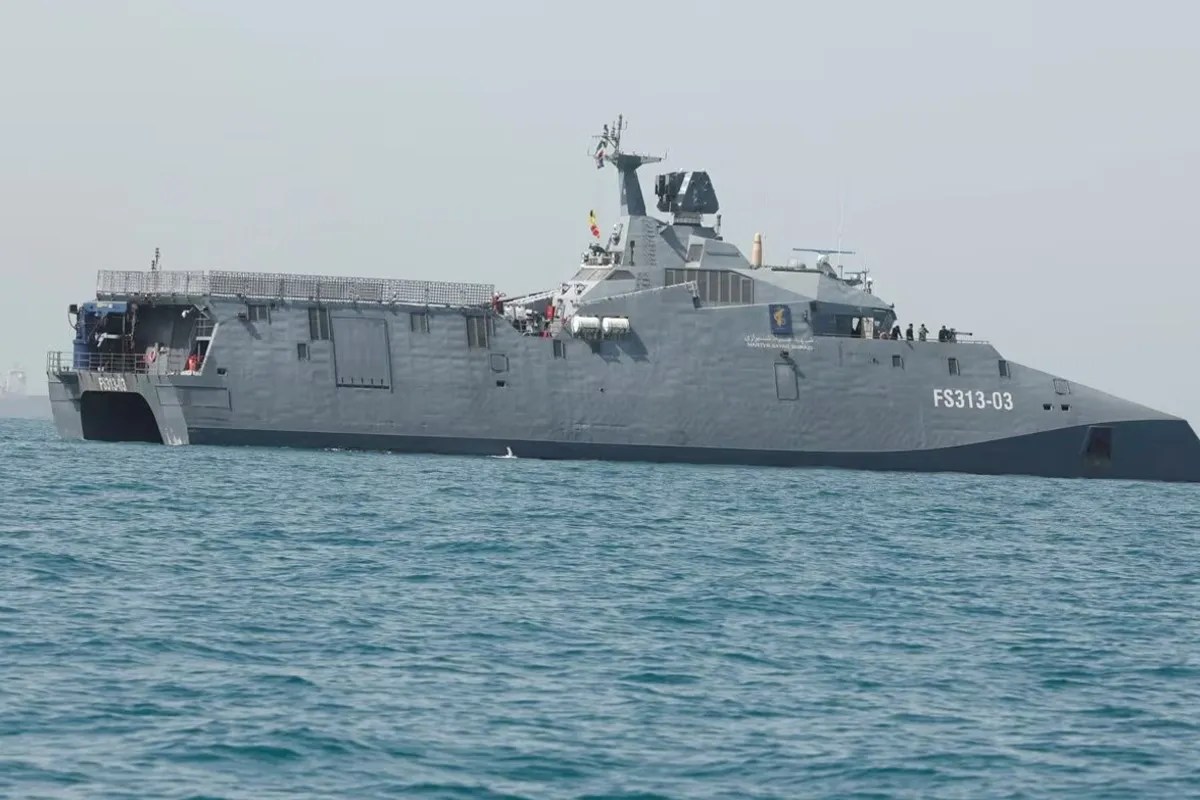
The Indian Ocean just became a graveyard for deniability. Reports of a devastating strike on an Iranian naval asset off the coast of Sri Lanka, resulting in over a hundred missing sailors, point to a radical escalation in regional maritime conflict. This was not a random accident or a mechanical failure. The precision required to disable a military vessel in deep water suggests a level of state-sponsored aggression that the world has tried to ignore for years. If the reports of a submarine-launched attack hold true, we are looking at the first overt underwater engagement of its kind in this specific theater of operations.
The incident centers on a primary Iranian surface vessel, likely part of Tehran’s "blue-water" ambitions to project power far beyond the Persian Gulf. Early data suggests the ship was hit below the waterline, a signature move of torpedo or mine-based warfare designed to maximize casualties and ensure the vessel cannot be easily salvaged. With 101 sailors currently unaccounted for, the scale of this disaster surpasses recent skirmishes in the Red Sea.
The Geography of a Calculated Strike
Sri Lanka occupies the most strategic real estate in the Indian Ocean. Its proximity to the global shipping lanes that connect the oil-rich Middle East to the manufacturing hubs of East Asia makes it a high-stakes chessboard. Iran has been increasing its presence in these waters, attempting to secure its own supply lines and find partners willing to bypass international sanctions.
An attack in these specific waters serves a dual purpose for the aggressor. First, it forces the Iranian Navy to operate under the assumption that they are being watched and hunted the moment they leave the Gulf of Oman. Second, it tests the diplomatic resolve of the Sri Lankan government, which now finds itself caught between its economic ties to regional powers and the fallout of a kinetic military action on its doorstep.
The Submarine Variable
Submarine warfare is the ultimate tool of the shadow war. Unlike drone strikes or anti-ship missiles, which leave a clear radar and thermal signature, a submarine-launched heavyweight torpedo leaves almost no forensic trail back to the source until it is too late. If a submarine was indeed the culprit, the list of capable actors narrows significantly.
Maintaining a silent, diesel-electric or nuclear-powered submarine in the Indian Ocean for extended periods requires sophisticated logistics. This wasn't a rogue operation. It was a professional hit. The mechanics of such an attack involve acoustic signatures. Every ship has a "sound" registered in global databases. A submarine crew would have identified the Iranian vessel by its specific engine frequency long before surfacing or firing.
Tehran's Overextended Reach
For years, Iran has converted old merchant ships into "forward base ships." These are essentially floating warehouses for drones and fast boats. While they look imposing, they lack the sophisticated hull integrity and anti-submarine warfare (ASW) suites found on modern Western or Chinese destroyers. They are "soft" targets.
By sending these ships so far from home, Iran accepted a gamble. They relied on the "gray zone" of conflict—the idea that no one would dare sink a sovereign vessel in international waters for fear of starting a total war. That bluff has been called. The disappearance of 101 crew members indicates that the ship likely suffered a catastrophic failure of its bulkheads, leading to a rapid sinking that prevented the deployment of life rafts.
Technical Realities of Deep Sea Search and Rescue
Finding survivors in the open ocean is a brutal race against physics. The currents off the Sri Lankan coast are notoriously strong. If the sailors did not make it to lifeboats within the first ten minutes of the strike, the odds of recovery drop to near zero.
Standard survival equipment on Iranian naval vessels has historically been criticized for being outdated. Without modern GPS-enabled life vests or high-frequency emergency beacons, a hundred men in the water are invisible to satellite surveillance. Furthermore, the depth of the water in this region makes any attempt to recover the "black box" or internal logs of the ship an expensive, multi-month salvage operation that Iran may not have the technology to perform alone.
The Intelligence Failure
How did the attacker know exactly where the vessel would be? The ocean is vast, but satellite imagery and signals intelligence (SIGINT) make it small for those with the right tools. The Iranian Navy has a habit of broadcasting its location through AIS (Automatic Identification System) sporadically, or failing to maintain strict radio silence.
This incident suggests a massive leak in Iranian naval intelligence or a total compromise of their encrypted communications. If the attacker was waiting in a "picket line" along a projected path, it means they had access to the ship's mission orders days or weeks in advance. This is the "why" that matters. Sinking a ship is easy; knowing which ship to sink and where to find it without being seen is the true mark of a superior military force.
Regional Reactions and the Silence of the Giants
Notice who isn't talking. In the aftermath of such a significant loss of life, the silence from major naval powers in the region is deafening. Usually, a humanitarian crisis of this magnitude triggers a rush of "assistance" offers. Instead, we see a cautious distance.
- India: As the primary security provider in the Indian Ocean, New Delhi’s silence suggests a desire to stay out of a direct confrontation between Iran and its adversaries.
- The United States: With the Fifth Fleet nearby, the U.S. has the assets to help, but providing aid to an Iranian warship is a political impossibility.
- China: Despite their massive investments in Sri Lankan ports like Hambantota, Beijing is hesitant to get dragged into a hot war that could disrupt the flow of trade.
The Economic Fallout for Maritime Insurance
This attack changes the math for every commercial shipping company. When war vessels start disappearing near major trade routes, insurance premiums skyrocket. We saw this in the Gulf of Tankers in the 1980s. If the Indian Ocean is no longer "safe" for even armed military ships, then the unarmed tankers carrying millions of gallons of crude oil are sitting ducks.
Lloyd's of London and other major insurers track these events with more scrutiny than some government intelligence agencies. A "war risk" designation for the waters south of Sri Lanka would divert traffic around the Cape of Good Hope, adding weeks to transit times and billions to global inflation. This isn't just a military story; it's a supply chain nightmare.
The Technology of the Strike
We must look at the possibility of autonomous underwater vehicles (AUVs). The world is moving away from manned submarines for high-risk hits. A loitering underwater drone can sit on the seabed for months, powered down, waiting for a specific acoustic signature to pass overhead.
$$F_d = \frac{1}{2} \rho v^2 C_d A$$
The physics of a torpedo hit involve the rapid displacement of water. When an explosion occurs under the keel, it creates a gas bubble that lifts the ship and then collapses. The weight of the ship, no longer supported by water, snaps the spine of the vessel. This is likely why there was no distress signal. A ship that breaks in half sinks in seconds, not minutes.
Hard Truths of Modern Naval Conflict
The era of protected sovereign transit is over. If you cannot defend your hull against subsurface threats, you have no business claiming "blue-water" status. Iran’s naval strategy has focused heavily on "asymmetric" warfare—using small boats to harass large ships. They are now learning that asymmetry works both ways. A single, high-tech submarine can nullify an entire fleet of surface ships if those ships lack modern sonar and depth-charge capabilities.
The loss of 101 lives is a human tragedy, but in the cold logic of geopolitics, it is a data point. It tells us that the "shadow war" has moved out of the shadows and into the deep blue.
Sri Lanka’s role in the coming days will be telling. Will they allow Iranian salvage teams into their waters? Will they permit an independent investigation? Most likely, the wreckage will remain at the bottom of the ocean, a silent testament to a mission that went horribly wrong.
Security analysts should watch the movement of Iranian "cargo" ships in the coming weeks. If Tehran pulls its assets back to the Gulf, the attacker won. If they send more, the Indian Ocean is about to get much louder.
Check the atmospheric pressure and current patterns near the coordinate of the last known ping to determine the drift radius for any potential wreckage.