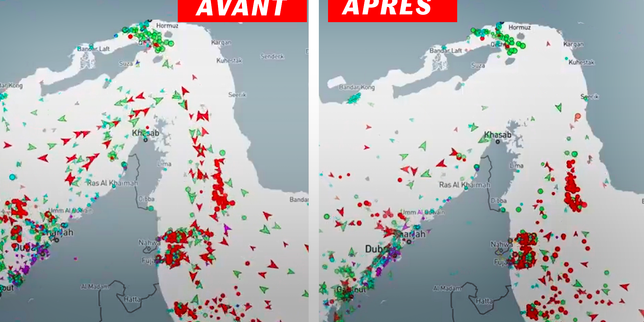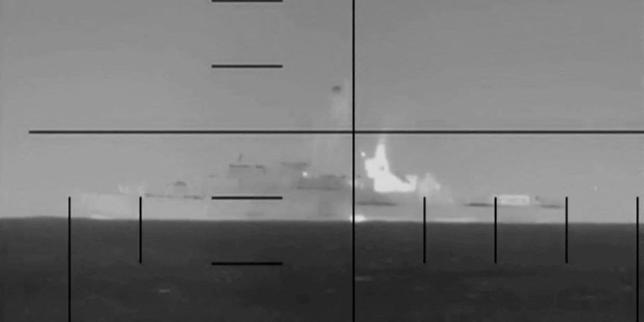
The maritime order just fractured off the coast of Sri Lanka. While official channels in Washington frame the sinking of an Iranian-flagged vessel as a calculated response to immediate threats, the reality is a messy convergence of intelligence failures and aggressive posturing. This was not a routine skirmish. It was a high-stakes demonstration of force in a region that has become the primary theater for the world's most dangerous supply chain wars.
Miscalculation at Sea
The engagement took place in the deep waters of the Laccadive Sea, far from the familiar friction points of the Persian Gulf. According to preliminary defense briefings, a U.S. carrier strike group neutralized what it identified as a sophisticated intelligence-gathering platform. Iran maintains the vessel was a civilian merchant ship. The truth likely sits in the gray zone where Tehran operates most effectively.
This specific ship was part of a broader network of "spy ships" that have been shadowing Western commercial traffic for months. By moving these assets toward the Bay of Bengal, Iran is testing the limits of international law. They want to see how far the U.S. will go to protect lanes that are technically outside the immediate zone of active conflict. Now they have their answer. It was a violent one.
The Hardware Behind the Strike
Modern naval warfare is no longer about broadsides. It is about the electromagnetic spectrum. The U.S. Navy used a combination of electronic jamming and precision-guided munitions to isolate the vessel before the final kinetic strike. This ensured that the ship could not broadcast its final coordinates or transmit real-time data back to Bandar Abbas.
The Iranian vessel was likely equipped with passive sonar arrays and signal interception tools designed to track the acoustic signatures of American nuclear submarines. In the quiet depths of the Indian Ocean, these submarines are the ultimate deterrent. If Iran can map their movements, the deterrent vanishes. The decision to sink the ship suggests that the intelligence being gathered had reached a critical threshold. Washington decided that the risk of escalation was lower than the risk of allowing that data to reach Tehran’s analysts.
Sri Lanka Caught in the Middle
Colombo is currently scrambling. The Sri Lankan government has spent the last decade trying to balance heavy investment from China with security partnerships with the West. An explosion of this magnitude in their backyard is a diplomatic nightmare. They do not want their waters to become a proving ground for foreign powers, yet they lack the naval capacity to police their own Exclusive Economic Zone (EEZ).
We are seeing a repeat of Cold War dynamics with updated technology. Local ports are being used as pawns. If the U.S. continues to engage targets this close to South Asian shores, it forces regional players to pick a side. Most of these nations would rather stay neutral and keep the trade flowing, but neutrality is a luxury that is rapidly disappearing.
Logistics of a Shadow War
Iran’s maritime strategy relies on deniability. They use aging hulls, often reflagged multiple times, to conduct surveillance. These ships blend into the thousands of commercial vessels crossing the Indian Ocean every day. Identifying them requires constant satellite monitoring and human intelligence.
The "ghost fleet" is not just about oil smuggling anymore. It is about kinetic readiness. By placing these ships near maritime chokepoints, Iran creates a "tripwire" effect. If one is hit, they can claim victimhood on the international stage while having already gathered the telemetry needed to target Western interests later. The sinking of this ship proves that the U.S. is no longer willing to play the game of plausible deniability.
The Drone Factor
Reports from the area indicate that the Iranian vessel may have been acting as a mobile launchpad for long-range suicide drones. This is a tactic perfected in the Red Sea. By moving the launch point closer to the center of the Indian Ocean, Tehran can theoretically strike targets that were previously considered safe.
If the U.S. Navy recovered debris suggesting drone capability, the legal justification for the strike becomes much stronger under the umbrella of "anticipatory self-defense." However, the Pentagon has been tight-lipped about the specific payload of the sunken ship. This silence breeds suspicion among regional allies who fear the U.S. might be overreaching.
Economic Aftershocks
Insurance premiums for cargo ships in the Indian Ocean are already ticking upward. This is the hidden tax of maritime instability. When a warship is sunk, every actuary in London and Singapore recalculates the risk of the entire region. We are looking at a potential spike in the cost of goods moving between Europe and East Asia.
The Suez Canal is already a bottleneck of anxiety. If the Indian Ocean becomes a "hot" zone, shipping companies will be forced to take even longer routes around the Cape of Good Hope. The global economy cannot afford another major disruption to its primary arteries. Yet, the military necessity of neutralizing threats often ignores the ledger of the global merchant.
The Failure of Traditional Diplomacy
International maritime bodies are largely toothless in this scenario. The UN Convention on the Law of the Sea (UNCLOS) provides a framework, but it does not account for hybrid warfare where a "civilian" ship acts as a military node. This incident highlights the obsolescence of current maritime treaties.
We are entering an era where might determines the rules of the water. If the U.S. can sink a ship and face no significant diplomatic blowback from the broader international community, the precedent is set. Other regional powers—India, China, and even smaller coastal states—will take note. They will begin to interpret "threats" more broadly, leading to a much more aggressive naval posture worldwide.
Signals to Tehran and Beijing
The target was Iranian, but the audience was global. Beijing is watching this incident with intense interest. The Indian Ocean is a vital part of China’s "string of pearls" strategy. Seeing the U.S. act decisively against a sophisticated adversary in these waters sends a message about American resolve and capability.
It also exposes the limits of Iran’s reach. Despite their rhetoric, they cannot protect their assets once they leave the safety of their coastal missile batteries. Out in the blue water, the U.S. still holds the cards. The question is how long they can maintain this dominance without sparking a wider conflict that involves more than just a single ship.
Strategic Fatigue
There is a palpable sense of exhaustion among the crews operating in these high-tension environments. Constant readiness for drone swarms, missile threats, and "ghost" vessels takes a toll on both manpower and machinery. The U.S. Navy is smaller than it was during the Cold War, but its responsibilities have tripled.
Every time a strike like this occurs, it consumes resources—not just the missiles fired, but the weeks of intelligence gathering, the repositioning of assets, and the subsequent diplomatic cleanup. It is a war of attrition where the "enemy" is a set of asymmetric threats that cost a fraction of the price to deploy compared to the cost of neutralizing them.
What Happens to the Wreckage
Recovery operations are likely already underway, though nobody will admit it. The technology on board that ship is a gold mine for Western intelligence. Decoding the communication systems and sensors used by Iran would provide a massive advantage in future encounters.
Conversely, if Iran can reach the site first, they will attempt to destroy any sensitive components left on the seafloor. This underwater race is the silent sequel to the surface explosion. It is a battle for the "black boxes" that contain the true intent of the mission.
The New Rules of Engagement
The rules have shifted from containment to active disruption. For years, the U.S. followed a policy of monitoring Iranian movements and only intervening when a direct attack was imminent. Sinking a ship off Sri Lanka suggests that the threshold for intervention has dropped significantly.
Now, the mere presence of high-end surveillance equipment on a hostile vessel may be enough to warrant its destruction. This is a much more proactive—and dangerous—stance. It leaves very little room for error and even less room for de-escalation.
The maritime world is waiting for the Iranian response. It won't be a conventional naval battle; it will be an asymmetric strike somewhere unexpected. A cyberattack on a port, a "random" mine in a shipping lane, or a drone strike on a tanker. This is the cycle of modern conflict.
Track the movement of the USS Abraham Lincoln and its escorts over the next forty-eight hours. Their positioning will tell you exactly how much the U.S. expects a counter-strike. If they move further out to sea, the Pentagon is bracing for a long-range response. If they stay put, they are daring Tehran to try again.
Check the Lloyd’s List for changes in maritime insurance zones. The moment the Indian Ocean is designated a "war risk" area, the economic reality of this sinking will hit your local grocery store shelves.