The structural failure of the U.S. Constitution to restrain executive war-making capabilities has transitioned from a domestic legal debate to a systemic risk factor for the global economy. While the War Powers Resolution of 1973 attempted to create a check on presidential impulse, the evolution of military technology and the speed of modern kinetic engagement have rendered traditional legislative oversight obsolete. The resulting power vacuum allows a single individual to bypass the deliberative process required for state-on-state conflict, specifically regarding high-stakes theaters like Iran. This systemic fragility creates a "Single Point of Failure" (SPOF) in the architecture of international security.
The Architecture of Executive Overreach
The divergence between constitutional intent and operational reality stems from the expansion of the "Commander-in-Chief" clause under Article II. Originally designed to allow the President to repel sudden attacks, this authority has been reinterpreted as a mandate for preemptive and perpetual military engagement. The current imbalance can be categorized into three structural pillars:
- The Information Asymmetry Gap: The executive branch maintains a monopoly on intelligence. By classifying the data used to justify military action, the President prevents Congress from performing a rigorous Cost-Benefit Analysis (CBA) of potential conflicts.
- The Definition of "Hostilities": Legal counsel within the executive branch has consistently narrowed the definition of hostilities. By framing drone strikes, cyber warfare, or targeted assassinations as "short of war," the administration avoids triggering the 60-day clock mandated by the War Powers Resolution.
- Fiscal Inertia: Once assets are deployed, the political cost of withdrawing funding—often framed as "abandoning the troops"—becomes prohibitively high for legislators. This creates a sunk-cost fallacy that fuels mission creep.
This lack of friction in the decision-making process increases the probability of "Tail Risk" events—low-probability, high-impact disasters that the global market cannot accurately price.
The Cost Function of Unilateralism
When the United States contemplates or executes a conflict with a regional power like Iran without a formal declaration or broad legislative consensus, it introduces specific externalities that degrade the global order. These are not merely political consequences; they are quantifiable economic and strategic drains.
Supply Chain Volatility and Energy Premiums
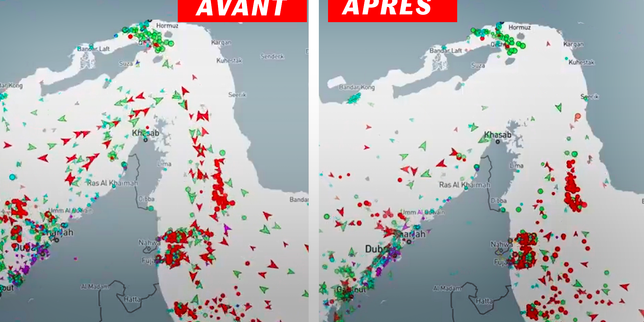
A conflict in the Persian Gulf puts the Strait of Hormuz at risk. Approximately 21% of the world’s petroleum liquids consumption passes through this chokepoint. The lack of a "Constitutional Brake" means that a President can trigger an immediate 15% to 30% spike in global oil prices through a single executive order. This "Geopolitical Risk Premium" is a direct tax on global manufacturing and logistics, forced upon the world by the failure of American internal checks and balances.
The Erosion of Deterrence Logic
The effectiveness of deterrence relies on predictability. When a President can pivot from diplomacy to kinetic action based on domestic political cycles rather than long-term strategic doctrine, allies and adversaries alike lose faith in the stability of the system. This unpredictability incentivizes nuclear proliferation; smaller states perceive nuclear capabilities as the only reliable insurance policy against a volatile executive who is not bound by a deliberative legislature.
Technology as an Accelerator of Conflict
The emergence of autonomous systems and cyber warfare has effectively decoupled war-making from public perception. In the 20th century, a declaration of war required a mass mobilization of the citizenry, creating a natural democratic barrier to conflict. Today, technology has streamlined the "Kill Chain."
- Remote Warfare: The use of Unmanned Aerial Vehicles (UAVs) minimizes the "body bag count" that historically curtailed executive adventurism. If a conflict results in zero American casualties, the domestic political pressure to stop it vanishes, even if the geopolitical fallout is catastrophic.
- Algorithmic Escalation: The integration of AI in targeting and threat assessment speeds up the OODA loop (Observe, Orient, Decide, Act). If the executive branch relies on automated triggers for "defensive" strikes, the window for Congressional intervention shrinks to seconds. This creates a state of permanent readiness that is indistinguishable from permanent war.
The legal framework of 1787 did not account for a world where a President could destroy a nation's power grid from a smartphone. The mismatch between the speed of the technology and the slowness of the law is the primary driver of current global instability.
The Fallacy of the Unified Command
Proponents of the "Unitary Executive Theory" argue that a single, decisive leader is necessary for national security in a nuclear age. However, this ignores the principle of Redundancy in high-stakes systems. In engineering, critical systems require multiple independent layers of verification to prevent a catastrophic error. The U.S. war-making apparatus has removed these layers.
The logic of the Constitution was to make war difficult to start but easy to finish. By allowing the executive to bypass the House and Senate, the U.S. has flipped this logic: it is now easy to start a war but nearly impossible to conclude one. This is evidenced by the "Forever War" paradigm, where military engagements persist for decades without a clear strategic objective or a terminal victory condition.
Strategic Realignment of the Global Response
Given that the American domestic legal system is unlikely to reform itself in the near term, international actors and domestic stakeholders must account for this "Executive Volatility" in their strategic planning. Relying on the U.S. to act as a "Rational Actor" in the Middle East is a flawed assumption.
- Strategic Decoupling: Nations must diversify their security dependencies to mitigate the impact of sudden U.S. policy shifts.
- Legal Countermeasures: International bodies should focus on establishing clear definitions of "Economic Warfare" and "Cyber Aggression" to create a normative framework that exists outside of U.S. constitutional interpretations.
- Market Hedging: Institutional investors must treat the U.S. Presidency as a volatile commodity. The "Power of the Purse" in Congress is no longer a reliable hedge against conflict.
The most effective check on executive power is no longer the U.S. Constitution, but rather the hard reality of economic interdependence. If the U.S. executive continues to treat the world's security as a personal prerogative, the global community will move toward a multipolar system where the American "Security Umbrella" is replaced by a series of regional, more predictable alliances.
The final strategic move for any global entity is the transition from a U.S.-centric security model to a distributed resilience model. This involves localizing supply chains, creating regional defense pacts that exclude the U.S. where interests diverge, and utilizing neutral digital currencies to bypass the weaponization of the dollar. The "War Powers Gap" is not just an American problem; it is a signal that the era of a single, reliable global hegemon has ended, replaced by a period of managed chaos where the only constant is executive unpredictability.