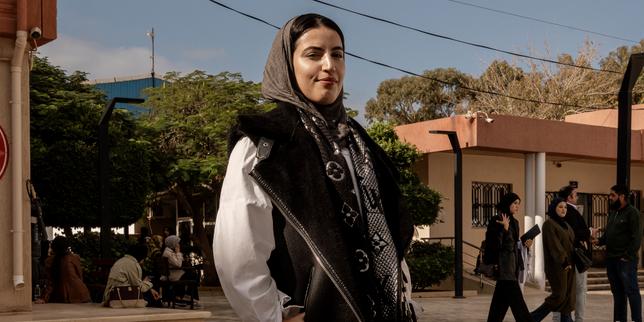
Libya is a country of paradoxes. You see it in the eyes of the twenty-somethings in Tripoli and Benghazi. They're living through a fragmented political reality that would break most people. Yet they're starting businesses, learning code, and organizing art festivals. They aren't waiting for the government to fix the economy because they've learned the hard way that the government is often the primary obstacle.
The common narrative about Libya usually focuses on oil production or militia checkpoints. That’s a mistake. If you want to understand where the country is actually headed, you have to look at the demographic bulge. Roughly two-thirds of the population is under the age of 30. These people don't remember the "Green Book" era with any clarity. They only know a decade of transition that feels like it’s stuck in a loop.
The Reality of the Economic Grind
Let's talk about the money. Libya sits on the largest oil reserves in Africa. In a sane world, that would mean prosperity. Instead, young Libyans face a liquidity crisis that makes getting cash out of a bank feel like winning the lottery. You’ll see lines stretching around the block at 6:00 AM. People wait hours just to withdraw a few hundred dinars.
Inflation has eaten the purchasing power of the average salary. If you’re a young man trying to get married, the costs are astronomical. You need a flat, a car, and a dowry. In the current economy, that’s almost impossible on a standard state salary. This isn't just a financial hurdle. It’s a social one. It delays adulthood. It breeds a specific kind of resentment that the political class seems to ignore.
But here is the twist. This pressure has forced a shift toward the private sector. For decades, the goal was a cushy government job. Not anymore. Young Libyans are turning to freelancing, tech startups, and small-scale trade. They're using Starlink and VPNs to bypass local infrastructure issues. They're looking outward because the internal systems are broken.
Education and the Skills Gap
The school system is struggling. It’s a relic of a centralized past that doesn't account for a globalized economy. Many graduates find that their degrees are basically decorative when they enter the job market. They know theory but lack the practical skills that modern companies actually want to pay for.
I've talked to tech recruiters in North Africa who say the same thing. Libyan youth are incredibly hungry to learn. They're teaching themselves Python and digital marketing through YouTube and Coursera. They're doing this while the power goes out for eight hours a day in the summer heat. That kind of resilience is a competitive advantage that you can't teach in a classroom.
There's also a massive surge in English language learning. It’s seen as the "exit ticket." Not necessarily to leave the country physically—though many want to—but to leave the local economy virtually. If you can speak English and code, you can work for a firm in Dubai or Tallinn from your bedroom in Misrata. That’s the real revolution happening right now.
Mental Health and the Weight of the Past
"I’m just trying to forget the past." You hear variations of this phrase constantly. It’s a survival mechanism. Libya has seen multiple rounds of civil conflict since 2011. Every young person you meet has a story of a missed school year, a displaced family, or a lost friend.
The trauma is real but mostly unaddressed. There is still a stigma around mental health care in much of the country. Instead, the youth channel that energy into "normalcy." They crowd into specialty coffee shops that look like they belong in London or Berlin. They organize photography walks. They create. This isn't about ignoring reality. It’s about a stubborn refusal to let the reality of war define their entire existence.
They're tired of being a "geopolitical issue." They want to be a market. They want to be a destination. They want to be part of the world.
The Digital Escape Hatch
Social media in Libya isn't just for memes. It's the primary marketplace. Since the traditional banking system is so clunky, informal networks have taken over. Facebook Marketplace and Instagram are where the real business happens.
Digital creators are also booming. You have Libyan YouTubers and TikTokers who are building massive audiences across the Middle East. They're changing the brand of the country. They’re showing the world that Libya is more than just a headline about migration or oil. They’re showing a vibrant, funny, and deeply creative culture that’s been suppressed for far too long.
This digital shift has its own risks. The lack of regulation means scams are common. Data privacy is almost non-existent. But for a 22-year-old with no other options, the risk of a digital scam is better than the certainty of unemployment.
How to Support the Libyan Private Sector
If you're looking at Libya from the outside, stop focusing solely on the political players. They’ve shown they aren't interested in quick solutions. Focus on the entrepreneurs.
- Direct Investment: Look at the tech hubs and incubators in Tripoli. They are the ones actually building infrastructure.
- Skill Sharing: Remote mentorship programs have a huge impact. Connecting Libyan talent with global networks breaks the isolation.
- Software Access: Many global platforms still block Libyan IP addresses due to sanctions or perceived risk. This hurts the people, not the politicians.
The youth in Libya are doing the heavy lifting themselves. They’re building a new country in the shell of the old one. It’s slow and it’s painful, but it’s happening. They don't need pity. They need partners and tools.
The next time you see a headline about Libya, remember the kid in the coffee shop with a laptop and a dream. He’s the one who’s actually going to decide the country’s future. The old guard is just arguing over the ruins.