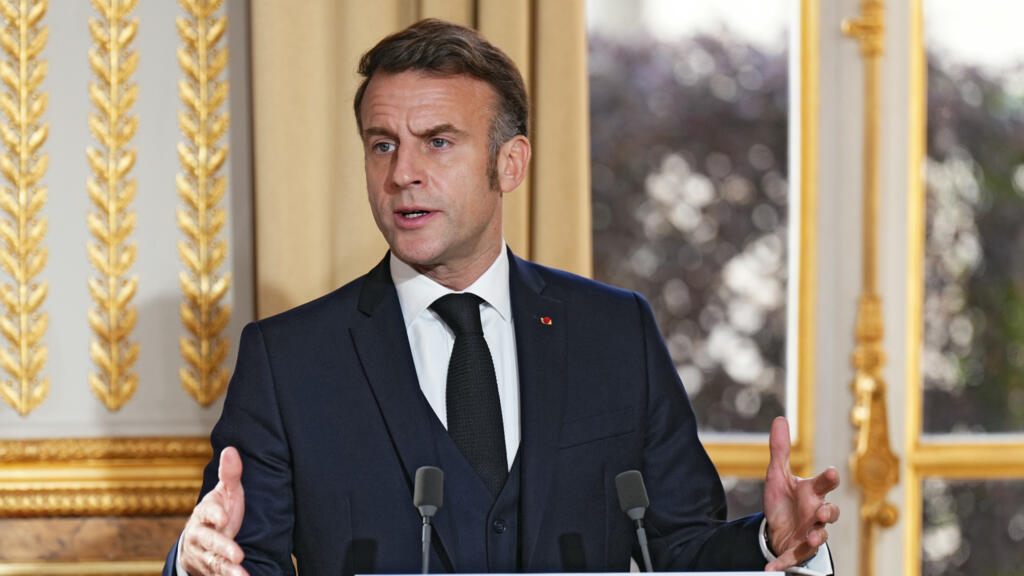
The French political class is currently presiding over a ghost ship. While the gilded halls of the Palais Bourbon and the Élysée remain filled with the choreographed movements of the elite, the engines of public trust have completely stalled. The disconnect between the ruling Enarchs—graduates of the prestigious École Nationale d'Administration—and the people they govern has moved beyond simple policy disagreement. It is now a structural failure of communication that threatens the very stability of the Fifth Republic.
For decades, the French political system relied on a mechanism known as the "Republican Front," a tacit agreement where voters of all stripes would unite against the far right. That mechanism is broken. It failed because the people tasked with maintaining it forgot how to speak the language of the street, the farm, and the factory floor. They replaced bread-and-butter economic reality with a technocratic jargon that sounds, to the average citizen, like a foreign tongue.
The Technocratic Blind Spot
The current crisis did not appear overnight. It is the result of a long-term professionalization of politics that has effectively walled off the leadership from the lived experience of the population. In the salons of Paris, success is measured by GDP growth percentages, fiscal deficit targets, and European Union compliance. In the rest of the country, it is measured by the price of a liter of diesel and the distance to the nearest maternity ward.
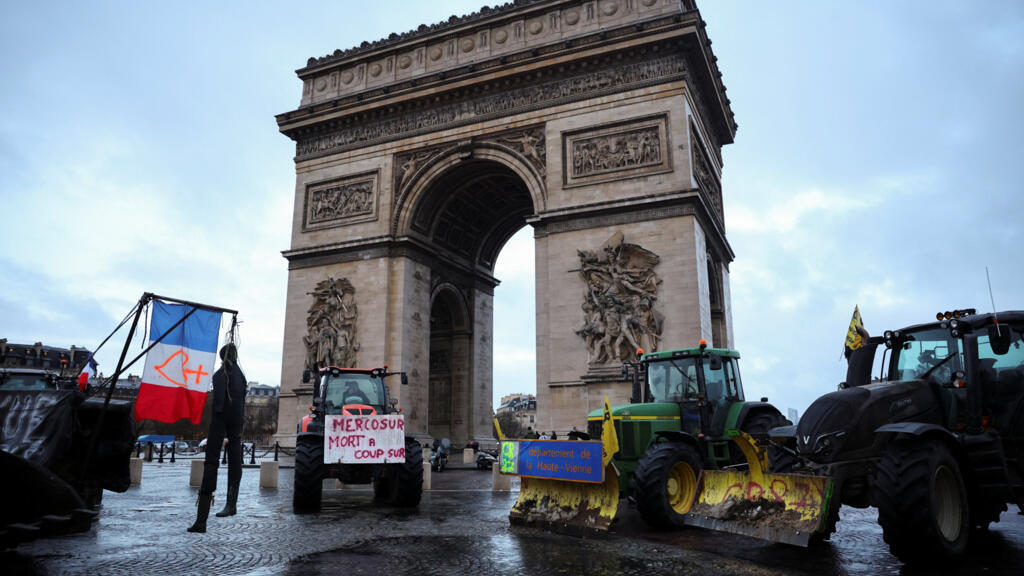
France is a country of "the two kilometers." This is the distance between the local bakery and the home, or the distance to the nearest public service hub. When a government closes a rural post office or increases the tax on fuel, they see a line item on a spreadsheet. The citizen sees the erasure of their village life. This fundamental difference in perception is the "why" behind the Yellow Vest movement and the subsequent rise of populist sentiment. The elite view these protests as irrational outbursts against progress. The protesters view the elite as a hostile occupying force of managers.
The Education Gap as a Class Barrier
The French system is uniquely designed to produce a uniform leadership class. The path through the "Grandes Écoles" ensures that the people running the Ministry of Finance and the people running the major media outlets often sat in the same classrooms. They share the same intellectual DNA. While this creates a highly competent administrative state, it also creates an echo chamber where alternative viewpoints are dismissed as "populist" or "unrealistic."
When a minister explains that a pension reform is "mathematically necessary," they are speaking to their peers. They are not speaking to the person who has spent thirty years on an assembly line and whose body is physically spent. To that worker, the mathematical necessity of the state is a direct assault on their dignity. This is where the "how" of the disconnect manifests: a total lack of empathy masked as intellectual rigor.
The Cost of Living in a Two Tier Economy
While Paris remains a global hub of luxury and finance, the "Diagonal of Emptiness"—a stretch of territory from the northeast to the southwest—feels the weight of deindustrialization. The French state has traditionally been the great equalizer, providing services and infrastructure regardless of geography. However, under the pressure of global competition and debt constraints, that social contract is fraying.
The numbers tell a story the government prefers to ignore. While official inflation figures might suggest a manageable increase, the "felt" inflation on essential goods—food, energy, and housing—has stripped away the purchasing power of the middle and lower classes.
| Expenditure Category | Impact on Urban Elite | Impact on Rural/Peripheral Workers |
|---|---|---|
| Transport | High access to subsidized public transit | Total dependence on private vehicles and rising fuel costs |
| Housing | High asset value growth; rental income | Stagnant property values; lack of affordable options near jobs |
| Education | Access to private tutors and elite networks | Closing of local schools; declining vocational training |
| Health | Proximity to world-class teaching hospitals | "Medical deserts" with months-long waits for specialists |
This table illustrates why a single national policy often produces two wildly different outcomes. A carbon tax that seems like a noble environmental goal in a Parisian arrondissement is a bankruptcy notice for a contractor in the Creuse.
The Erosion of the Republican Front
The most dangerous consequence of this disconnect is the legitimization of the extremes. For years, the political establishment used the threat of the National Rally (RN) as a shield. They believed that no matter how unpopular their policies became, the electorate would always choose the status quo over the far right. This was a massive miscalculation.
The "Republican Front" was based on the idea that the establishment represented a set of shared values. But when the establishment is perceived as indifferent to the suffering of the population, those values lose their currency. Voters are no longer afraid of the "leap into the unknown" because the "known" has become unbearable.
The Rise of Identity over Ideology
As economic security vanishes, voters are retreating into identity. This isn't just about immigration or religion; it’s about a sense of belonging. The "out of touch" nature of French politicians is most evident in their inability to address this loss of national and local identity. They offer "European integration" when people are looking for "community protection."
The French people are not necessarily moving to the right in a traditional sense; they are moving away from a center that they feel has abandoned them. The traditional left-right divide has been replaced by a "top-bottom" divide. On one side are the "Anywheres"—mobile, educated, and benefited by globalization. On the other are the "Somewheres"—rooted, dependent on local stability, and threatened by the dismantling of the state.
Why the Current Solutions Are Failing
The government’s response to this crisis has been largely performative. They hold "Great National Debates" or create "Citizens' Assemblies," but the outcomes of these exercises are rarely reflected in actual legislation. These initiatives are often seen as PR exercises designed to manage anger rather than address its root causes.
The fundamental issue is power. The French system is one of the most centralized in the democratic world. Decisions made in a few square miles of central Paris dictate life in the outermost territories. Until there is a genuine devolution of power—not just administrative tasks, but actual budgetary and legislative authority—the disconnect will remain.
The Mirage of Digital Engagement
There is a misguided belief among the younger political guard that the gap can be closed through social media and digital transparency. They believe that being "accessible" on TikTok or Instagram is the same as being "in touch." It isn't.
A video of a minister explaining a complex tax law doesn't make the tax any easier to pay. In fact, the glossy, high-production value of these digital efforts often reinforces the image of a polished elite that is more concerned with optics than reality. The French public is historically skeptical and intellectually rigorous; they can smell a marketing campaign from a mile away.
The Structural Trap of the Fifth Republic
The Constitution of the Fifth Republic, designed by Charles de Gaulle to provide stability, has become a straitjacket. It grants the President immense power, which is useful in a crisis but disastrous when that President loses the confidence of the people. With a weak Parliament and a centralized executive, there are few "safety valves" to release social pressure.
When the President is the only person who matters, he becomes the sole lightning rod for all national frustrations. This creates a cycle of "Jupiterian" leadership followed by intense social upheaval. The current administration's inability to build a working coalition in the National Assembly is not just a political headache; it is a symptom of a system that was built for a different era—an era where the people trusted the state implicitly.
The Economic Reality of the "Working Poor"
One of the most significant overlooked factors in the French disconnect is the emergence of the "working poor." France has a high minimum wage (the SMIC), but the cost of living in productive areas has outpaced it. There is a growing class of people who work full-time but cannot afford to live within a reasonable distance of their workplace.
These are the people who feel the "disconnect" most acutely. They are told the economy is "resilient," yet they are one car breakdown away from financial ruin. When politicians talk about "labor market flexibility" or "digital transformation," it sounds like a threat to someone whose job is already precarious.
The Failure of the Meritocratic Myth
The "Republican promise" was that anyone, regardless of their background, could succeed through the state school system. This myth is dying. Statistics show that social mobility in France has stalled. The children of the elite are increasingly likely to remain in the elite, while the children of the working class are trapped in a cycle of temporary contracts and low-level service jobs.
If the school system—the pride of the Republic—no longer functions as an escalator, the entire justification for the current social order collapses. The "out of touch" politician is the one who still believes the escalator is working, simply because it worked for them forty years ago.
The Path to Fragmentation
The result of this sustained disconnect is a fragmented society. France is no longer a single nation but a collection of "archipelagos," as described by sociologist Jérôme Fourquet. These islands—the urban elite, the suburban immigrant communities, the rural working class—no longer share a common reality or a common set of facts.
The political class continues to speak as if it is addressing a unified nation. It uses the language of "Universalism" in a country that has become deeply particular. This isn't just a communication problem; it's a reality problem. You cannot govern a country you no longer recognize.
The Brutal Truth of the Next Election
The next major electoral cycle will not be a contest of ideas; it will be a referendum on the existence of the elite itself. If the current trajectory continues, the "Republican Front" will not just crack; it will shatter. The voters who once held their noses to support the center are increasingly likely to stay home or vote for the very disruption the elite fears most.
The "why" of the French disconnect is a refusal to share power and a refusal to acknowledge that the technocratic model of the 20th century is obsolete in the 21st. The "how" is a specialized education system that produces leaders who are brilliant at solving puzzles but terrible at reading people.
The French state is not failing because it is broke; it is failing because it is lonely. It has plenty of managers but very few leaders who can walk into a café in a deindustrialized town in the North and explain why the future belongs to the people sitting there. Until that changes, the Palais Bourbon will remain a beautiful, expensive, and increasingly irrelevant theater.
Start looking at the local election results in the "peri-urban" zones—the areas where the suburbs end and the countryside begins. These are the true barometers of the French soul, and right now, they are screaming.