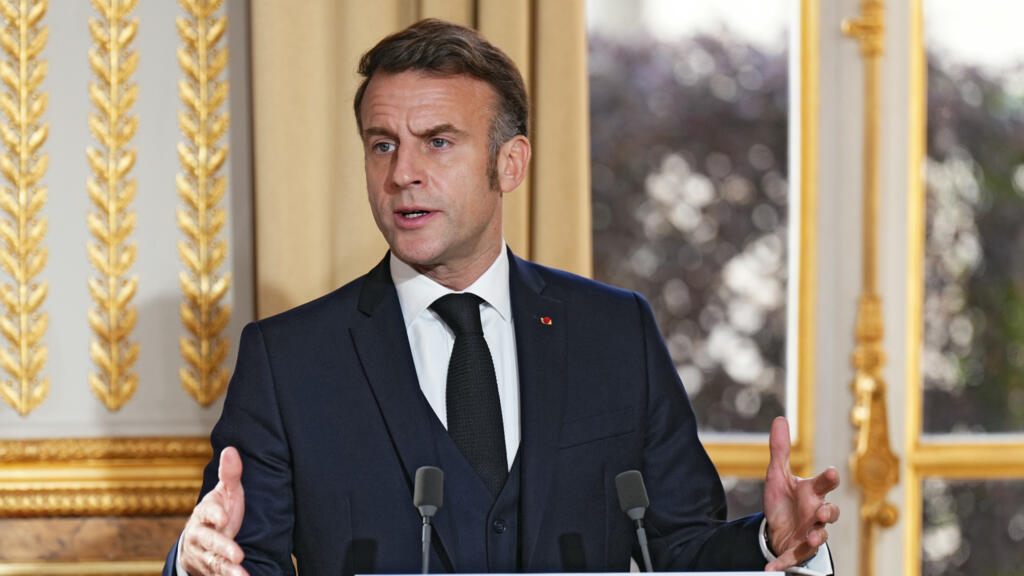
The fragile alignment between Paris and Washington shattered on January 5, 2026, when Emmanuel Macron formally declared that France "neither supports nor approves" of the American military operation that forcibly removed Nicolás Maduro from power. While the Élysée Palace initially signaled relief at the fall of a leader they long branded a dictator, the reality of a sovereign president being snatched from his capital by U.S. special forces proved too volatile for France’s legalistic sensibilities. Macron is now attempting a difficult diplomatic pivot. He wants Maduro gone, but he cannot stomach the precedent of a G7 ally treating the world as a personal hunting ground for political rivals.
The Midnight Extraction
On January 3, 2026, the United States launched Operation Absolute Resolve. It was not a subtle diplomatic maneuver or a slow-burn intelligence operation. It was a massive series of airstrikes on military and civilian infrastructure in Caracas, serving as a tactical screen for the "extraction" of Nicolás Maduro and his wife, Cilia Flores. Within hours, they were in New York, awaiting trial on charges of narco-terrorism and drug trafficking.
This was the Monroe Doctrine reimagined for the 2020s. President Donald Trump, citing a "Trump Corollary," asserted that the United States would effectively manage Venezuela’s transition and its massive oil reserves until a suitable replacement was installed.
France’s first instinct was celebratory. Macron’s early social media posts suggested that the Venezuelan people could "only rejoice" at being rid of a dictatorship. However, that sentiment lasted less than forty-eight hours. By Monday, the tone shifted from celebration to a chilling warning about the collapse of the global order.
Why France Can No Longer Follow
The French objection is not rooted in a sudden affection for Maduro’s socialist policies. Far from it. Paris remains a vocal critic of the 2024 election fraud that kept Maduro in power. The rift is about the "method."
For Macron, the American move represents a "new colonialism." By bypassing the United Nations and ignoring the principle of non-use of force, Washington has effectively signaled that no borders are sacrosanct if they harbor an American adversary. French government spokesperson Maud Bregeon clarified that France defends international law and the "freedom of peoples," a thinly veiled jab at the unilateral nature of the U.S. raid.
France is looking at the long-term wreckage. If a sitting president can be kidnapped under the guise of a judicial "extraction mission," the very concept of sovereign immunity—a shield that protects all world leaders—evaporates.
The Oil Factor and the New Regime
While the diplomats argue over the UN Charter, the Treasury Department in Washington is moving at light speed to consolidate the spoils. Within weeks of Maduro’s capture, the U.S. eased sanctions on Venezuela’s oil industry, but with a specific caveat: the relief applies almost exclusively to American companies.
This "America First, Others Ask" policy has left European energy giants like Repsol and Eni in a precarious position. The new acting president in Caracas, Delcy Rodríguez—who was Maduro's deputy and is now cooperating with Washington—has already overseen the dismantling of the old socialist oil model. Legislation passed in late January now allows private producers autonomy to operate projects, effectively reversing decades of nationalization.
Washington is now marketing Venezuelan crude and planning a $100 billion reinvestment into the country’s oil fields. For Macron, this looks less like a democratic liberation and more like a hostile takeover of the world's largest proven oil reserves.
A Continent Divided
The fallout has split the globe along predictable, yet dangerous, lines. Most NATO allies have stayed quiet or offered tepid support for the airstrikes, prioritizing the removal of a Russian-aligned leader in the Western Hemisphere. Meanwhile, the Global South is in an uproar. Leaders from Malaysia to Honduras have condemned the raid as "state terrorism" and a "clear violation of international law."
Macron finds himself in the middle, trying to lead a "Third Way." He has called for the rightful winner of the 2024 election, Edmundo González Urrutia, to take a central role in the transition. Yet, Washington seems more interested in the cooperation of Delcy Rodríguez, who provides the stability necessary for immediate oil production.
The Death of Multilateralism
This crisis marks a definitive moment in Macron’s presidency. He is watching the United States "gradually turn away" from its allies and the rules-based system it helped build after 1945. In his annual speech to ambassadors, he warned that Europe cannot be a spectator while the world is divided by great powers.
The U.S. response has been blunt. The White House recently flagged an exit from dozens of global organizations and treaties, signaling that international consensus is no longer a priority for the American administration. In this new era, military might and economic leverage have replaced the slow grind of diplomacy.
France is now left to decide if it will remain a junior partner in an American-led hemisphere or if it will attempt to build a European bloc capable of resisting this "new imperialism." The capture of Maduro was the catalyst, but the real casualty is the idea that global powers must play by a set of shared rules.
Would you like me to analyze the specific economic impact of the new Venezuelan oil laws on European energy markets?