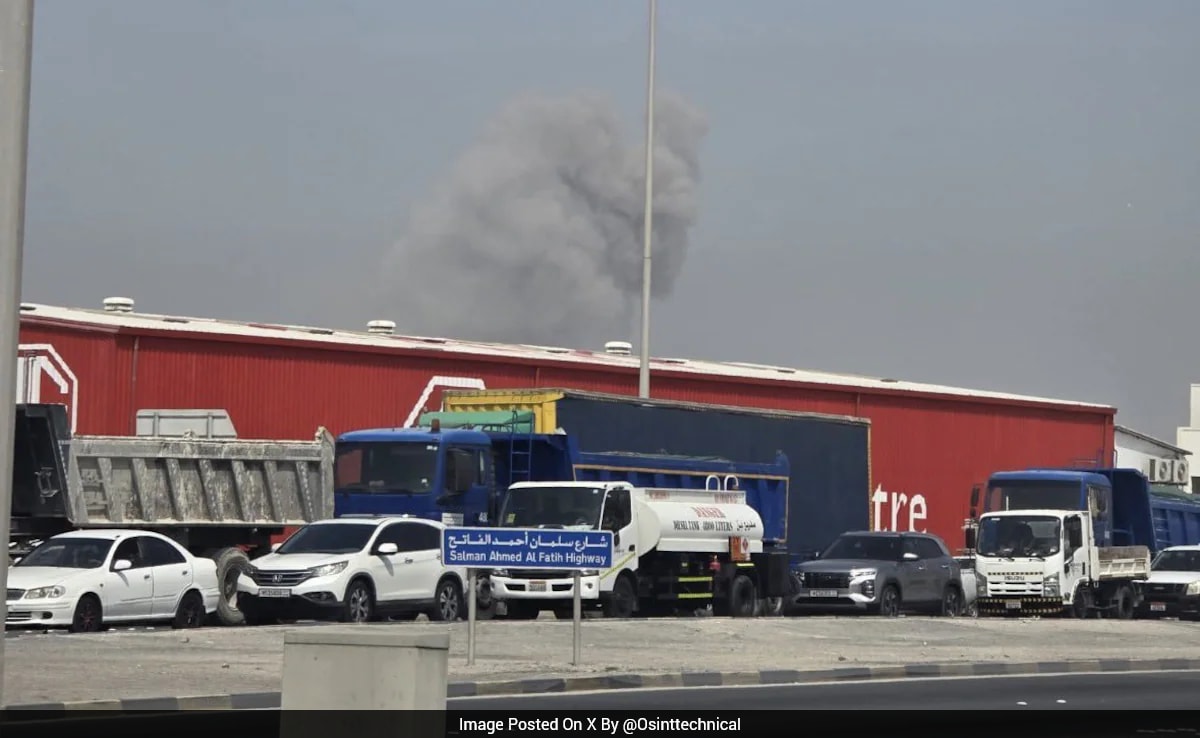
The plume of black smoke rising from the El Alto plateau on the outskirts of La Paz represents more than a localized aviation disaster. It is the physical manifestation of a systemic failure in how Bolivia manages its sovereign wealth and internal security. When a Bolivian Air Force C-130 Hercules, loaded with crates of physical banknotes and twenty personnel, slammed into the jagged terrain of the Andes, it ended dozens of lives and exposed a primitive financial distribution network that the government has desperately tried to keep under wraps. This was not a routine transport mission gone wrong. It was a high-stakes gamble with human life necessitated by a crumbling banking infrastructure and a desperate need to keep the rural economy from flatlining.
The crash killed at least 20 people, including flight crew and central bank officials tasked with overseeing the delivery. While the immediate cause of the accident is being attributed to technical failure and poor visibility—staples of high-altitude Andean aviation—the underlying reason for the flight’s existence is far more damning. In an era where the rest of the world has moved toward digital ledgers, the Bolivian state remains tethered to the physical movement of paper money, a logistical nightmare that forces the military to act as a glorified armored car service in one of the most dangerous flight environments on earth.
Why Physical Cash Still Dictates Bolivian Life
To understand why a military transport was stuffed with billions of bolivianos, one must look at the geography of the Altiplano. Outside the urban hubs of La Paz, Santa Cruz, and Cochabamba, the digital economy is a myth. For the miners, coca farmers, and indigenous communities that form the backbone of the country’s political base, cash is the only valid form of sovereignty.
The Central Bank of Bolivia (BCB) relies on the military because private logistics firms often refuse to service remote outposts where the roads are frequently washed out or blocked by political protesters. The air force becomes the default courier. This creates a dangerous intersection of military overreach and financial necessity. The planes being used for these runs are often decades-old relics, maintained with a shrinking budget and pushed to their limits by the thin air of the high-altitude runways.
The Mechanics of the C-130 Failure
The Lockheed C-130 Hercules is a workhorse, but it is not immortal. Flying into El Alto, which sits at over 13,000 feet, requires specialized performance. The air is thin. Lift is harder to generate. Engines run hotter while producing less thrust. When you add the weight of several tons of paper currency—which is surprisingly heavy when packed for mass distribution—the margin for error vanishes.
Initial reports from the ground suggest the aircraft suffered an engine flameout shortly after its final approach began. In the high Andes, if you lose power, you don't glide; you fall. The crew, caught between the encroaching mountain peaks and the urban sprawl of the capital, had nowhere to put the plane down. The resulting impact was catastrophic, scattering incinerated banknotes across a debris field that spanned several city blocks.
The Security Risk of Aerial Money Laundering
There is a darker side to these "money flights" that investigators are now forced to reckon with. Transporting massive amounts of liquid cash via military assets creates a vacuum of accountability. Unlike electronic transfers, physical cash can "evaporate." In the chaos of a crash site, the first priority is recovery, but the secondary priority for the state is often the containment of the currency.
The presence of the military at the crash site was immediate, not just for search and rescue, but for cordoning off the area to prevent locals from scavenging the scattered wealth. This highlights a grim reality of the Bolivian economy: the state trusts its military more than its banking software. By bypassing the traditional banking system to move physical assets, the government circumvents the very transparency measures designed to prevent corruption.
Financial Instability and Public Panic
The loss of this specific shipment creates an immediate liquidity crisis in the regions it was intended to serve. In towns where the local bank branch only receives a cash injection once a month, this crash means that pensions won't be paid, small businesses cannot make change, and the local barter economy will be forced to take over.
This isn't just a tragedy of lost lives; it’s a trigger for civil unrest. When the government fails to deliver the physical paper that represents a citizen's labor, the social contract begins to fray. We have seen this before in various Latin American contexts, where the failure of the "money plane" leads directly to riots at the bank doors.
The Overlooked Factor of Pilot Fatigue and Training
We often blame the machines, but the men and women behind the controls are under immense pressure. The Bolivian Air Force has been stretched thin by a combination of anti-narcotics operations, disaster relief, and these constant financial transport missions.
Pilots are often flying "blind" into airfields with minimal navigational aids, relying on visual flight rules in a region where weather changes in seconds. The veteran pilots who understand these mountains are retiring, and the new generation is being trained on simulators that cannot fully replicate the erratic wind shears of the Cordillera Real. To call this an "accident" is to ignore the cumulative exhaustion of a fleet and a corps that has been treated as a multi-purpose delivery service for a cash-starved administration.
The Cost of Avoiding Modernization
Critics of the current administration argue that the investment required to digitize the rural economy would be far less than the cost of a lost C-130 and the twenty souls on board. However, digital banking requires electricity, internet stability, and—most importantly—trust in the central government.
The indigenous populations in the interior have a historical distrust of digital figures on a screen. They remember the hyperinflation of the 1980s. They want the weight of the boliviano in their hands. This cultural insistence on hard currency forces the state into these high-risk aerial maneuvers. The crash is a symptom of a nation caught between its 19th-century geography and its 21st-century aspirations.
Infrastructure as a Death Trap
The El Alto International Airport is one of the most difficult places in the world to land a heavy transport aircraft. The runway is long, but the air density means that landing speeds are significantly higher than at sea level. If a pilot encounters a mechanical issue on descent, they are fighting physics that are heavily weighted against them.
The government has repeatedly promised to upgrade the military’s transport wing, yet the "new" acquisitions are often second-hand equipment from larger nations looking to offload their aging inventory. When Bolivia buys a used Hercules, they aren't buying a fresh start; they are buying someone else's maintenance headache.
A Pattern of Neglect
If we look at the last decade of Bolivian military aviation, a pattern emerges. These aren't isolated incidents. They are the result of a "make do and mend" philosophy that works for a local garage but is fatal for an air force. The standard response is a week of national mourning followed by a quiet return to the same flight paths with the same aging planes.
The investigation into this crash will likely find "pilot error" as a contributing factor. It is a convenient label. It absolves the bureaucrats who signed the flight manifests and the politicians who refuse to invest in a secure, digital financial backbone. It shifts the blame onto the dead, who cannot argue back.
The Economic Aftershocks
As the wreckage is cleared, the BCB will have to account for the lost billions. While currency can be reprinted, the loss of confidence cannot be so easily rectified. The black market value of the boliviano often fluctuates based on the perceived stability of the government's ability to provide liquidity. A military plane falling out of the sky while carrying the nation’s wealth is the ultimate symbol of instability.
Foreign investors look at these events and see a country that cannot manage the basic logistics of its own currency. It signals a level of sovereign risk that keeps interest rates high and development slow. The human cost is tragic, but the economic cost is a slow-motion disaster that will affect millions of Bolivians who will never even see the crash site.
The recovery of the "black box" will provide technical data, but the real data is already available in the streets of La Paz. People are waiting in lines at ATMs that are running dry. The military is scouring the mountainside for scorched paper. The government is drafting a press release that will mention "bravery" and "sacrifice" to mask the sheer incompetence of a system that risks lives to move stacks of paper through the clouds.
Bolivia must now decide if it will continue to fly its wealth over the peaks in 50-year-old planes or if it will finally build a bridge to the modern financial world. Until that choice is made, the Altiplano will continue to claim the lives of those caught in the middle. The debris of the C-130 is a warning. It is a loud, violent signal that the old ways of doing business are no longer sustainable.
Stop looking at the altitude and start looking at the ledgers. The engine didn't just fail; the entire strategy did.