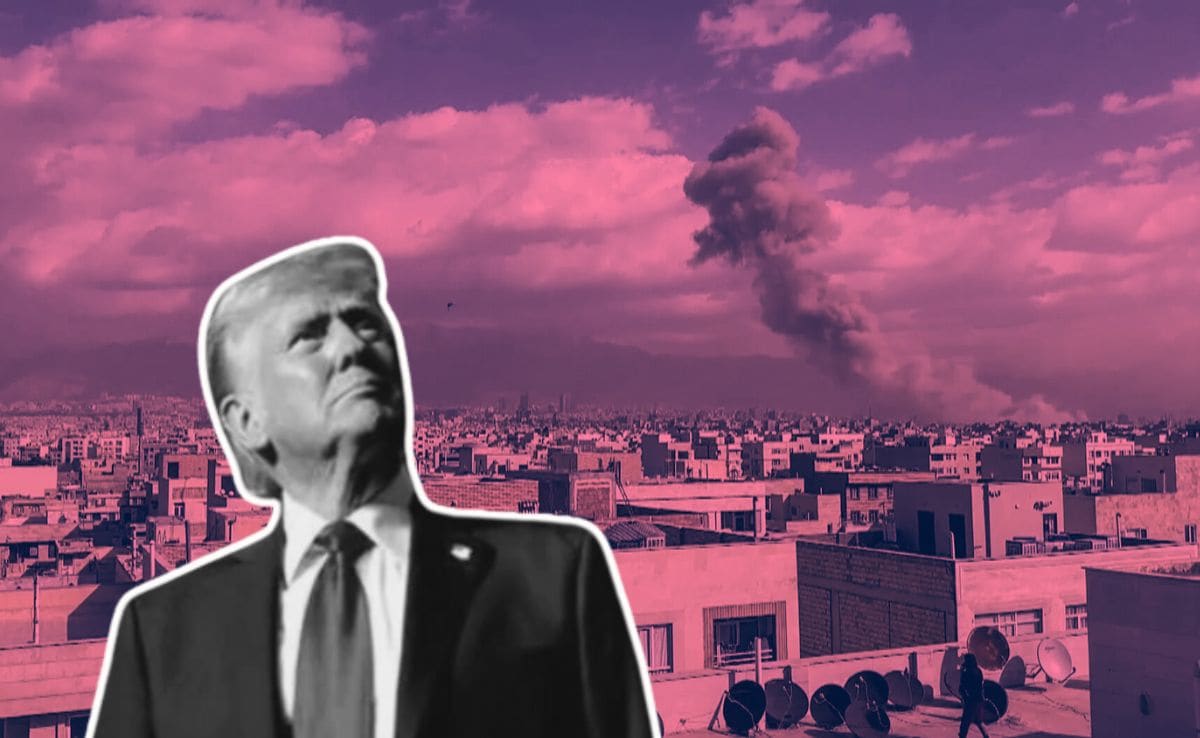
The media remains obsessed with a binary that doesn't exist. They see a "Peace President" suddenly turning into a warmonger, as if foreign policy is a mood swing rather than a cold calculation of leverage. To frame the current friction with Iran as a betrayal of a non-interventionist campaign promise is to fundamentally misunderstand how power actually projects in the 21st century.
Peace is not the absence of tension. Peace is the presence of an overwhelming deterrent that makes the cost of conflict's initiation mathematically suicidal for the opponent.
The "Peace President" moniker was always a tactical label used to contrast with the nation-building failures of the early 2000s. It never meant pacifism. It meant an end to the "Forever Wars" of occupation and a shift toward a "Surgical Strike" doctrine. If you aren't willing to hit the person who breaks the deal, you never had a deal; you had a suggestion.
The Flaw of the Escalation Ladder
Mainstream analysts love the "escalation ladder" theory. They argue that every move by Washington—sanctions, naval deployments, targeted strikes—forces Tehran to climb higher. This is academic garbage. It assumes both players are rational actors with the same definition of "winning."
In reality, the Iranian regime views Western restraint not as an olive branch, but as a data point confirming weakness. When the U.S. retreats from the Middle East under the guise of "peace," it creates a power vacuum. Physics dictates that something must fill it. Usually, that something is a regional proxy with a penchant for ballistic missiles and maritime disruption.
I have watched policy "experts" in D.C. blow through decades of credibility claiming that "maximum pressure" doesn't work. They point to continued Iranian enrichment as proof of failure. They’re looking at the wrong ledger. Maximum pressure isn't about making the regime "behave"—it's about making the regime broke. A broke regime can't fund the next Hezbollah as effectively.
Why Sanctions are the Kinder Form of War
The critics moan about the "humanitarian cost" of economic warfare. Let’s be brutally honest: the alternative to economic warfare is kinetic warfare. If you dismantle the sanctions regime, you are effectively subsidizing the IRGC's regional expansion.
Consider the mechanics of the JCPOA. It was a liquidity injection disguised as a treaty. By releasing frozen assets, the West didn't buy peace; it financed a more sophisticated brand of instability. To call the current pivot toward aggression "justifying war" is a total inversion of reality. The pivot is a correction for a decade of funded theater.
The Mirage of Global Stability
We are told that the U.S. must act as the "adult in the room" to maintain global stability. This is the most dangerous misconception in modern geopolitics. The goal isn't stability; the goal is American interest.
Stability is often the code word for a stagnant status quo that benefits our adversaries. If the status quo involves a nuclear-capable Iran threatening the Strait of Hormuz, then stability is our enemy.
The "Peace President" understands something the career bureaucrats hate: unpredictability is an asset.
- The Rational Actor Trap: If an adversary knows exactly how you will respond, they can price that response into their budget.
- The Madman Theory: When a leader appears willing to bypass the standard diplomatic channels and strike directly at high-value targets, it forces the adversary to pause.
This isn't "on the warpath." This is re-establishing the boundaries of a playground that had no fences for years.
The Cost of the Non-Interventionist Ego
The most vocal critics of a hardline Iran stance are often the ones who claim to be "anti-war." Yet, their preferred policies—appeasement, dialogue without teeth, and the removal of regional footprints—directly lead to larger, more catastrophic conflicts later.
I’ve seen this play out in corporate boardrooms and high-stakes negotiations. The party that signals they are "unwilling to walk away" or "unwilling to fight" gets eaten alive. Foreign policy is no different. If the "Peace President" refuses to attack, he is merely inviting a larger attack on American assets.
Dismantling the Justification Narrative
The competitor article claims the administration is "justifying" an attack. This implies a need for a moral high ground. In the real world, the only justification needed for a strike is the removal of a clear and present threat.
The legalists will argue about the War Powers Act. The moralists will argue about sovereignty. Meanwhile, the practitioners understand that if a drone is heading for your base, the "sovereignty" of the launch site is a secondary concern to the survival of your personnel.
The Proxy Problem
The biggest failure of the "Peace" narrative is the oversight of proxy groups. Iran doesn't fight the U.S. directly; it uses cut-outs.
If the U.S. ignores the proxies to maintain the "Peace President" image, it allows a thousand small cuts to bleed the nation dry. Attacking the source—the Iranian infrastructure itself—is the only way to signal that the proxy shield has been shattered.
- Direct Accountability: If your proxy fires, you pay.
- Resource Depletion: Destroy the funding, destroy the threat.
- Psychological Parity: Make the leadership in Tehran feel the same insecurity they export to their neighbors.
Stop Asking if War is Coming
The question "Is the President taking us to war?" is the wrong question. It’s a clickbait query designed for people who don't understand leverage.
The right question is: "Is the current level of aggression sufficient to prevent a total regional collapse?"
The answer is uncomfortable. It requires a departure from the "Peace President" branding and an acceptance of the "Sledgehammer" reality. You cannot manage a rogue state with a Twitter feed and a smile. You manage them with the credible threat of total systemic deletion.
If you find this stance "warmongering," you are likely someone who views the world through the lens of how it should work, rather than how it does work. The downside to this contrarian approach is obvious: it carries the risk of miscalculation. But the risk of inaction is a certainty of decline.
The media wants a narrative of a leader lost in his own ego. The reality is a leader finally realizing that the "Peace" he sold on the campaign trail is only achievable through the strategic application of violence.
Buy the ammunition or prepare to learn a new language. There is no middle ground.
Stop looking for a "Peace President" and start looking for a realist who understands that the only way to avoid the big war is to win the small ones decisively.
Every time we hesitate out of a fear of "escalation," we are merely signing a promissory note for a much larger bloodletting in the future. The debt always comes due. Paying it now, in small increments of targeted aggression, is the only fiscally and strategically responsible move left on the board.
The "Warpath" isn't a detour; it’s the destination.


