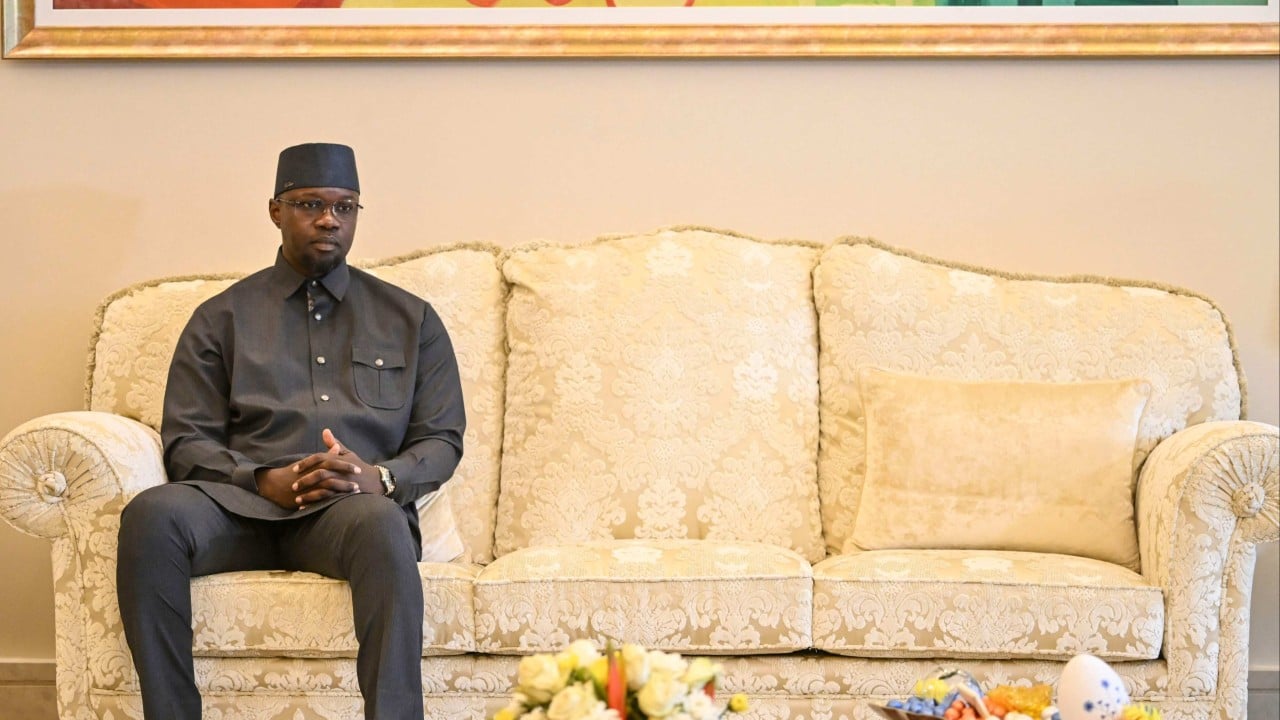
The coffee in the porcelain cup was cooling, and for the first time in his thirty-year career, the Minister felt the urge to let it go cold. Outside the window of the government palace in Dakar, the Atlantic breeze normally smelled of salt and possibility. Today, it carried the metallic tang of anxiety.
Across the ocean, across the desert, and deep into the Middle East, a conflict involving Iran had shifted from a localized tremor to a global earthquake. In Senegal, thousands of miles away, the ground was beginning to crack.
Economics is often taught as a series of graphs and clean lines. In reality, it is a nervous system. When a major oil producer or a regional power center like Iran enters a state of war, the nerves in West Africa don't just tingle—they scream. This is why the Senegalese government did something drastic. They didn't just issue a statement. They grounded the fleet.
A new directive rippled through the ministries: foreign travel for government officials is now strictly limited. No more international summits. No more high-level junkets to Paris or New York. The borders of the budget have closed because the borders of the world have become too expensive to cross.
The Invisible Ledger
Consider a hypothetical mid-level official named Amadou. Two weeks ago, Amadou would have been preparing for a trade conference in Dubai. He would have booked a flight on a regional carrier, stayed in a hotel, and represented Senegalese interests in the textile market.
But when a conflict involving Iran deepens, the price of jet fuel doesn't just rise. It spikes. The insurance premiums for flying over certain corridors quadruple overnight. The "fallout" described in news tickers isn't just debris; it is the sudden, crushing weight of operational costs that a developing nation cannot afford to ignore.
The President’s decision to chain his ministers to their desks in Dakar is a masterclass in fiscal survival. It is an admission that the global supply chain is so fragile that a single drone strike in a different hemisphere can threaten the school lunch program in a village outside Thiès.
Every dollar spent on a business-class ticket to a "pivotal" summit is a dollar that cannot be used to subsidize the rising cost of fuel for the buses that take workers to the Port of Dakar. The government has looked at the ledger and realized that in a world on fire, the most patriotic thing a leader can do is stay home and watch the embers.
The Dominoes of the Diaspora
Senegal’s economy is a beautiful, complex machine fueled largely by the sweat of its people abroad. Remittances are the lifeblood of many households. When a conflict in the Middle East destabilizes global markets, it doesn't just affect oil. It affects the stability of the Euro and the Dollar.
If the conflict expands, the global shipping lanes through the Suez Canal or the Strait of Hormuz become gauntlets of risk. Freight costs for shipping rice—the staple of the Senegalese diet—climb. If you are a mother in the Medina district of Dakar, the "Iran war" isn't a geopolitical abstract. It is the reason the bag of broken rice you bought this morning costs twenty percent more than it did last month.
The travel ban for ministers is a signal. It tells the population: We see the storm, and we are hunkering down with you. There is a psychological component to leadership that the dry reports often miss. When the people are told to tighten their belts, they expect to see the gold buckles of the elite being tucked away too. By limiting foreign visits, the administration is attempting to preserve a sense of national solidarity. It is an act of austerity intended to prevent a crisis of confidence.
The Ghost of 2008
To understand why Senegal is moving so quickly, you have to remember how it felt when the global financial system buckled nearly twenty years ago. Developing nations are often the first to feel the chill and the last to feel the thaw.
When a conflict involving a power like Iran persists, it creates a "risk premium" on everything. Investors who were considering a new solar farm in the Sine Saloum region suddenly hesitate. They pull their capital back to "safe" havens.
The Senegalese government knows that they cannot control the price of Brent Crude. They cannot stop the missiles. They can only control the outflow of their own dwindling reserves. By grounding the ministers, they are reclaiming a tiny sliver of sovereignty from a global market that seems determined to ignore the needs of the Global South.
It is a quiet, desperate kind of math.
One international flight for a minister and their entourage can cost upwards of fifteen thousand dollars when you factor in security, per diems, and transport. Multiply that by dozens of departments and hundreds of potential trips per year. That is a bridge. That is a clinic. That is a buffer against the day when the price of bread might cause a riot.
The Silence in the Terminal
Blaise Diagne International Airport usually hums with the sound of departures. There is a specific rhythm to it—the rolling of suitcases, the frantic energy of diplomats moving between gates, the sense that Senegal is a hub connecting the old world of Europe to the rising energy of Africa.
That rhythm has changed.
The VIP lounges are emptier. The diplomatic passports are staying in their drawers.
This isn't just about saving money. It is about a fundamental shift in how a nation views its place in a volatile century. For decades, the "master narrative" of development was about integration—being everywhere, joining every committee, flying to every forum.
The Iran conflict has forced a pivot toward introspection.
If the world is going to be this unpredictable, perhaps the strength of a nation isn't measured by how far its leaders can travel, but by how well they can manage the resources within their own borders. The "deepening fallout" mentioned in the headlines is a reminder that in the modern age, no country is an island, but every country must eventually learn to stand on its own feet.
The Minister finally took a sip of his cold coffee. He looked at the stack of cancelled flight itineraries on his desk. He didn't look like a man who had lost a privilege. He looked like a man who had finally realized that the most important work wasn't happening in a boardroom in Geneva or a gala in Washington.
The most important work was right here, in the heat and the dust, making sure that when the global storm finally hits the coast, the house is strong enough to hold.
The sky hasn't fallen yet. But in Dakar, they are already reinforcing the roof.