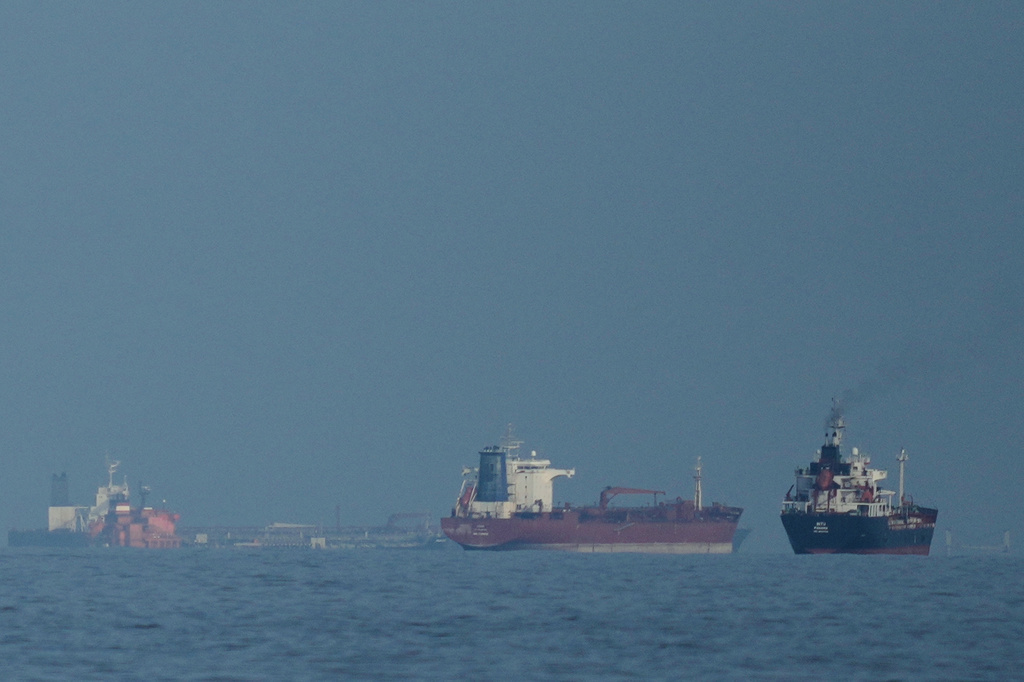
The air in the Strait of Hormuz doesn't move. It sits heavy, a thick soup of salt and humidity that sticks to your skin like a second layer of clothing. On the bridge of a Very Large Crude Carrier (VLCC) like the Falcon Spirit, the silence is heavy. This ship is a steel behemoth, nearly a quarter-mile long, carrying two million barrels of oil. Underneath the feet of the crew lies enough energy to power a small city for years, or to incinerate it in seconds.
To the north, the jagged, sun-bleached mountains of Iran’s Musandam Peninsula loom like teeth. To the south, the coast of Oman. Between them lies a narrow throat of water just 21 miles wide. This is the world’s most dangerous choke point. If the global economy has a jugular vein, you are looking at it.
A U.S. naval blockade here isn't just a military maneuver. It is a cardiac arrest for the modern world.
The Math of a Closed Throat
Every morning, the world wakes up and demands roughly 100 million barrels of oil. We don’t think about where it comes from until the lights flicker or the price at the pump jumps twenty cents overnight. But consider this: one-fifth of the world’s total petroleum consumption passes through this single, narrow gap.
When analysts talk about a blockade, they often use sterile language. They speak of "interrupted flows" and "supply-side shocks." What they mean is that the 20 or so tankers that navigate this passage every single day—each one a floating island of wealth—would suddenly have nowhere to go.
If the U.S. Navy moves to "close" Iran, the response is rarely a neat, surgical procedure. Iran’s military doctrine isn't built for a fair fight. They use "swarm" tactics—hundreds of fast-attack boats, sea mines hidden in the silt, and land-based anti-ship missiles tucked into those jagged coastal caves.
The Ghost in the Machine
Meet Elias. He’s a commodities trader in a glass tower in Singapore. He doesn't see the salt spray or hear the roar of the Falcon Spirit’s engines. He sees a flickering green line on a Bloomberg terminal.
To Elias, a blockade is a "risk premium." When the news breaks that a U.S. destroyer has intercepted an Iranian tanker, that green line doesn't just climb; it teleports. Oil is priced on the future. If the market even suspects the Strait might close, prices move before a single drop of oil is actually lost.
In a true blockade scenario, Brent crude wouldn't just hit $100. It would aim for $150, perhaps $200. We have seen this movie before, but never with the stakes this high. During the "Tanker War" of the 1980s, over 500 ships were attacked. Back then, the world had more spare capacity. Today, we live on a knife's edge.
The immediate result? Inflation that isn't just a headline—it’s a lifestyle change. It’s the trucker in Ohio who realizes he’s now paying $800 to fill his rig, making his delivery unprofitable. It’s the plastics manufacturer in Germany who sees his raw material costs triple in a week.
The Invisible Chains
We often mistake oil for just "gasoline." That is a dangerous oversimplification. Petroleum is the ghost in our machines. It is the feedstock for the fertilizer that grows our corn, the plastic in our heart valves, and the asphalt under our tires.
When the Strait of Hormuz is throttled, the ripple effect moves at the speed of light.
- Asian Dependence: China, India, Japan, and South Korea get the vast majority of their energy from this water. If the flow stops, the factories that build our iPhones and car parts go dark.
- The Insurance Nightmare: Even if a tanker could get through, no sane underwriter would insure it. The "war risk" premiums would become so high that shipping the oil would cost more than the oil itself.
- The SPR Illusion: The U.S. has the Strategic Petroleum Reserve, but it’s a band-aid for a compound fracture. It can stabilize things for a few months, but it cannot replace 20 million barrels a day indefinitely.
The U.S. Navy is the most powerful force on the planet, but water is a difficult thing to own. A blockade is a two-way street. By stopping Iran’s exports, the U.S. effectively dares Iran to stop everyone’s exports.
The Human Toll of High-Stakes Geometry
Imagine a family in a developing nation that relies on kerosene for cooking. When global oil prices spike because of a geopolitical chess move in the Persian Gulf, they aren't thinking about "regional hegemony." They are thinking about why they can only afford one meal today instead of three.
Energy security is social stability. When energy prices stay high for too long, governments fall. Riots break out. The "Arab Spring" was triggered as much by the price of bread—directly tied to the price of energy—as it was by a desire for democracy.
A blockade is an attempt to use gravity to stop a river. You can hold it back for a while, but the pressure builds. On one side, you have a nation desperate to survive under the weight of sanctions. On the other, a global superpower trying to maintain an order that is increasingly fragile.
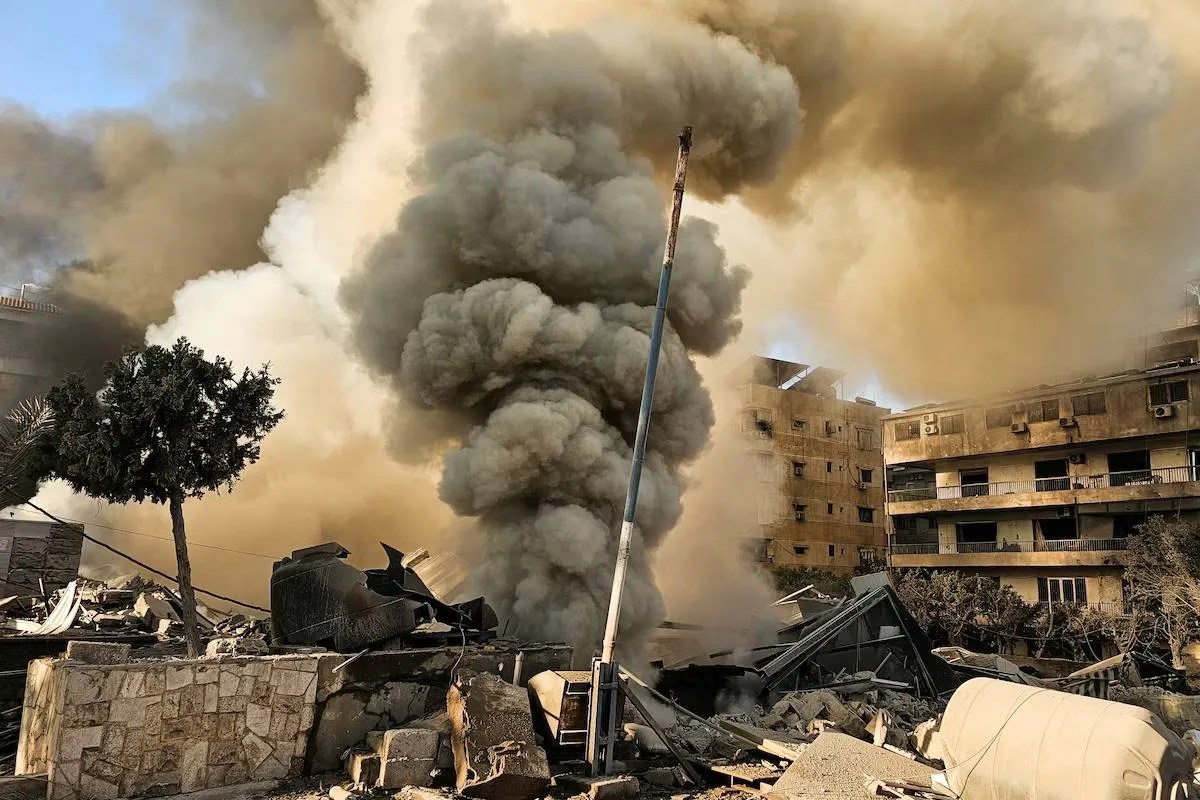
The sailors on those Iranian fast-boats and the midshipmen on the U.S. cruisers are often barely out of their teens. They are separated by a few miles of water and decades of mutual suspicion. One nervous finger on a trigger, one misidentified radar blip, and the "blockade" becomes a regional conflagration that no one knows how to put out.
The Fragility of the "Normal"
We live in a world designed for "just-in-time" efficiency. We don't keep stockpiles; we keep flows. Our entire civilization is built on the assumption that the 21 miles of the Strait of Hormuz will always be open.
But history is a graveyard of "unbreakable" assumptions.
If the U.S. chooses to close the door on Iran, it must be prepared for the fact that the door might stay shut for everyone. The physical blockade is made of steel and fire, but the economic blockade is made of fear. Fear is much harder to patrol.
As the sun sets over the Strait, the heat finally begins to break, replaced by a cooling wind that carries the scent of oil and old dust. The Falcon Spirit moves slowly, its wake trailing behind it like a long, dark ribbon. For now, the ribbon remains unbroken. For now, the lights in the cities across the horizon stay on.
But the silence in the Strait is never really quiet. It is the sound of a held breath.
One day, someone might finally exhale. And when they do, the world will find out exactly how much those 21 miles are worth.
The price won't be measured in dollars. It will be measured in what we are willing to lose to keep the machine running.