Pakistan is positioning itself as the unlikely pressure valve in the escalating friction between the United States and Iran. As the standoff between Washington and Tehran threatens to destabilize regional trade and energy security, Islamabad has formally proposed a second round of mediated talks to prevent a total diplomatic collapse. This isn't a gesture of pure altruism. Pakistan shares a porous 560-mile border with Iran and maintains a delicate, often strained, strategic partnership with the U.S. For Islamabad, a conflict next door is a direct threat to its own internal stability and its fragile economic recovery.
The proposal comes at a moment when traditional backchannels—often managed by Qatar or Oman—appear to be reaching their functional limits. By stepping into the fray, Pakistan is attempting to leverage its unique position as a nuclear-armed state that remains one of the few entities capable of talking to both the Iranian Revolutionary Guard and the Pentagon without an immediate wall of hostility. Recently making headlines in related news: Why Brazil’s Fugitive Spy Chief is Finally in Hand.
The Geography of Desperation
To understand why Pakistan is pushing for these talks, you have to look at the map. Islamabad is currently caught in a vice. On one side, it faces immense pressure from the U.S. to curb any cooperation with Iran that might violate international sanctions. On the other, it desperately needs the long-delayed Iran-Pakistan gas pipeline to solve a crippling energy deficit that triggers rolling blackouts across its industrial hubs.
The "standoff" isn't just about rhetoric or nuclear enrichment levels. It is about physical infrastructure. Pakistan recently received a final notice from Tehran regarding the pipeline project; failing to complete its side of the construction could result in billions of dollars in penalties. However, building that pipeline triggers "secondary sanctions" from the U.S. Treasury. By proposing a second round of talks, Pakistan is trying to create a diplomatic window where it can negotiate a sanctions waiver under the guise of regional de-escalation. Additional details on this are covered by Associated Press.
Why the First Round Failed
The previous attempts at mediation were hamstrung by a lack of transparency and shifting goalposts. Washington remains hyper-focused on Iran’s proxy networks and drone technology exports, while Tehran refuses to return to the 2015 nuclear framework without significant, upfront sanctions relief.
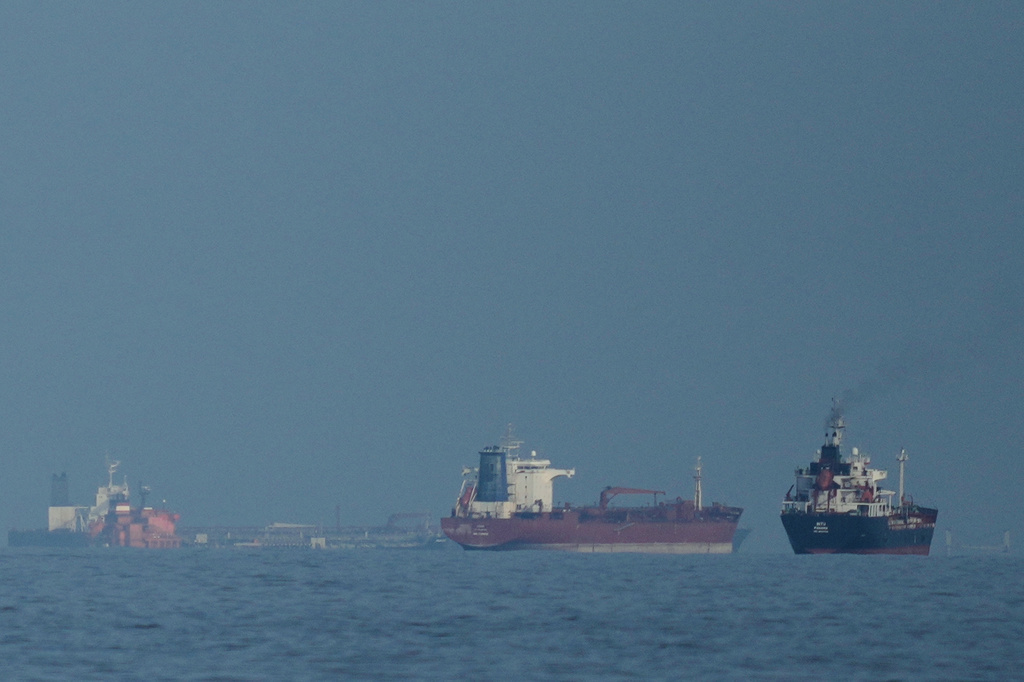
Pakistan's new pitch differs because it focuses on compartmentalized security. Rather than trying to solve the entire nuclear puzzle—a task that has exhausted the world’s best diplomats for two decades—Islamabad is suggesting a focus on maritime security and border stability. This is the "low-hanging fruit" strategy. If the two sides can agree on basic rules of engagement in the Strait of Hormuz, it creates a foundation of trust that doesn't exist today.
The Saudi Factor
No diplomatic move in this region happens in a vacuum. Pakistan is heavily indebted to Saudi Arabia, which has historically viewed Iranian influence with deep suspicion. However, the recent Chinese-brokered normalization between Riyadh and Tehran has changed the math. Islamabad now feels it has the "green light" from its Gulf creditors to engage with Iran more openly.
This shift is crucial. In the past, if Pakistan moved too close to Iran, Saudi financial support would vanish. Now, with the Riyadh-Tehran relationship in a state of "cold peace," Pakistan can act as a bridge without fear of immediate bankruptcy. This isn't just about peace; it’s about the re-alignment of the Middle East and South Asia’s economic corridors.
Technological Warfare and the New Battlefield
The standoff has moved beyond traditional naval posturing. We are now seeing a sophisticated layer of cyber warfare and electronic interference that complicates any mediation effort. Iran has significantly advanced its electronic warfare capabilities, often testing them on the fringes of Pakistani airspace and waters.
When Pakistan proposes "talks," they aren't just talking about diplomats in suits sitting around a mahogany table. They are proposing a framework for de-conflicting automated systems. The risk of an accidental war triggered by an autonomous drone or a spoofed GPS signal is at an all-time high. A secondary round of talks would likely need to include technical experts who understand how to prevent a digital glitch from becoming a kinetic explosion.
The Pentagon’s Quiet Calculus
Behind the public-facing skepticism, there is a faction within the U.S. Department of Defense that sees value in Pakistan’s offer. The U.S. is currently overextended. With resources diverted to Eastern Europe and the South China Sea, the last thing the Pentagon wants is a full-scale conflagration in the Persian Gulf.
Using Pakistan as a "messenger" allows the U.S. to maintain its "maximum pressure" public stance while checking the pulse of the Iranian leadership. It provides deniability. If the talks fail, the U.S. can blame Pakistani ineptitude or Iranian stubbornness. If they succeed, even marginally, it reduces the immediate need for a larger American troop presence in the region.
The Internal Pakistani Risk
This isn't a risk-free maneuver for Islamabad. Domestically, the Pakistani government is facing intense polarization. Any perception that the military establishment is "doing the bidding" of Washington can trigger protests from hardline religious factions who are ideologically aligned with Tehran’s anti-Western stance.
Conversely, if Pakistan appears too cozy with Iran, it risks losing the military aid and IMF support that keeps its economy breathing. It is a high-wire act performed over a pit of fire. The "second round" of talks is, in many ways, a survival mechanism for the Pakistani state itself.
The Failure of Traditional Diplomacy
Modern diplomacy is often too slow for the pace of modern conflict. The reason previous talks stalled is that they relied on "strategic patience," a luxury that neither the starving Pakistani economy nor the embattled Iranian leadership possesses. Islamabad is pushing for a fast-track verification process. They want clear, actionable steps:
- A temporary freeze on specific enrichment activities in exchange for limited humanitarian trade channels.
- A formal "hotline" between the U.S. Fifth Fleet and Iranian naval commanders to prevent mid-sea collisions.
- The establishment of a neutral "buffer zone" for trade that is exempt from the most stringent sanctions.
The Role of China
Beijing is the silent partner in this proposal. As Pakistan’s primary investor and a major buyer of Iranian oil, China has a vested interest in seeing this standoff de-escalate. Much of the "originality" in Pakistan’s proposal likely has fingerprints from Beijing. China prefers a stable environment for its Belt and Road Initiative (BRI) projects, and the Iran-Pakistan-China axis is a logical extension of that goal.
By having Pakistan lead the talks, China avoids a direct diplomatic confrontation with the U.S. while still steering the outcome toward regional integration. If Pakistan succeeds, it reinforces the idea that the "Eastern" way of resolving conflict—focused on trade and infrastructure rather than human rights and political reform—is the new standard.
The Nuclear Shadow
We cannot ignore the reality of the nuclear threshold. Iran is closer to weapons-grade material than ever before. Pakistan, already a nuclear power, understands the weight of this status better than most. Part of the Pakistani pitch is a "lessons learned" exchange. Islamabad can provide a perspective on nuclear signaling and deterrence that Western powers cannot. They have lived through decades of nuclear tension with India without a full-scale launch. That specific, "weary" expertise is what they are bringing to the table.
A Fragile Window of Opportunity
The standoff has deepened because both sides feel that "winning" is still possible through attrition. The U.S. thinks Iran will collapse under economic weight; Iran thinks the U.S. will eventually tire of the Middle East and leave. Both are likely wrong.
Pakistan’s proposal is a reality check. It is an admission that neither side is going to disappear, and the cost of the status quo is becoming higher than the cost of compromise. The "second round" isn't about friendship; it's about calculated coexistence.
The success of this gambit depends entirely on whether Washington is willing to view Pakistan as a legitimate partner rather than a transactional tool. For years, the U.S.-Pakistan relationship has been defined by "do more" demands from the American side. Now, Pakistan is the one asking the U.S. to "do more" for the sake of global energy prices and regional peace.
If these talks don't materialize within the next six months, the momentum will shift toward kinetic options. The window for a "negotiated standoff" is closing as Iran's domestic hardliners gain more influence and the U.S. enters a volatile election cycle where "being tough on Iran" is a mandatory political posture.
The move by Islamabad is a desperate, necessary attempt to rewrite a script that currently ends in a regional war that no one—not even the primary antagonists—can actually afford to win. Investors and geopolitical analysts should watch the frequency of diplomatic shuttles between Islamabad and Tehran; that is the real-time barometer of whether this gamble has a chance.
The next few weeks will determine if this is a genuine breakthrough or just another footnote in the long history of failed Middle Eastern diplomacy. If the U.S. State Department sends even a mid-level delegation to Islamabad to discuss the proposal, it's a sign the "maximum pressure" campaign is looking for an exit ramp.