The air inside Bahrain International Airport has a specific, synthetic chill. It is the smell of industrial-grade recycled oxygen mixed with the faint, lingering scent of expensive duty-free oud and the sweat of people who have forgotten what a bed feels like. Under the fluorescent hum of the terminal lights, time doesn't just pass; it dissolves.
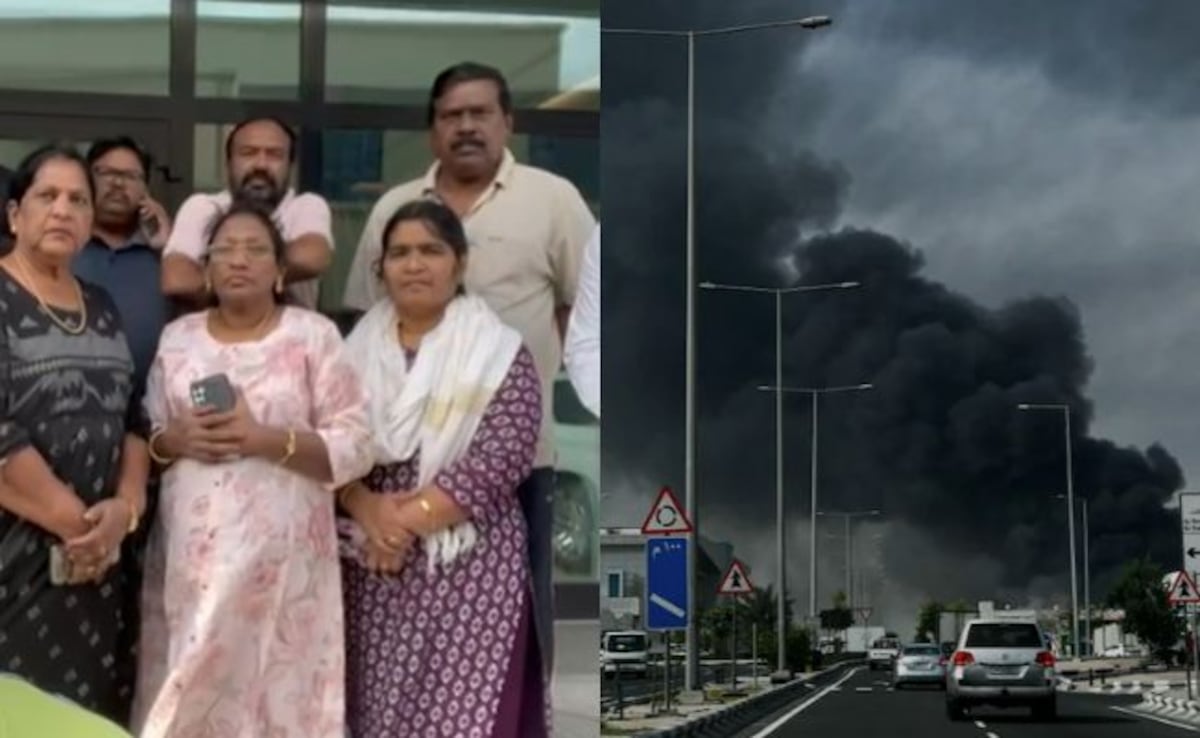
Rohan checks his phone for the fiftieth time. The screen brightness bleeds into the dimming hope in his eyes. He isn't supposed to be here. He was supposed to be in Mumbai by now, eating home-cooked dal and complaining about the humidity. Instead, he is a ghost in a luxury transit lounge, one of hundreds of Indian travelers caught in a geopolitical tectonic shift they didn't see coming.
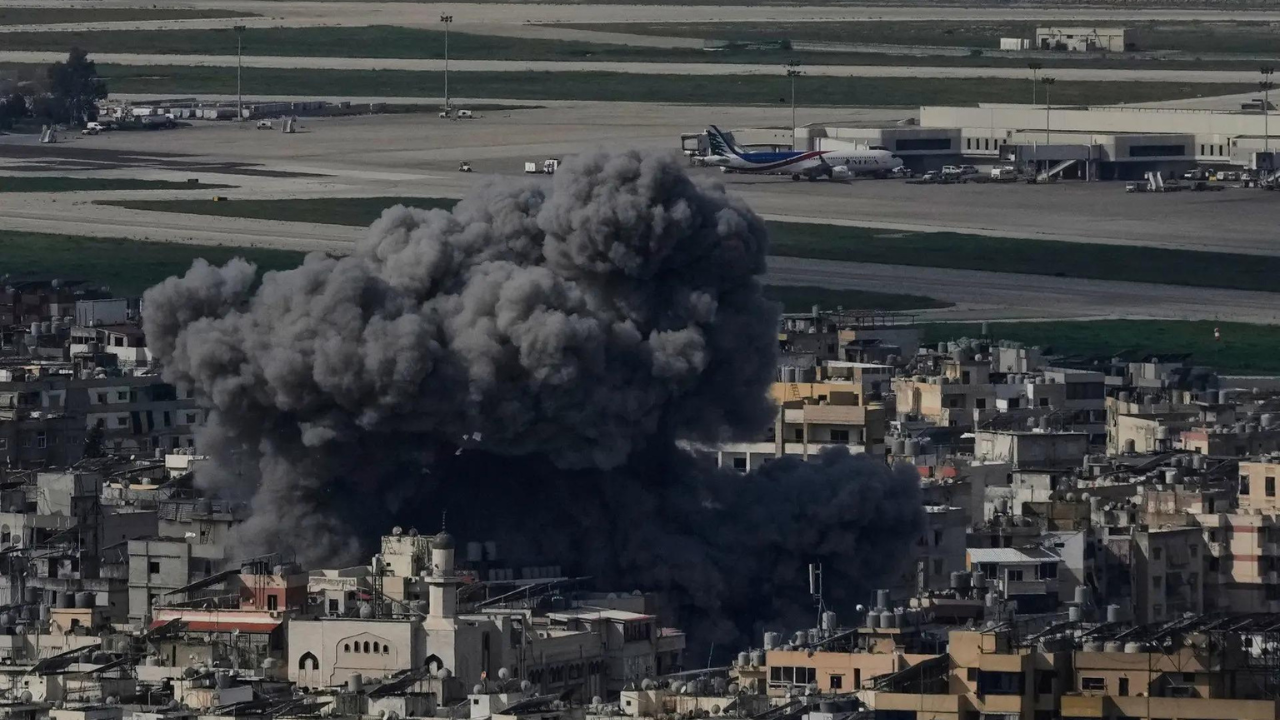
When the missiles began to arch across the Middle Eastern sky, the world didn't stop, but the flight paths did.
The Geography of a Nightmare
War is often discussed in the abstract—maps with red arrows, defense budgets, and televised punditry. But for the traveler stranded in a transit hub, war is the sound of a "Delayed" status flipping to "Cancelled" on a digital board. It is the realization that the patch of blue sky you need to fly through has become a corridor of fire.
The conflict between Iran and regional forces has effectively cauterized the arteries of global travel. Bahrain, usually a glittering stepping stone between the West and the East, suddenly became a dead end. For the Indian diaspora and tourists returning from Europe or the Americas, the island nation turned from a layover into a limbo.
Consider the logistics of a sudden grounding. An airline is a finely tuned machine of moving parts. When a hub like Manama fills up with passengers who cannot leave, the system doesn't just slow down—it chokes. Hotels within the city limits reached capacity within hours. Those left behind were relegated to the linoleum floors of the departure gates.
The Human Cost of High-Altitude Politics
Metaphors about "being caught in the crossfire" feel a lot less poetic when you are washing your face in a public restroom sink for the third day in a row.
Take the hypothetical, yet statistically representative, case of the Iyer family. They were returning from a two-week vacation in London—a trip saved for over five years. Now, they sit on a pile of quilted coats near Gate 14. Their youngest child is crying because the only food available in the immediate vicinity is overpriced sliders and bags of pretzels. Their credit cards are flagging "unusual activity" because of the repeated, desperate attempts to book alternative routes through Muscat or Abu Dhabi.
The "Condition" reported by these travelers isn't just about physical discomfort. It is the psychological erosion of being a guest who is no longer welcome but cannot leave.
The Indian Embassy is working. Phones are ringing. But diplomacy moves at the speed of ink, while a traveler's sanity moves at the speed of a ticking clock. There is a profound vulnerability in being a citizen of a country that is thousands of miles away while the airspace between you and home is a literal battleground.
The Invisible Stakes
Why does this matter to someone sitting comfortably in an armchair in Delhi or Bangalore? Because the stranded in Bahrain are the canaries in the coal mine for the modern age of connectivity.
We live in a world built on the assumption of friction-less movement. We book tickets with a tap, assuming the sky is a neutral, eternal highway. We forget that the "Open Skies" policy is a fragile agreement between volatile neighbors. When a regional power decides to settle a score, the first thing to die isn't just peace—it is the certainty of the return journey.
Statistics tell us that over 3,000 Indian nationals found themselves displaced in various Gulf hubs during the initial escalation. That is 3,000 missed weddings, 3,000 expired work visas, 3,000 families wondering if the next headline will mean their loved ones are coming home or moving to a makeshift shelter.
The logic of the situation is cold. Airlines cannot fly into a zone where GPS jamming is rampant and anti-aircraft batteries are twitchy. To do so would be to invite another tragedy. So, the planes stay on the tarmac. The passengers stay in the terminal. The stalemate continues.
The Weight of the Wait
Night falls over the Persian Gulf. Outside the terminal’s massive glass panes, the distant lights of Manama flicker. Inside, the noise level drops to a weary murmur.
There is a specific kind of camaraderie that forms in these moments. Strangers share portable chargers. A group of students from Kerala shares a large bag of chips with an elderly couple from Punjab. In the absence of information from the flight carriers, rumors become the primary currency. I heard Air India is sending a special charter. I heard the airspace opens at dawn. I heard the war is over.
None of it is true, but it helps the hours pass.
The reality is that these travelers are experiencing the "Terrible Condition" of being collateral data points. They are the human friction in a world of high-velocity conflict. Their struggle is not just with the lack of blankets or the quality of airport food; it is with the terrifying realization that they are entirely at the mercy of forces that do not know their names and do not care about their destinations.
As the sun begins to bleed over the horizon, painting the Bahraini desert in shades of bruised purple and orange, Rohan looks out at the runway. A lone jet sits fueled and ready, but the engines are silent. The sky is empty, beautiful, and utterly impassable.
He adjusts his makeshift pillow—a backpack containing everything he owns in this moment—and prepares for another day of being nowhere.
The boarding call never comes. Only the silence of a sky that has forgotten how to be a bridge.