Oil markets don't care about "potential" anymore. They're reacting to the cold, hard reality of missiles hitting steel. On Monday, March 2, 2026, Brent crude futures didn't just drift upward—they exploded, jumping as much as 13% in early trading to hit $82.37. This is the highest we've seen since early 2025, and it’s a direct response to the US and Israeli strikes on Iran that have effectively turned the world’s most important energy chokepoint into a no-go zone.
If you’re looking at your gas receipt and wondering why it’s suddenly more expensive, look at the narrow 21-mile wide strip of water between Oman and Iran. Roughly 20% of the world's oil flows through the Strait of Hormuz. That’s 15 to 20 million barrels every single day. When Tehran signals that "no ship will be allowed to pass," the global economy doesn't just flinch—it goes into a defensive crouch.
The Chokepoint Reality Check
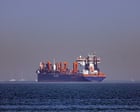
Forget the theoretical models for a second. We’re seeing physical supply at risk. Over 150 tankers, carrying everything from crude oil to Liquified Natural Gas (LNG), are currently sitting at anchor in open waters. They’re stuck. Captains are refusing to enter the Strait, and insurance companies are either hiking "war risk" premiums to astronomical levels or pulling coverage entirely.
The Strait of Hormuz is unique because there’s no real Plan B. Sure, Saudi Arabia has the East-West Pipeline and the UAE has the Fujairah line, but combined they can only handle about 6.5 million barrels per day. That’s less than a third of the typical volume moving through the water. If the Strait stays closed, those pipelines are like trying to put out a forest fire with a garden hose.
Who Gets Hit the Hardest
This isn't just a Middle Eastern problem or a US problem. It's an Asian energy crisis in the making.
- China and India: These two are the biggest buyers of crude moving through the Strait. India gets about 40% of its crude from this route. For every $1 increase in oil prices, India’s annual import bill jumps by $2 billion.
- Japan and South Korea: They're almost entirely dependent on these shipments. If the tankers stop moving, their economies start a countdown toward a hard landing.
Why the Market is Different Now
Last year in June 2025, we saw symbolic strikes and warnings that led to a spike and then a quick recovery. This time, the Supreme Leader, Ayatollah Ali Khamenei, was killed in US-Israeli strikes on Saturday. That’s a massive escalation. We’re not talking about symbolic gestures anymore—we’re talking about a hot war.
OPEC+ countries, including Russia, met on Sunday and agreed to a modest production increase of 206,000 barrels per day for April. That’s basically nothing. It’s a drop in the ocean when 15 million barrels are blocked. The market knows this. That’s why Brent crude hit $82.37 on Monday even with the OPEC+ announcement.
The Hidden Threat to Natural Gas
While everyone is staring at oil prices, the LNG market is also screaming. Roughly 20% of global LNG trade, mostly from Qatar, transits the Strait. If you're in Europe or Asia and rely on gas to heat your home or run your factory, you're looking at a supply chain that just got severed.
The Dutch TTF front-month gas prices could soar above €90/MWh if Qatari exports are removed from the global balance. This is the kind of shock that creates structural inflation, not just a temporary blip at the gas pump.
What it Means for You and Your Portfolio
Don't wait for the official GDP numbers to tell you there's a problem. Look at the shipping routes. Maersk has already halted all passage through the Strait and the Suez Canal. When the world's shipping giants start rerouting around the Cape of Good Hope, you're looking at an extra 15 days of sailing time. That adds cost to everything—from the electronics in your pocket to the food on your table.
If you’re managing investments, here’s the reality:
- Energy Stocks: Upstream producers like ONGC and Oil India are likely to see gains, but oil marketing companies are going to get crushed by margin compression.
- Inflation is Back: Any hope of inflation easing in 2026 just took a direct hit. High oil prices feed into transportation and manufacturing costs within weeks.
- Currency Pressure: For major importers like India, the Rupee is facing a massive depreciation bias. The central banks are going to have to burn through foreign exchange reserves to keep things stable.
The next 48 to 72 hours are critical. Whether Tehran escalates or seeks a de-escalation path will determine if this $82 price point is the new floor or just a temporary peak. But given the intensity of the strikes and the targeting of senior leadership, don't expect a quick return to the $67 levels we saw last Friday.
Watch the tanker tracking data. If those 150+ ships at anchor don't start moving by Wednesday, we’re looking at $100+ oil by the end of the month.