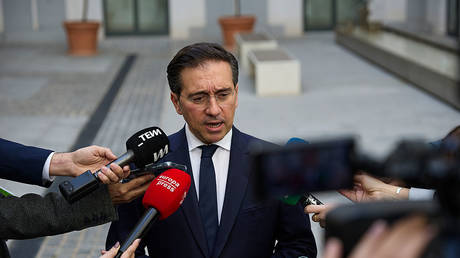
Germany is acting like the strict parent of the European Union again, and Spain has had enough. The recent friction between Madrid and Berlin isn't just a minor diplomatic spat. It's a fundamental clash over what it means to be a "union" when things get ugly. When Spanish officials recently rebuked Germany for its perceived lack of solidarity, they weren't just venting. They were pointing out a structural flaw in how the Eurozone operates during a crisis.
The tension centers on a simple, recurring theme. Germany wants rules. Spain wants results. For years, the German government has leaned on a "me first" policy regarding energy and fiscal stability, often expecting Southern Europe to pick up the slack or tighten their belts. But the tide is turning. Madrid is now leading a vocal group of nations that refuse to be lectured by a Berlin administration that frequently prioritizes its own industrial needs over the collective health of the EU. Read more on a similar topic: this related article.
The Energy Disconnect that Broke the Silence
The spark for this latest round of criticism was energy. For decades, Germany built its economic powerhouse on the back of cheap Russian gas. It was a gamble that failed spectacularly. When the supply vanished, Berlin's first instinct wasn't to look for a communal European solution. Instead, it moved to protect its own manufacturers with massive subsidies that smaller or less wealthy nations simply couldn't match.
Spain’s Minister for Ecological Transition, Teresa Ribera, didn't hold back. She made it clear that asking Spanish citizens to sacrifice—after Spain had invested heavily in its own diversified energy infrastructure—to bail out German industrial mistakes wasn't going to fly. Spain spent years building LNG terminals and renewable grids. Germany ignored those warnings and stayed hooked on Nord Stream. Now, the bill is due. More analysis by TIME highlights related views on this issue.
This isn't just about gas. It's about fairness. If the EU is a single market, one country can't just dump billions into its own companies while telling others to follow strict austerity rules. That’s not a partnership. It’s a hierarchy. Spain is effectively saying the era of following Berlin’s lead without question is over.
Why the Solidarity Snub Matters for the Eurozone
You have to look at the history to see why this hurts so much. During the financial crisis a decade ago, the "PIGS" (Portugal, Italy, Greece, Spain) were dragged through the mud. They were told their laziness and lack of fiscal discipline caused the crash. They were forced into brutal austerity measures that gutted their healthcare and education systems.
Now, the shoes are on the other feet. Germany is the "sick man of Europe" again, facing a recession and a crumbling industrial model. Yet, instead of the humility they demanded from the South in 2012, we see a defensive Berlin. They’re dragging their feet on common debt and energy caps.
- Financial asymmetry: Germany has the fiscal space to spend 200 billion euros on energy subsidies. Spain doesn't.
- Infrastructure disparity: Spain has the highest regasification capacity in Europe.
- Political shift: The current Spanish government feels empowered to lead the "Mediterranean bloc" against Northern frugality.
Spain isn't just complaining. They're proposing a different way. They want a more integrated energy market and a permanent version of the pandemic recovery funds. They want a Europe where the risks are shared because the benefits are shared. Berlin's hesitation looks less like "prudence" and more like "protectionism" to the rest of the continent.
The Myth of German Fiscal Superiority
We've been told for years that Germany is the adult in the room. But look at the data. Their refusal to invest in their own infrastructure—bridges, railways, and internet—has left them vulnerable. Their "debt brake" law, once hailed as a masterpiece of stability, is now an anchor dragging down the entire EU economy.
Spain’s economy has actually been outperforming Germany's in terms of growth recently. Madrid has shown that you can invest in green energy and social safety nets while still maintaining a functioning economy. When Spain rebukes Germany, they're doing it from a position of growing confidence. They've done the work. They've modernized. They're tired of being treated like the junior partner.
The German "solidarity snub" usually takes the form of silence. They don't say "no" immediately; they just wait and hope the problem goes away or that they can find a bilateral deal that favors them. But with the war in Ukraine and the shift toward a greener economy, the problems aren't going away.
What Spain Wants From Berlin Now
It’s not complicated. Spain wants three things. First, a real commitment to a European Energy Union that doesn't rely on one country's whims. Second, a rethink of the fiscal rules that prevent countries from investing in their future. Third, an acknowledgment that the "South" has a lot to teach the "North" about resilience.
If Germany continues to prioritize its domestic political optics over the survival of the European project, the resentment will grow. We're already seeing it in the polls across the continent. When the biggest economy in the room acts selfishly, it gives every populist and Euroskeptic exactly the fuel they need.
Moving Past the Blame Game
Stop thinking of this as a "fight." Think of it as a necessary correction. For the EU to survive the next decade, the power balance has to shift. The Franco-German engine is sputtering. Spain, Italy, and Poland are becoming the new centers of gravity.
If you're watching this play out, don't just look at the headlines about "rebukes." Look at the policy shifts. Watch how the European Commission handles state aid rules. If Germany is allowed to keep subsidizing its industry while others can't, the single market is dead. Spain knows this. They're shouting because the house is on fire and the guy with the extinguisher is busy polishing his own furniture.
Germany needs to realize that its prosperity is tied to a stable, happy Europe. You can't be a wealthy exporter if your neighbors can't afford your goods or if they're too busy dealing with energy blackouts. True solidarity means taking a hit for the team occasionally. Spain did it for years. Now it's Germany's turn to step up.
Get familiar with the European Gas Demand Reduction Plan and the ongoing debates over the "Green Deal Industrial Plan." These aren't just dry documents. They're the battlegrounds where this argument is being settled. If you want to see where Europe is headed, stop looking at Berlin and start looking at the Mediterranean. The South is no longer taking orders.