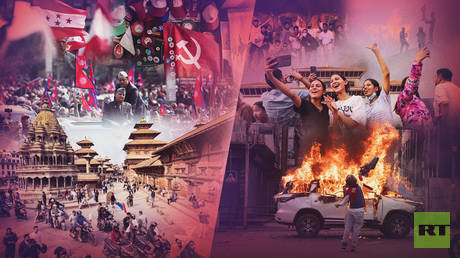
Nepal’s political veterans are shaking. The men who spent decades hiding in jungles, leading Maoist insurgencies, and orchestrating street protests to topple a monarchy now find themselves looking like the very relics they once replaced. People are tired. They're tired of the same three or four faces playing musical chairs with the Prime Minister’s seat while the economy stagnates and the youth flee to the Gulf for work.
The shift from violent revolt to the ballot box was supposed to be the end of the story. It was the victory of democracy. But in 2026, that democracy feels hollow to a generation that doesn't care about who carried a gun in 1996. They care about high-speed internet, jobs in Kathmandu, and an end to the "revolving door" coalitions that change governments every eighteen months. This frustration has carved out a massive space for a new brand of populist leaders who trade in TikTok clips rather than revolutionary manifestos.
The failure of the revolutionary promise
The old guard—specifically leaders from the Nepali Congress (NC), the CPN-UML, and the Maoist Center—rely on their "struggle credentials." They constantly remind voters how they suffered in prison or fought in the mountains to bring about the Federal Democratic Republic of Nepal. It worked for a while. It doesn't anymore.
The 2006 Comprehensive Peace Accord ended a decade of civil war that claimed over 17,000 lives. It was a massive historical pivot. Yet, the peace dividend never really trickled down to the average family in a village outside Pokhara or a worker in a Biratnagar factory. What happened instead was the solidification of a "syndicate" of powerful political bosses. They've spent twenty years dividing the spoils of the state, from administrative posts to development contracts.
Younger voters look at these leaders and see a generation that knows how to destroy an old system but has no clue how to build a modern one. They see a country where 1,500 people leave every single day through Tribhuvan International Airport to work abroad because there's nothing for them at home. That's not just a statistic. That's a national tragedy that the old guard ignores at their peril.
Populism is more than just a trend
The rise of the Rastriya Swatantra Party (RSP) and various independent local leaders like Balen Shah in Kathmandu isn't a fluke. It's a calculated rejection of the status quo. These figures don't talk about "dialectical materialism" or "democratic socialism." They talk about cleaning up trash, digitalizing government services, and ending the blatant corruption that makes getting a driver’s license an all-day ordeal.
Ravi Lamichhane, despite his legal controversies, tapped into something primal: the desire for an outsider to burn the house down. His rise was fueled by media savvy and a relentless focus on the day-to-day misery of the common citizen. It's a classic populist playbook, and it's working because the traditional parties forgot how to talk to people who weren't already on their payroll.
Why the old guard's playbook is broken
The big three parties—NC, UML, and the Maoists—all follow the same tired script. They hold massive "mass meetings" that require bussing in supporters from across the country. They make grand promises about railways to Tibet or hydropower booms that never quite materialize.
Then there's the internal rot. These parties aren't democratic. They're personality cults. Decisions are made in "smoke-filled rooms" by a handful of elderly men who've held onto power since the late 1980s. There's no room for fresh blood. If you're a talented 30-year-old with ideas for urban planning, you're expected to spend fifteen years as a "student leader" before you're even considered for a minor local ticket.
The populists changed the game by bypassing the party machinery. They went straight to the smartphone. In a country where internet penetration is skyrocketing, a viral clip of a mayor shouting at a corrupt contractor carries more weight than a three-hour speech about the 1990 People's Movement.
The migration crisis is the real fuel
If you want to understand why the old guard is in trouble, look at the remitted money flowing into Nepal. Remittances account for roughly 25% of the GDP. This is basically the "export" of Nepal’s most valuable resource: its youth.
When these workers go to Dubai, Seoul, or Doha, they see what a functional (even if non-democratic) state looks like. They see roads that work, hospitals that aren't falling apart, and bureaucracies that aren't fueled by bribes. They come back or they call home, and they're angry. They ask why Nepal, with its massive water resources and tourism potential, remains one of the poorest countries in South Asia.
The old guard's failure to create jobs isn't just an economic mistake. It's an existential threat to their power. The populists know this. They've framed themselves as the party of the "aspirational class," the people who want to stay in Nepal and build something. They've successfully linked the old guard to the "failure of the state," making the veterans look like guardians of a sinking ship.
The king factor and the return of the right
There’s another twist in this populist surge. It’s not just the "modernizers" like the RSP. There’s a growing, vocal movement calling for the restoration of the Hindu monarchy. The Rastriya Prajatantra Party (RPP) has seen a resurgence in support by suggesting that the 2008 move to a republic was a mistake that only brought instability.
To many, especially in the older generation or conservative rural areas, the monarchy represents a lost era of "national unity." It's a nostalgic populism. It’s a reaction to the messy, often corrupt reality of the federal republic. While it’s unlikely that Nepal will return to an absolute monarchy, the fact that the idea is even being discussed shows how badly the current leaders have fumbled the transition.
The local vs federal divide
One of the few bright spots in Nepal’s 2015 Constitution was the decentralization of power. Local governments now have real authority. This is where the old guard is truly losing the fight.
Independent mayors like Balen Shah in Kathmandu or Harka Sampang in Dharan have shown that you can get things done without a party flag. They focus on local pride, infrastructure, and transparency. Their success has created a blueprint for other independents. If you can fix the water problem in your town, people don't care if you don't have a history of fighting the police in the 90s.
The traditional parties are terrified of this. They've tried to block these independent leaders at every turn, which only makes them more popular. It reinforces the narrative that the "system" is rigged against anyone who actually wants to help.
A collision course in 2026 and beyond
We're headed for a massive reckoning in the next general election. The old guard still has the ground-level "cadre" strength. They have the unions, the local committees, and the deep pockets. But they're losing the narrative.
The Maoists, in particular, are in a tailspin. Pushpa Kamal Dahal (Prachanda) has gone from being a revolutionary firebrand to a master of the "backroom deal." Every time he switches sides to stay in power, his core message of social transformation dies a little more. The UML and NC aren't faring much better. They're seen as two sides of the same coin—conservative, elderly, and out of touch.
The challenge for the new populists is to prove they can actually govern. Winning a mayor's seat or a few seats in Parliament is one thing. Running a country with complex geopolitical pressures from India and China is another. If the populists win and fail to deliver, the cynicism in Nepal will reach a breaking point.
What happens if nothing changes
If the old guard manages to cling to power through more "unholy alliances" and coalition gymnastics, the exodus of youth will only accelerate. The brain drain will become a ghost town effect in many rural areas.
The political instability we see now is just a symptom of a deeper crisis of legitimacy. The republic was supposed to be "for the people," but it currently feels like it's "for the politicians." Until the parties reform from within—meaning real internal elections, age limits, and actual policy platforms—they'll continue to bleed support to anyone who promises to tear the whole thing down.
Actions to take for a more stable Nepal
If you're following the situation in South Asia, pay attention to these markers of change:
- Track the local by-elections: Watch if independents continue to snatch seats from the major parties. This is the best indicator of the public mood.
- Watch the Election Commission’s updates: Monitor the registration of new, smaller parties. The fragmentation of the vote favors the populists.
- Follow the migration data: If the number of young people leaving doesn't start to drop, the pressure on the government will become unsustainable.
- Look for internal party revolts: Keep an eye on the "second-tier" leaders in the NC and UML. If they don't break away or force the veterans out soon, their parties might face a complete collapse in the next decade.
The old guard can't live on past glories forever. A revolution is only as good as the life it provides afterward. For millions of Nepalis, that life hasn't arrived yet. They're done waiting.