The headlines are predictable. A Member of Parliament stands near a river, points at a discharge pipe, and declares that raw sewage is the primary executioner of the Atlantic salmon. It is a convenient narrative. It’s easy to film. It’s even easier to fundraise against.
It’s also mostly wrong.
If you believe that simply stopping "spills" will bring the salmon back to their Victorian-era glory, you have been sold a sedative. You are focusing on the visible grime while the ecosystem dies from invisible, systemic mismanagement that has nothing to do with what you flush down your toilet.
The obsession with Storm Overflows (SOs) is a classic case of looking for your keys under the streetlight because that’s where the light is. In reality, the keys are deep in the woods, buried under decades of agricultural runoff, thermal pollution, and a fundamental misunderstanding of river chemistry.
The Phosphorus Paradox
Most people view sewage as a toxic sludge of chemicals. In reality, the most "dangerous" thing in human waste for a river is phosphorus. High levels of phosphorus lead to eutrophication—algal blooms that suck the oxygen out of the water and suffocate fish.
But here is the data point the MP won’t tell you: In many UK river catchments, treated effluent from "functional" sewage works contributes far more phosphorus over a 365-day cycle than the occasional headline-grabbing storm spill. Even worse? Both of those sources are frequently dwarfed by agricultural runoff.
I have spent years analyzing river sensors. You can spend £20 billion "fixing" every storm overflow in the country, and if the local dairy farm is still leaking slurry and the arable farm is still dumping nitrogen-heavy fertilizer, the salmon will still die. We are hyper-focusing on a 5% problem because the 60% problem—industrial farming—is politically untouchable.
The Math of Mortality
Let’s look at the actual biological stressors on Salmo salar.
- Thermal Stress: Salmon are cold-water specialists. Thanks to the removal of bankside vegetation (to make room for more grazing or "tidy" riverbanks), river temperatures are spiking. A salmon can survive a temporary dip in water quality. It cannot survive its blood reaching $25°C$.
- Siltation: This is the silent killer. Intensive farming and construction send fine sediment into the gravel beds where salmon spawn. It smothers the eggs. The "clean" water flowing over the top is irrelevant if the cradle is full of mud.
- Endocrine Disruption: This is where the sewage argument actually has teeth, but not in the way the activists think. It isn't the "spills" that are the issue; it's the constant, "legal" discharge of treated water. Our current treatment plants are not designed to filter out birth control hormones, antidepressants, and beta-blockers. We are chemically castrating fish populations 24/7, even when the water looks crystal clear.
The Infrastructure Lie
The public outcry demands we "separate the sewers." This sounds logical. Create one pipe for rainwater and one for sewage.
I’ve seen the engineering estimates for this. To retroactively separate the combined sewer system of a city like London or Manchester would require ripping up every single street, reconnecting every single house, and spending hundreds of billions. It is a century-long project.
If we follow the MP's logic, we will spend the next fifty years digging holes in the road to prevent a few days of spill-over, while the salmon go extinct in the next ten. It is a misallocation of capital so profound it borders on criminal negligence.
Nature Doesn't Want a Sterile River
Here is the contrarian truth: A river with zero organic input is a desert.
The historical abundance of salmon coincided with rivers that were messy. They had fallen trees, beaver dams, and, yes, organic matter. By trying to turn our rivers into sterile, concrete-lined flumes that whisk water to the sea as fast as possible, we have destroyed the "nursery" habitat.
We don't need "cleaner" water as much as we need "slower" water.
- The "Clean" Trap: If you remove all nutrients from a river, the base of the food chain (macroinvertebrates) collapses.
- The Velocity Problem: Modern drainage ensures that when it rains, water hits the river instantly. This creates "spate" conditions that wash away juvenile fish and destroy the riverbed.
Stop Protesting the Pipes and Start Planting the Banks
If you actually care about salmon, stop tweeting about water companies for a second and look at the shade.
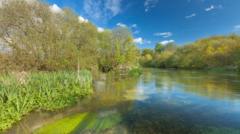
A river without trees is a dying river. Riparian shading can drop water temperatures by several degrees—the difference between life and death for a smolt. Furthermore, root systems act as the ultimate filter for the very "sewage" pollutants people are so worried about.
We are trying to solve a biological problem with civil engineering. It’s like trying to fix a heart arrhythmia by repaving your driveway.
Why My Approach is Unpopular
I’ll admit the downside: My solution requires telling people things they don't want to hear.
- To the Environmentalist: You have to stop hating the water companies long enough to realize that the local farmer’s "unregulated" runoff is the bigger villain.
- To the Taxpayer: Your water bills are too low. If you want a 21st-century treatment system that filters out your Prozac and Estrogen, you’re going to have to pay for it.
- To the MP: You need to stop using the "sewage" buzzword to get votes and start talking about land-use reform, which is boring, complex, and pisses off the powerful farming lobby.
The Brutal Reality of "People Also Ask"
"Is it safe to swim in rivers with sewage?"
Usually, no. But not just because of the sewage. You’re also swimming in leptospirosis (rat urine), heavy metal runoff from roads, and agricultural chemicals. Focusing only on the E. coli from a spill is like worrying about a papercut while standing in a house fire.
"Can salmon populations recover?"
Not with the current strategy. We are obsessed with "stocking"—dumping hatchery fish into the river. This is the equivalent of trying to fix a declining human population by dropping people out of airplanes into a wasteland. If the habitat is broken, the fish will die. Period.
"Why are water companies allowed to dump sewage?"
Because you and your neighbors paved over your front gardens for parking. Because your local council approved a new housing estate without demanding the developer build a sustainable drainage system (SuDS). The "dumping" is a pressure-relief valve to prevent the sewage from backing up into your kitchen sink. You are part of the system that causes the spill.
Disrupting the Cycle
We need to stop the performative outrage.
The salmon don't care about your protest signs. They care about the $1.5$ meters of gravel at the bottom of the stream and the temperature of the water in July.
If we keep chasing the "Zero Spill" ghost, we will spend all our money on concrete tanks and plastic pipes, leaving nothing for river restoration, floodplain reconnection, and the radical re-wilding of our headwaters.
Rip up the weirs. Reintroduce the beavers. Fence the cattle out of the streams. Shade the water.
Everything else is just noise from people who prefer a simple villain to a complex solution.
Fix the river, not the pipe.