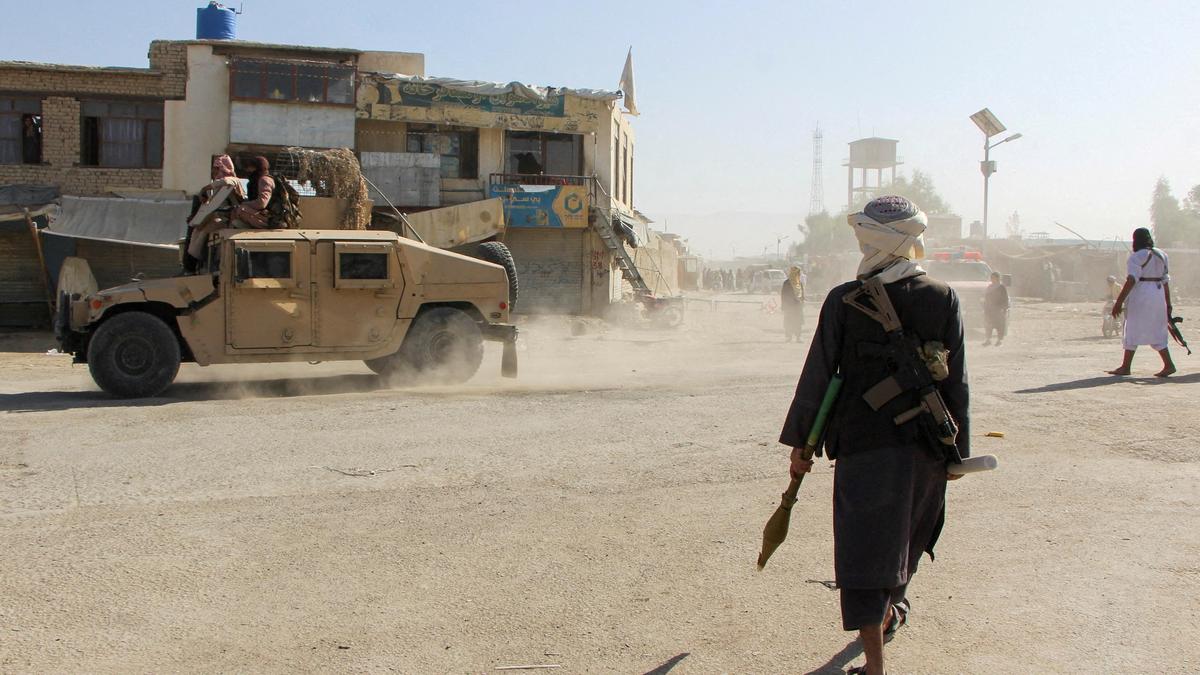
The headlines are screaming about "open war" between Pakistan and the Taliban. They’re wrong. What we are seeing in the border regions of Khost and Paktika isn't the start of a conventional conflict; it is the final, twitching realization that the "Strategic Depth" doctrine—a decades-long pillar of Pakistani military intelligence—has backfired so spectacularly that the only tool left in the box is a blunt-force airstrike.
Calling this an open war implies a symmetrical conflict between two sovereign entities with defined objectives. This isn't that. This is a domestic security crisis masquerading as a foreign policy maneuver. When Pakistan’s jets cross the Durand Line to hit Tehrik-i-Taliban Pakistan (TTP) targets, they aren't just hitting insurgents. They are signaling to their own population that the state has lost control of its borders and its former proxies.
The Myth of the "Rogue" Proxy
For years, the lazy consensus in Western media and regional analysis was that Pakistan held the remote control for the Afghan Taliban. The theory went that if Islamabad wanted the TTP stopped, they simply had to call in a favor from Kabul.
I have spent years tracking the movement of capital and arms across these porous mountain passes. The reality is far uglier. The Afghan Taliban and the TTP share a DNA that transcends national borders. They are bound by the Deobandi school of thought and a shared history of fighting a common enemy. Expecting the Taliban in Kabul to dismantle the TTP is like asking a man to cut off his own right arm because it’s bothering his neighbor. It won't happen.
The strikes in Kabul and the surrounding provinces aren't a show of strength. They are a loud, expensive admission that the Pakistani state can no longer influence the very monster it helped create.
The Economic Suicide of Border Conflict
While the generals play at war, the merchants are bleeding. If you look at the Chaman and Torkham border crossings, you see the real cost of this "open war" rhetoric. Trade between these two nations is the lifeblood of the regional economy. When the airstrikes start, the containers stop.
- Supply Chain Paralysis: Fresh produce from Kandahar rots in the sun while trucks are backed up for miles.
- Market Volatility: The Pakistani Rupee (PKR) and the Afghani (AFN) fluctuate wildly with every kinetic movement, wiping out the margins of small-scale traders who form the backbone of these border towns.
- The Black Market Pivot: Kinetic strikes don't stop trade; they just move it into the shadows, empowering the very smugglers and warlords the military claims to be targeting.
We are watching a nuclear-armed state with a crumbling economy spend millions on fuel and munitions to bomb mud huts, all while its foreign exchange reserves are on life support. This isn't strategy. It’s a temper tantrum with a high-octane price tag.
Dismantling the "Terrorist Sanctuary" Narrative
The "People Also Ask" section of your search engine is likely filled with questions about why the Taliban "allows" the TTP to operate. This premise is fundamentally flawed. It assumes the Taliban has the bureaucratic infrastructure of a Westphalian state.
They don't.
The Taliban governs through a decentralized network of commanders. Many of these commanders fought alongside TTP members during the twenty-year insurgency against the US-led coalition. The "sanctuary" isn't a policy decision; it’s a social and historical reality.
Imagine a scenario where the US federal government tries to force a rural sheriff to arrest his own brother for a crime committed in another state. The sheriff doesn't just refuse; he laughs. That is the dynamic between Kabul and the border militants. Pakistan’s bombs can’t hit a "policy." They can only hit people, and every civilian casualty in these strikes serves as a recruitment poster for the TTP.
The Intelligence Failure Nobody Admits
If Pakistan’s intelligence services were as omnipotent as the thrillers suggest, they wouldn't need F-16s to solve a border dispute. The shift to kinetic aerial strikes is the ultimate proof of an intelligence blackout.
The "Strategic Depth" policy was built on the idea that a friendly government in Kabul would provide Pakistan with a fallback position in a war with India. Instead, they’ve gained a hostile neighbor that provides a forward operating base for insurgents targeting the Pakistani state itself.
- Pre-2021: Pakistan hoped for a compliant Kabul.
- Post-2021: Pakistan got a Kabul that prioritizes its own ideological purity over Islamabad's security concerns.
- Result: The hunter has become the hunted.
The TTP has increased its operational tempo within Pakistan, hitting police stations and military outposts with terrifying regularity. The airstrikes are an attempt to "mow the grass," but as any gardener knows, if you don't pull the roots, the grass grows back thicker.
The Blowback is Already Here
The contrarian truth is that these strikes make Pakistan less safe, not more. By violating Afghan sovereignty, Islamabad gives the Taliban government a nationalist rallying cry. It allows the Taliban to frame themselves as the defenders of Afghan soil against a foreign aggressor—a role they are very comfortable playing.
Furthermore, these actions isolate Pakistan from the very regional partners it needs. China, which is heavily invested in the China-Pakistan Economic Corridor (CPEC), hates instability. Beijing wants a quiet border so they can extract minerals and move goods. Every bomb dropped on Kabul is a signal to Beijing that Pakistan cannot manage its own backyard.
Stop Looking for a Military Solution
The obsession with a military "fix" for the TTP problem is the definition of insanity. You cannot bomb an ideology into submission, especially when that ideology is fed by the very poverty and displacement the bombs create.
If Pakistan wants to end the "open war," it needs to stop looking at the border as a battlefield and start looking at it as a marketplace. The only way to decouple the TTP from its support base is through radical economic integration and a total abandonment of the proxy-warfare mindset.
But that would require the military to cede control of foreign policy to civilian leaders—a move that is far more frightening to the establishment than any insurgent group.
The strikes on Kabul aren't a sign that war is coming. They are a sign that the old ways of doing business are dead, and the people in charge are the last ones to realize it. They are burning the house down to kill a spider, and then wondering why they’re standing in the cold.
Stop reading the headlines about "war" and start looking at the maps of the dead. It’s not a conflict of choice; it’s a death rattle of an exhausted strategy.
Find a new lens. The old one is cracked.