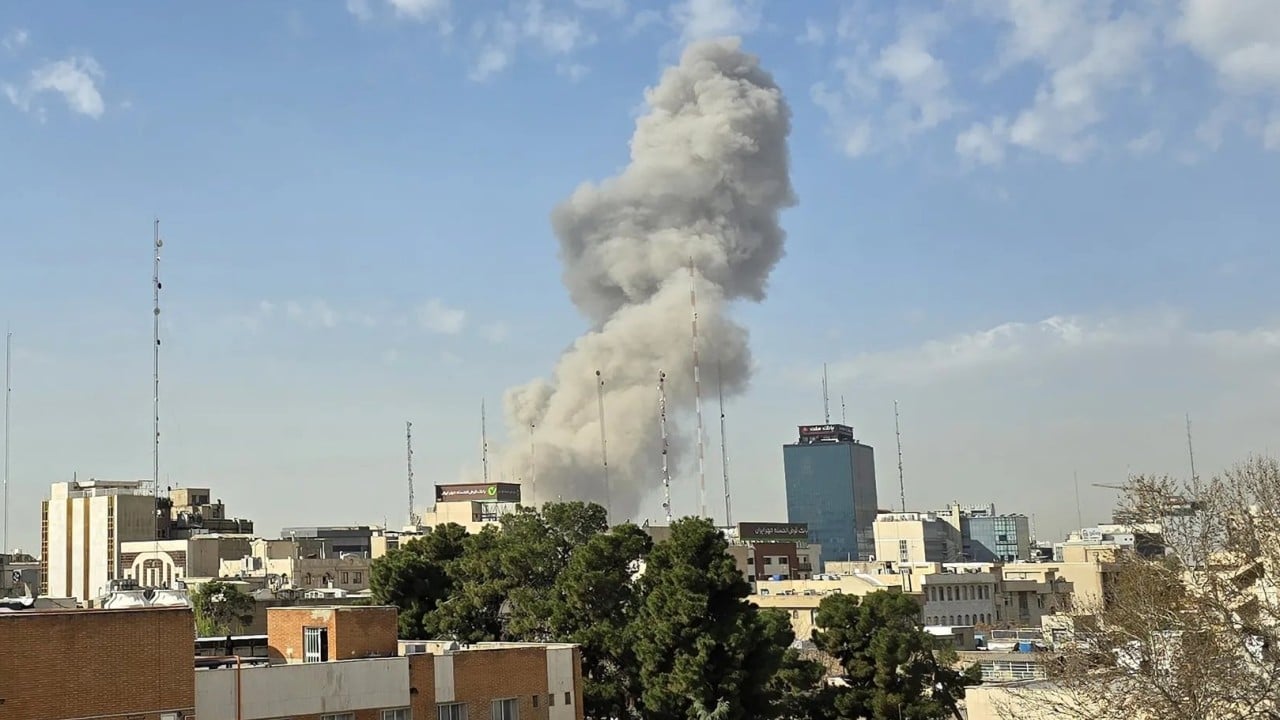
The smoke rising over Tehran isn't just from another localized strike. If the reports are true, we're looking at the most significant shift in the Middle East since 1979. On Saturday, February 28, 2026, a joint military operation between Israel and the United States, codenamed Operation Genesis and Operation Epic Fury, targeted the high-security Pasteur district. This wasn't just a hit on military assets. It was a decapitation strike aimed squarely at the Beit-e Rahbari—the official residence and nerve center of Supreme Leader Ayatollah Ali Khamenei.
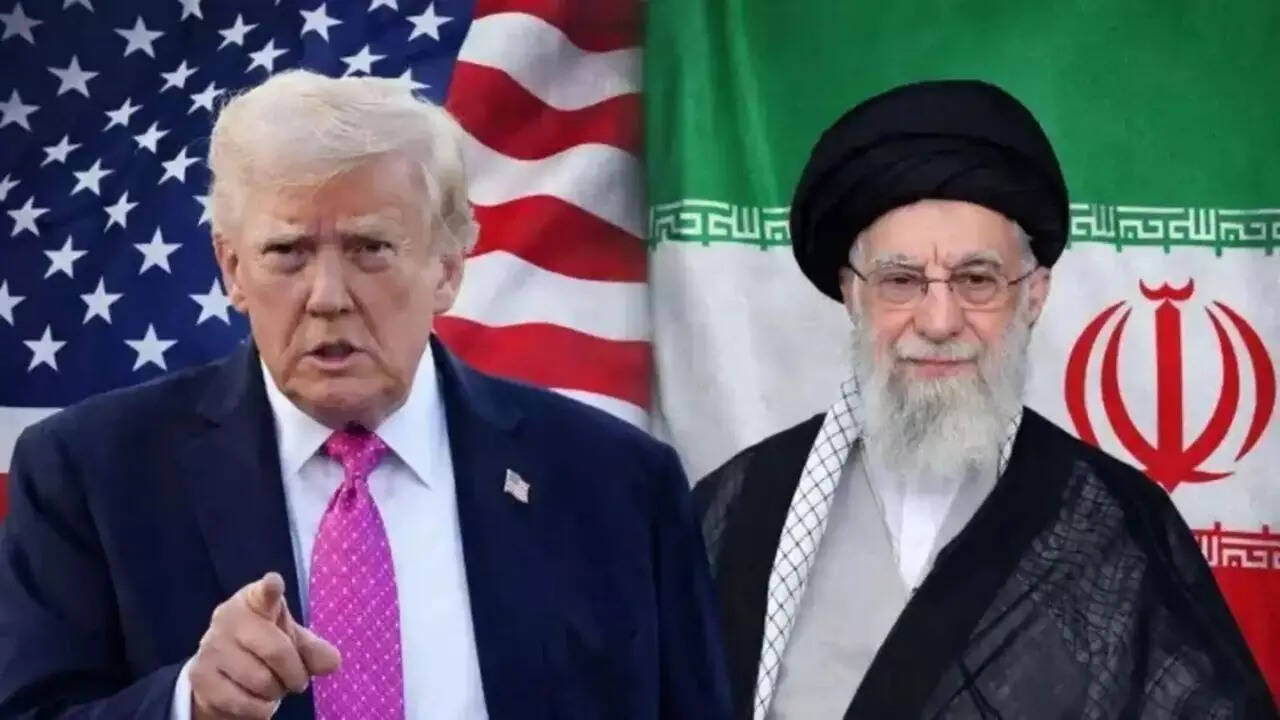
Satellite imagery from Sabrin News and ground reports from residents describe a scene of total devastation. The "palace" is gone, reduced to smoldering ruins. While initial confusion reigned over Khamenei’s whereabouts, Iranian state media and high-ranking officials in Washington, including President Donald Trump, have now confirmed that the 86-year-old leader was killed in the barrage. This isn't just a tactical win; it's a structural earthquake for a regime that has spent decades consolidating power around a single man.
The night the Pasteur district fell
The strikes began around 9:45 a.m. local time. It was a Saturday—the start of the work week in Iran—meaning the administrative heart of the country was fully staffed. According to reports from the Times of Israel and PBS News, the assault involved a massive coordination of nearly 200 Israeli fighter jets alongside U.S. B-2 stealth bombers and Tomahawk missiles.
They didn't just hit the Supreme Leader. The list of the deceased looks like a "Who's Who" of the Iranian establishment:
- Ali Shamkhani: The top security advisor and former defense minister.
- Mohammad Pakpour: The Commander-in-Chief of the IRGC Ground Forces.
- Aziz Nasirzadeh: The Iranian Defense Minister.
- Saleh Asadi: The chief of Iranian military intelligence.
This wasn't a warning shot. It was a deliberate move to erase the command and control structure of the Islamic Republic in a single morning.
Where is the regime heading now
You might wonder how a country with such a rigid hierarchy survives the loss of its absolute head. Honestly, it's messy. Under the Iranian constitution, a transitional council consisting of President Masoud Pezeshkian, Judiciary Chief Gholamhossein Mohseni Ejei, and a third top official is supposed to keep the lights on. But the real power has always lived with the Assembly of Experts and the Islamic Revolutionary Guard Corps (IRGC).
The Assembly is already scrambling. Reports from Al Jazeera suggest that Alireza Arafi, a 67-year-old senior cleric, has been appointed to lead the transition. But don't expect a smooth handoff. The IRGC isn't just a military; it's a business empire with its own internal factions. With their top commanders dead, the younger, more radical elements of the Guard might not wait for a bunch of elderly clerics to pick a successor. They're armed, they're angry, and they've got everything to lose.
The Mojtaba factor
For years, the rumor mill focused on Mojtaba Khamenei, the late leader's second son. He’s got deep ties to the security apparatus, but there's a huge problem. The 1979 Revolution was built on the rejection of hereditary monarchy. If the clerics try to put another Khamenei on the throne, it could trigger a civil war within the ranks. Many Iranians who have been protesting for months aren't looking for a "New King"—they want the whole system dismantled.
What this means for your wallet and the world
If you think this is just a local conflict, look at the markets. Gold prices have already shot past $5,200 an ounce. The Strait of Hormuz, where roughly 20% of the world's oil flows, is effectively a no-go zone right now. The global automotive industry is already warning about fractured supply chains.
This isn't like previous flare-ups. In the past, the "playbook" was to sell the spike because tensions usually faded. Not this time. When you remove the head of a regime that has no clear backup plan, the "geopolitical premium" on oil and shipping becomes structural, not temporary. We’re looking at a summer of high energy costs and massive shipping delays.
The immediate fallout on the ground
Tehran is currently under a total internet blackout. Authorities have shut down mobile services and closed the airspace. While some videos have leaked showing groups of Iranians celebrating the strikes, the atmosphere is largely one of fear and confusion.
The U.S. and Israel have made their stance clear. This wasn't just about stopping a nuclear program—which they claim was largely neutralized in strikes back in 2025—it was about regime change. President Trump’s message on Truth Social was blunt: "This is the single greatest chance for the Iranian people to take back their Country."
But "taking back a country" is rarely a clean process. Without a stabilizing force on the ground, the vacuum left by Khamenei could be filled by chaos.
What to watch for in the next 48 hours
The next few days will determine if this spirals into a global conflagration or stays a localized regime collapse. Keep your eyes on these specific triggers:
- The Strait of Hormuz: If the remaining IRGC naval units follow through on threats to sink tankers, global oil prices will hit levels we haven't seen in our lifetime.
- Hezbollah and Proxies: With their primary financier and spiritual leader gone, do groups in Lebanon and Yemen lash out in desperation or retreat to protect their own turf?
- The Assembly of Experts: Any announcement of a new Supreme Leader will be a signal of either continuity or total fracture.
If you’re holding assets in energy or precious metals, don't expect the volatility to end this week. This is a foundational change in global politics. The old Iran is gone; what replaces it is anyone's guess, but the transition is going to be violent. Keep your news alerts on and your eyes on the shipping lanes.

.png?width=1200&auto=webp&trim=0%2C0%2C0%2C0)