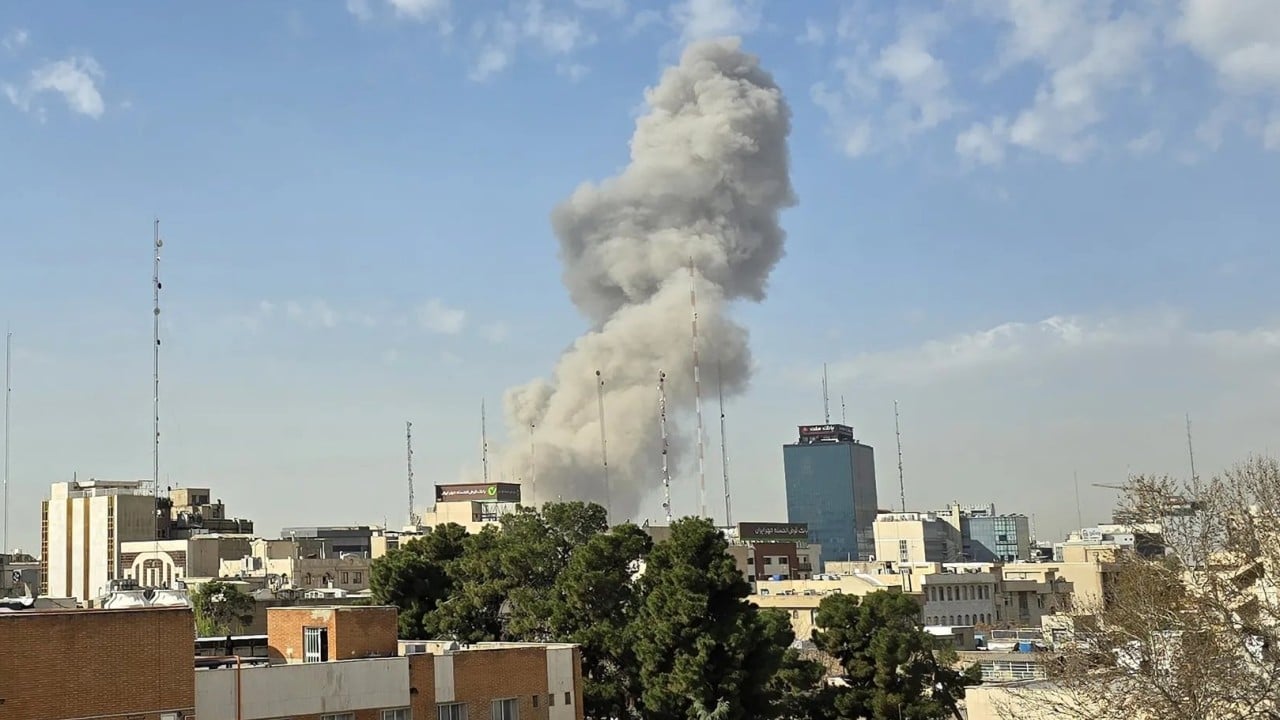
The era of the "Shadow Imam" ended at 9:15 a.m. local time on Saturday, February 28, 2026, when a coordinated volley of Israeli and American munitions effectively decapitated the leadership of the Islamic Republic. While initial reports from Tehran were characterized by a frantic, tactical silence, the reality is now undeniable. Ali Khamenei, the 86-year-old Supreme Leader who had steered Iran through nearly four decades of defiance, is dead.
This was not a singular strike but a systemic "Operation Genesis," a high-stakes gamble by the Netanyahu and Trump administrations to force a regime collapse from the top down. By targeting the Pasteur district—the fortified heart of the clerical establishment—intelligence agencies didn't just aim for Khamenei; they sought to erase the institutional memory of the Revolutionary Guard (IRGC). With the confirmed deaths of IRGC Commander Mohammad Pakpour and Defense Minister Aziz Nasirzadeh, the "Axis of Resistance" has lost its central nervous system in a single morning.
The Intelligence Breach That Cost a Dynasty
The success of the strike points to a catastrophic failure of Iranian internal security that will be analyzed for decades. Sources indicate that the CIA and Mossad had been tracking Khamenei’s movements for months, but the decision to strike was triggered by "high-fidelity" intelligence indicating a rare morning gathering of the Supreme National Security Council.
The technical execution of the raid, dubbed Operation Epic Fury by the Pentagon, involved a sophisticated layering of electronic warfare and stealth. B-2 bombers and Israeli F-35s utilized undisclosed long-range standoff weapons to bypass Iran’s S-400 and domestically produced Bavar-373 air defense systems. This wasn't just a display of firepower; it was a demonstration that the regime’s "impenetrable" bunkers were transparent to Western sensors.
The use of Task Force Scorpion Strike—low-cost, one-way attack drones deployed in massive swarms—marked the first time such technology was used to overwhelm urban defense grids before the heavy hitters delivered the killing blow. By the time the dust settled on the destroyed leadership compound, at least thirty precision bombs had ensured that no one inside survived.
A Vacuum the Constitution Cannot Fill
Tehran has officially activated Article 111 of its constitution, appointing an interim leadership council consisting of President Masoud Pezeshkian, Judiciary Chief Gholamhossein Mohseni Ejei, and a representative from the Guardian Council. However, this is a legal band-aid on a severed artery.
The Islamic Republic is built on the concept of Velayat-e Faqih (Guardianship of the Jurist), a system where the Supreme Leader holds absolute power over the military, the judiciary, and the economy. Without Khamenei’s specific brand of tempered radicalism, the factions that he kept in a state of perpetual, balanced tension are already beginning to fray.
- The Hardliners: Elements within the IRGC who view any transition as a moment of weakness that must be met with regional "total war."
- The Technocrats: A dwindling group around Pezeshkian who may see this as a grim opportunity to negotiate a ceasefire to save the state from total dissolution.
- The Streets: A population still scarred by the 2025 "January Massacre," where over 30,000 protesters were killed. For many in Tehran and Isfahan, the smoke rising from the Pasteur district is not a tragedy, but a signal.
The Regional Wildcard
The immediate response from Iran’s proxies has been a mix of mourning and undirected kinetic energy. The IRGC has already moved to close the Strait of Hormuz, a move that has effectively paralyzed global energy markets and shuttered aviation hubs in Dubai and Doha.
In a chilling escalation, the IRGC claimed to have struck the USS Abraham Lincoln with ballistic missiles in the Gulf. While the extent of the damage is still being verified by CENTCOM, the message is clear: the regime will attempt to make the cost of Khamenei’s death a global burden.
The "Axis of Resistance" is now a headless hydra. Hezbollah, reeling from its own recent setbacks in Lebanon, and the Houthis in Yemen have vowed "decisive revenge," but without the steady flow of logistics and command-and-control usually provided by the IRGC’s Quds Force—whose leadership was also reportedly at the Saturday meeting—their ability to launch a sustained, coordinated campaign is in doubt.
The Myth of Stability
For years, regional analysts argued that the death of the Supreme Leader would be the ultimate "black swan" event. The assumption was that the transition would be internal, managed by the Assembly of Experts over a period of weeks or months. By choosing an external, violent conclusion to Khamenei’s reign, the U.S. and Israel have bypassed the transition and moved straight to the endgame.
The danger now is not just a war between nations, but a systemic collapse within Iran itself. If the IRGC loses its grip on the internal security apparatus while simultaneously fighting a high-intensity war with the West, the resulting chaos could make the Syrian Civil War look like a minor border dispute.
There are no "good candidates" for a clean transition in a system designed to discourage them. The regime’s survival depends on its ability to maintain the illusion of control while its foundations are literally being excavated by 2,000-pound bunker busters.
The Iranian people are now faced with a choice that was unthinkable forty-eight hours ago. They are being urged by exiled figures and Western broadcasts to "take over" their government. But in a country flooded with weapons and overseen by a wounded, paranoid security state, the path to a new Iran is likely to be paved with more than just celebration.
The smoke over Tehran is not just the remains of a building; it is the vaporized remains of a geopolitical order that defined the Middle East for thirty-seven years.
Would you like me to analyze the specific economic impact of the Strait of Hormuz closure on global oil prices and shipping logistics?

.png?format=1500w)