The sun hits the Moncloa Palace in Madrid with a persistence that feels like a weight. Inside, Pedro Sánchez sits at a desk that has seen the rise and fall of empires, but today, the pressure isn't coming from history. It’s coming from a smartphone. Across the Atlantic, a new administration in Washington has issued an ultimatum that reads less like diplomacy and more like a shakedown. The choice is binary: Spain supports a military escalation against Iran, or Spain pays the price in the marketplaces where its people earn their bread.
Most political reporting treats this as a spreadsheet problem. They talk about "trade imbalances," "geopolitical alignment," and "tariff structures." But for a small-scale olive farmer in Jaén, these abstractions are a phantom blade at the throat.
Let’s name him Mateo. He doesn't care about the intricacies of the Strait of Hormuz. He cares about the thirty hectares of silver-green trees that have been in his family since the days when telegrams were high technology. When the United States threatens a twenty-five percent tariff on Spanish exports as retaliation for a lack of military cooperation, Mateo isn't looking at a "policy shift." He is looking at the possibility of losing his tractor. He is looking at a daughter whose university tuition depends on the American appetite for premium oil.
This is the human geometry of a trade war.
The Ledger of Blood and Oil
Pedro Sánchez is standing firm. To the cameras, he speaks of international law, of the humanitarian catastrophe that a direct conflict with Tehran would ignite, and of the fundamental right of a sovereign nation to choose its battles. It is a brave stance. It is also an expensive one.
The tension exists because the current White House views loyalty as a commodity. In this worldview, the North Atlantic Treaty is a subscription service. If you don't pay your "security dues" by joining the latest coalition of the willing, your "premium features"—like duty-free access for your wine, footwear, and olives—get revoked.
Sánchez is gambling that the soul of Spanish foreign policy is worth more than the profit margins of the Ibex 35. He remembers, as many Spaniards do, the scars of 2003. He remembers the massive "No to War" protests that flooded the Gran Vía when Spain was dragged into Iraq. The ghost of that era sits in the room with him. He knows that while a trade war might hurt the economy, a shooting war destroys the social fabric.
Consider the alternative. If Spain buckles, the tariffs vanish. The olives flow. The footwear manufacturers in Elche breathe a sigh of relief. But the cost is measured in Spanish frigates deployed to the Persian Gulf. It is measured in the very real possibility of young men and women from Seville and Bilbao returning home in flag-draped coffins for a cause that their own government admits is a strategic mistake.
The Mechanics of the Squeeze
How does a superpower actually "threaten" a middle power? It isn't always through a formal declaration. It’s a slow, methodical tightening of the screws.
It begins with "investigative" duties. A Washington bureaucrat finds a technicality in how Spanish steel is subsidized. Then, a sudden delay in customs for Spanish oranges. Finally, the hammer drops: a sweeping list of products targeted for maximum pain. This list is curated with surgical precision. They don't pick products that Americans can't live without; they pick products that are iconic to Spain but easily replaced by competitors.
It is a psychological operation. The goal is to make the Spanish business elite turn on their own president. The strategy is to force the CEO of a global construction firm to call Moncloa and whisper, "Is a principled stance on Iran really worth three billion euros in lost infrastructure contracts?"
Sánchez is currently the man in the middle of that crossfire. He is balancing the immediate, visceral anger of the Trump administration against the long-term stability of the European Union. Because if Spain breaks, the EU’s unified front on the Iran nuclear deal shatters with it.
The Invisible Stakes
We often talk about "national interests" as if they are cold, inanimate blocks of ice. They aren't. They are living, breathing anxieties.
The invisible stake here is the concept of European autonomy. For decades, the continent has operated under the umbrella of American protection, often at the cost of its own independent voice. By saying no to the war in Iran despite the trade threats, Sánchez is attempting to prove that a mid-sized power can still have a conscience.
But conscience is a luxury item in a global recession.
If the tariffs land, we will see the fallout in the supermarkets of Ohio and the villages of Andalusia. In Ohio, the price of a bottle of Rioja climbs by ten dollars. The consumer mumbles and reaches for a Californian bottle instead. In Andalusia, the winery realizes its export volume has plummeted by forty percent. They lay off the seasonal pickers. The local bar sees fewer customers. The village starts to go quiet.
This isn't a "dry" fact. It is a heartbreak. It is the sound of a shuttered shop door hitting the frame.
The Gamble of the Long Game
Sánchez’s refusal to budge is based on a specific calculation of the future. He is betting that the current American administration is a temporary storm, while Spain’s relationship with the Mediterranean and its European partners is a permanent climate.
He is also betting on the resilience of the Spanish people. Spain has survived much worse than a tariff hike. It has survived civil war, dictatorship, and the total collapse of its currency. There is a certain stubborn pride in the Spanish character that resents being bullied. By framing his opposition to the war as a matter of national dignity, Sánchez is tapping into a reservoir of support that transcends traditional party lines.
However, the clock is ticking. Trade wars are wars of attrition. They are designed to see who runs out of patience first.
While the diplomats exchange icy memos, the real story is happening in the loading docks of Valencia. It’s in the eyes of the workers watching the news on the breakroom TV, wondering if their shift will exist next month. They are the collateral damage of a geopolitical chess match they never asked to play.
The Echo of the Choice
History rarely remembers the trade ministers. It remembers the leaders who stood their ground when the path of least resistance was paved with gold.
If Sánchez holds his line, Spain becomes the vanguard of a more independent Europe. It becomes a signal to other nations that the global trade system should not be used as a blunt-force instrument for military recruitment. If he folds, he saves the olive industry but loses the moral authority to lead a nation that overwhelmingly despises the idea of another Middle Eastern entanglement.
There is no "win" here. There is only a choice between two different types of pain.
One pain is felt in the pocketbook. It is sharp, measurable, and recoverable. The other pain is felt in the soul of a country. It is the dull ache of knowing you sold your convictions to keep a favorable tax bracket.
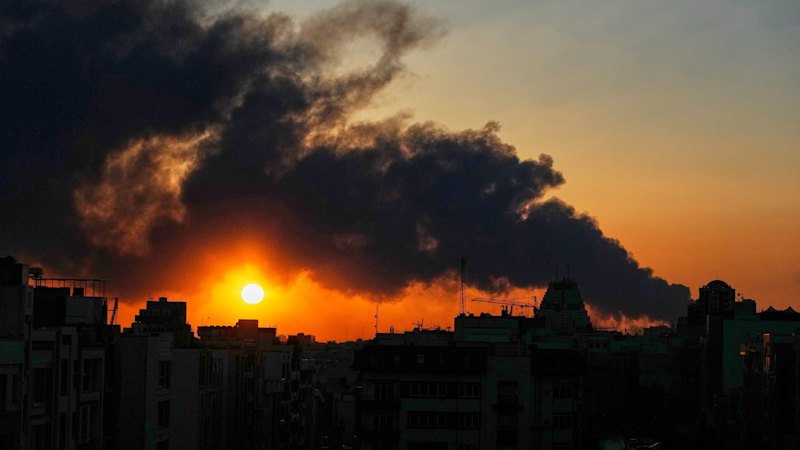
Tonight, as the sun finally sets over Madrid, the lights in Moncloa will stay on. The spreadsheets will be checked again. The threats will be weighed. But outside, in the squares where people drink their wine and talk of the future, there is a quiet hope that for once, the "no" stays a "no."
The olives can wait. The peace cannot.
Spain is standing in the doorway of a conflict it didn't start, facing a friend who is acting like a stranger, holding a shield made of nothing but words. It is a precarious, terrifying, and deeply human moment. It is the moment we realize that the most expensive thing a leader can ever say is the truth.
The bill is coming. Spain is ready to pay it.