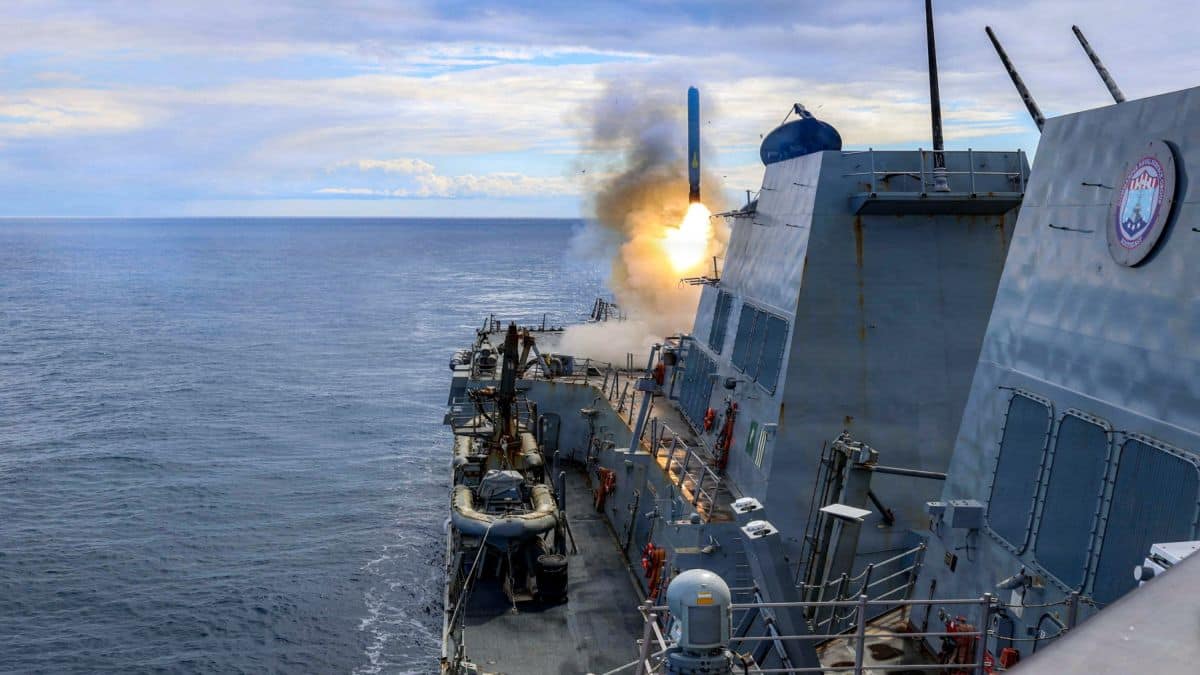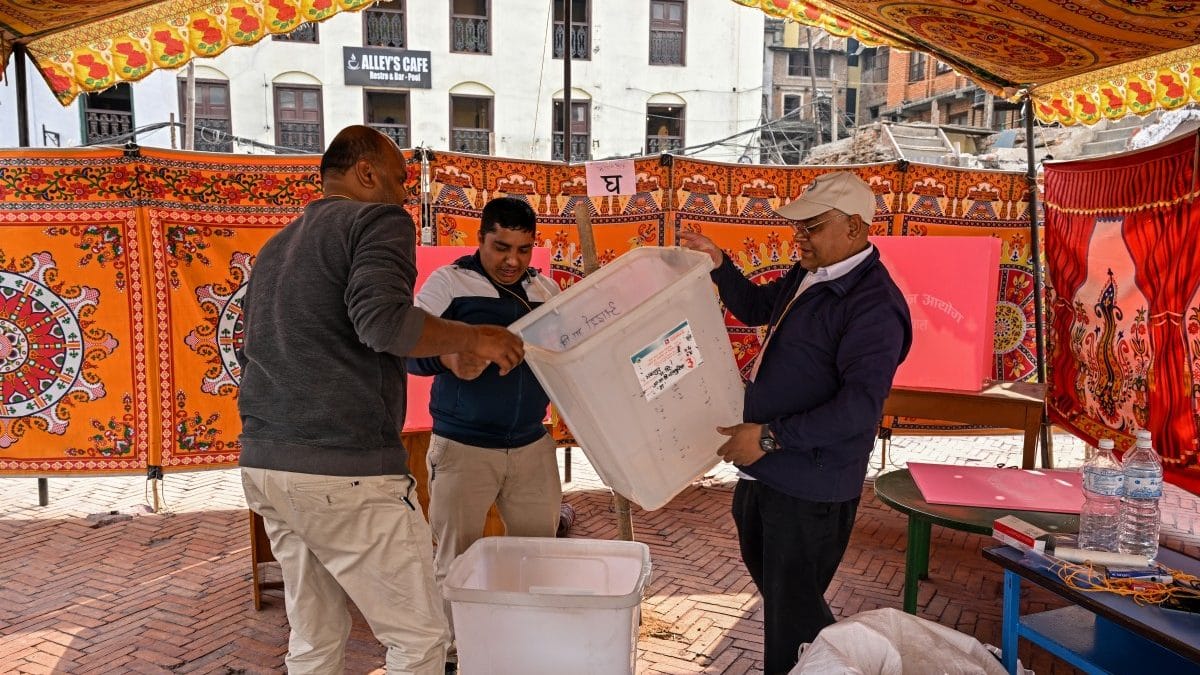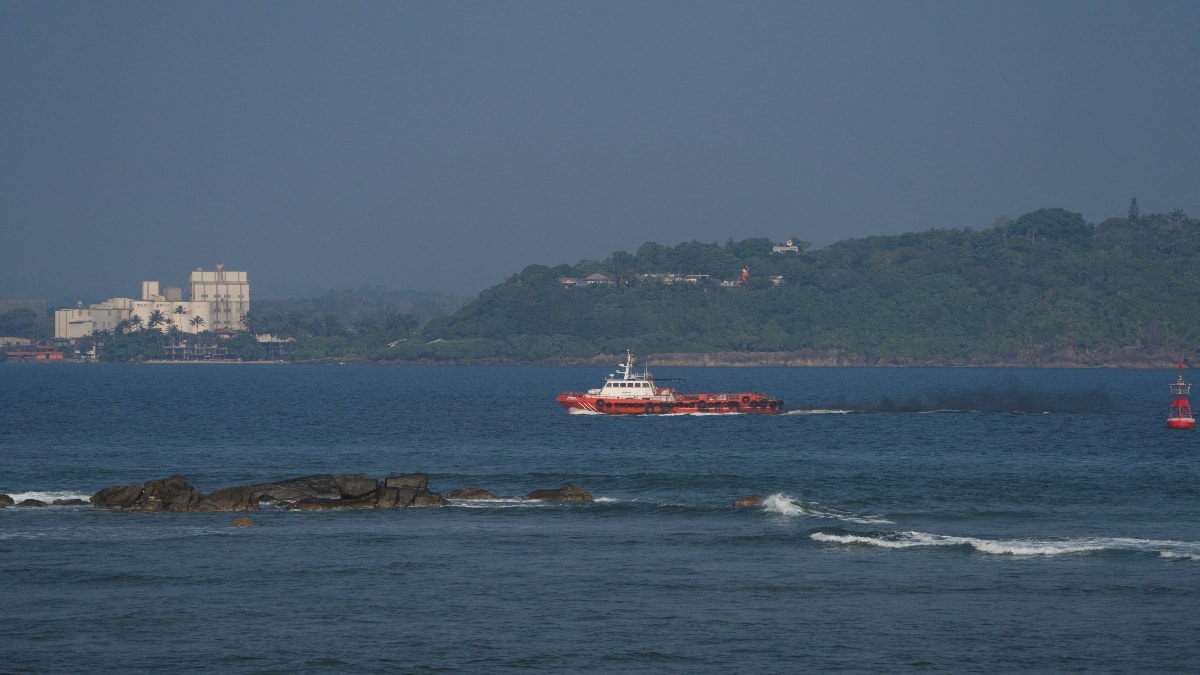
The question of whether Pakistan is on the brink of war with Iran is no longer a theoretical exercise for think-tank panels. It is a reality being dictated by falling missiles and rising body counts. As of March 2026, Pakistan finds itself in the most precarious geostrategic position since 1971, caught between a mutual defense pact with Saudi Arabia and a burning western neighbor. While Islamabad has officially condemned the recent U.S.-Israeli strikes on Tehran, the internal reality is one of controlled panic.
Pakistan will not join a war against Iran by choice. It is being dragged into one by the gravity of collapsing borders and sectarian spillover. The assassination of Supreme Leader Ali Khamenei on February 28 has effectively decapitated the Iranian state, leaving a power vacuum that is already hemorrhaging across the 565-mile frontier into Balochistan. For the Pakistani military, the threat isn't just an exchange of fire; it is the total disintegration of a neighbor while Pakistan is already engaged in an "open war" with the Taliban in Afghanistan.
The Myth of the Brotherly Border
For decades, the border between Iran and Pakistan—the "Goldsmid Line"—was a secondary concern compared to the permanent alert on the Indian frontier. That era is dead. The rugged terrain of Sistan-Baluchestan has transformed from a smuggling corridor into a frontline for two distinct but overlapping wars.
On one side, the Iranian state, or what remains of its command structure, is lashing out. Following the death of Khamenei, the Iranian military has implemented a decentralized command protocol, allowing local units to fire at will against perceived threats. On the other side, Sunni militant groups like Jaish al-Adl are viewing the chaos in Tehran as a generational opportunity to carve out a sovereign Baloch state.
This creates a paradox for Rawalpindi. If Pakistan moves to crush Baloch insurgents, it inadvertently aids the embattled Iranian regime. If it stands back, those same insurgents gain the momentum and territory to threaten Pakistan’s own provincial integrity. The "strategic depth" once sought in Afghanistan has become a strategic nightmare in the west.
The Saudi Pact and the Sectarian Fuse
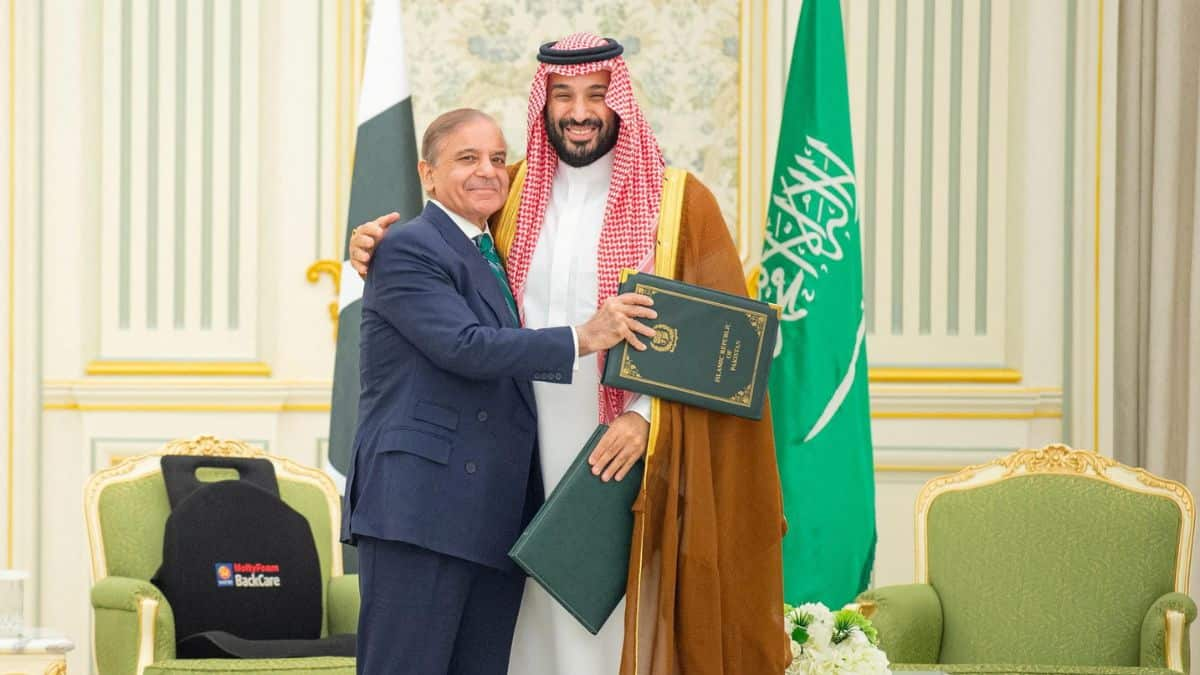
In September 2025, Pakistan signed a landmark Strategic Mutual Defence Agreement with Saudi Arabia. At the time, it was hailed as an economic lifeline—a way to secure Gulf investment for a country whose treasury was effectively empty. Today, that agreement looks like a tripwire.
With Iran launching retaliatory strikes against U.S. bases and Gulf allies in Kuwait, Dubai, and Qatar, Riyadh is looking to Islamabad to honor its commitments. The pressure is immense. Pakistan’s military receives significant "oxygen" in the form of Gulf subsidies, yet the country’s domestic fabric is ill-equipped for a conflict with Iran.
- The Shia Factor: Roughly 20% of Pakistan’s population is Shia. The killing of Khamenei has already sparked riots in Karachi and Islamabad, with 22 protesters killed in the first week of March alone.
- The Military Balance: Pakistan is currently fighting a two-front war against the TTP on the Afghan border and BLA insurgents in the south. Opening a third front against a conventional Iranian military—even one in disarray—would be a logistical impossibility.
The military leadership knows that any overt participation in an anti-Iran coalition would trigger a civil war at home. Curfews in Gilgit-Baltistan and parts of Sindh are not just about crowd control; they are about preventing the state from fracturing along sectarian lines.
The Balochistan Vacuum
While the world watches the skies over Tehran, the real "war" is happening on the ground in the dust of Nushki and Gwadar. The Balochistan Liberation Army (BLA) and other separatist factions have intensified their campaign, sensing that both Tehran and Islamabad are too distracted to maintain a grip.
In January 2026, the BLA launched a coordinated assault across nine districts, briefly seizing administrative buildings and engaging the Pakistani army in a three-day battle for the town of Nushki. These groups do not care about the geopolitics of the U.S.-Iran conflict except as a means to an end. They utilize American-made weapons—likely sourced from the black markets of post-withdrawal Afghanistan—and operate with a mobility that conventional forces cannot match.
If the Iranian Revolutionary Guard Corps (IRGC) collapses, the border becomes a "gray zone" of absolute lawlessness. Pakistan’s nightmare scenario is the emergence of a "Greater Balochistan" that ignores the 19th-century maps and establishes a corridor from the Arabian Sea deep into the Iranian plateau.
Economic Asphyxiation
We must also look at the brutal arithmetic of the marketplace. Despite sanctions, Pakistan has relied on a $1.4 billion informal trade network with Iran for fuel, dairy, and produce. In border towns, "Iranian petrol" is the only thing keeping the lights on.
The closure of the Strait of Hormuz by Iran on March 1 has spiked global oil prices, but for Pakistan, the localized impact is more immediate. Border closures have halted the flow of essential goods, leading to food shortages in Balochistan that further fuel the insurgency. A hungry population is a recruitable population.
The military's business model, which often relies on managing crises to remain indispensable to global powers, is failing. The "transactional alignment" with the West that kept the IMF coming back is no longer enough to offset the cost of three simultaneous insurgencies and a potential conventional war.
Beyond the Brink
Pakistan is not "joining" the war against Iran in the sense of a formal declaration. Instead, it is being absorbed into a regional conflagration. The diplomatic rhetoric of "restraint" and "diplomacy" issued by the Foreign Office in Islamabad is a desperate attempt to buy time.
The reality is that Pakistan is currently fighting for its own internal stability. The military is stretched thin, the economy is on a ventilator, and the social fabric is tearing. Every missile Iran fires at a Gulf target brings Pakistan closer to a choice it cannot afford to make: bet on the Saudi-U.S. alliance and face internal revolution, or remain neutral and face economic collapse.
The border with Iran, once a line in the sand, has become a mirror. In it, Pakistan sees the reflection of its own fragility. The conflict is no longer about who wins in the Middle East; it is about whether the state of Pakistan can survive the vacuum being left behind by its neighbors.
The era of choosing sides is over. The side has been chosen by geography, and the price is being paid in blood.
Would you like me to analyze the specific impact of the recent Strait of Hormuz closure on Pakistan’s 2026 energy security strategy?