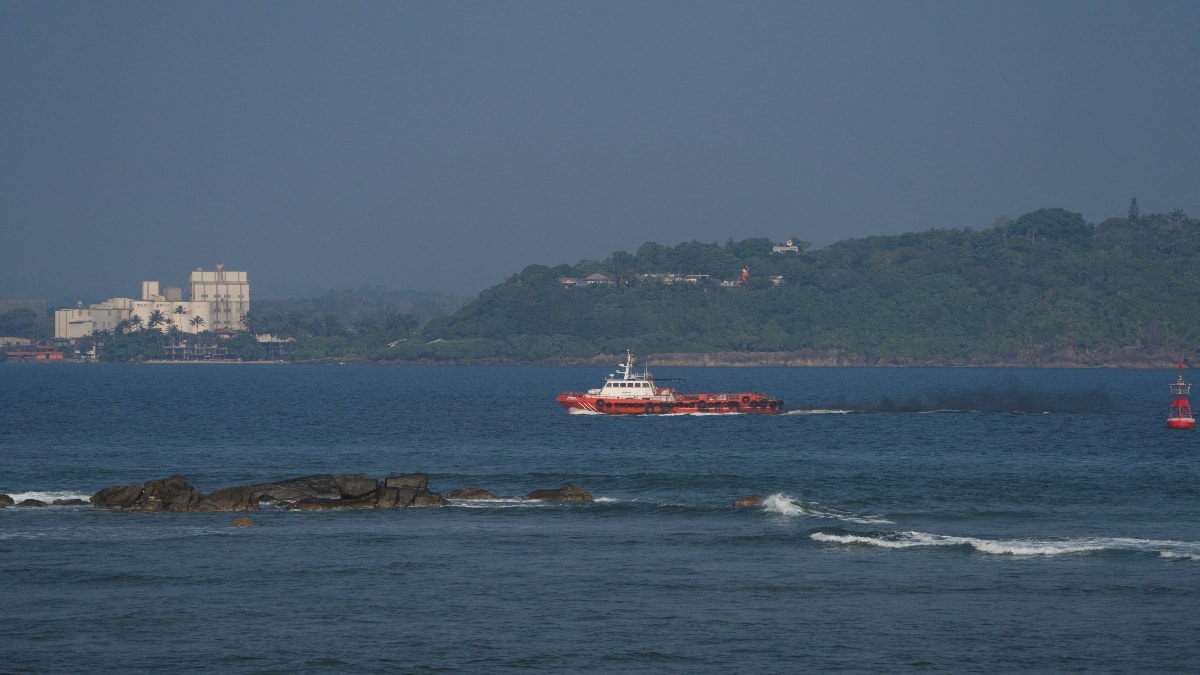
The destruction of the Moudge-class frigate IRIS Dena by a United States submarine near Sri Lanka represents a fundamental shift in the risk-reward calculus of surface deployment within the Indian Ocean. This event is not merely a tactical loss of 87 personnel and a primary surface asset; it is a demonstration of the absolute transparency of modern littoral environments when monitored by high-end acoustic and satellite arrays. Surface vessels operating without a comprehensive, multi-layered anti-submarine warfare (ASW) umbrella are now liabilities rather than instruments of power projection.
The Triad of Detection and Localization
The sinking of the Dena was the result of a failure in three distinct operational layers. When a surface vessel enters a contested maritime zone, its survival depends on its ability to manage its signature across the electromagnetic and acoustic spectrums.
- Acoustic Signature Propagation: The Moudge-class frigates, while modernized, rely on propulsion systems that generate significant low-frequency noise. In the thermocline layers of the Indian Ocean, these sounds can travel hundreds of kilometers before being intercepted by passive sonar arrays.
- Satellite Synthetic Aperture Radar (SAR): Unlike optical satellites, SAR can penetrate cloud cover and operate at night, detecting the physical wake and metallic mass of a vessel. The IRIS Dena’s transit was likely tracked in near-real-time, allowing a submarine to be vectored into an intercept vector without ever activating its own high-signature sensors.
- Electronic Emissions: Any active radar or communication from the frigate acts as a beacon for Electronic Support Measures (ESM). If the Dena was searching for threats, it was simultaneously announcing its exact coordinates to every listener in the region.
Subsurface Lethality and the Physics of the Torpedo Strike
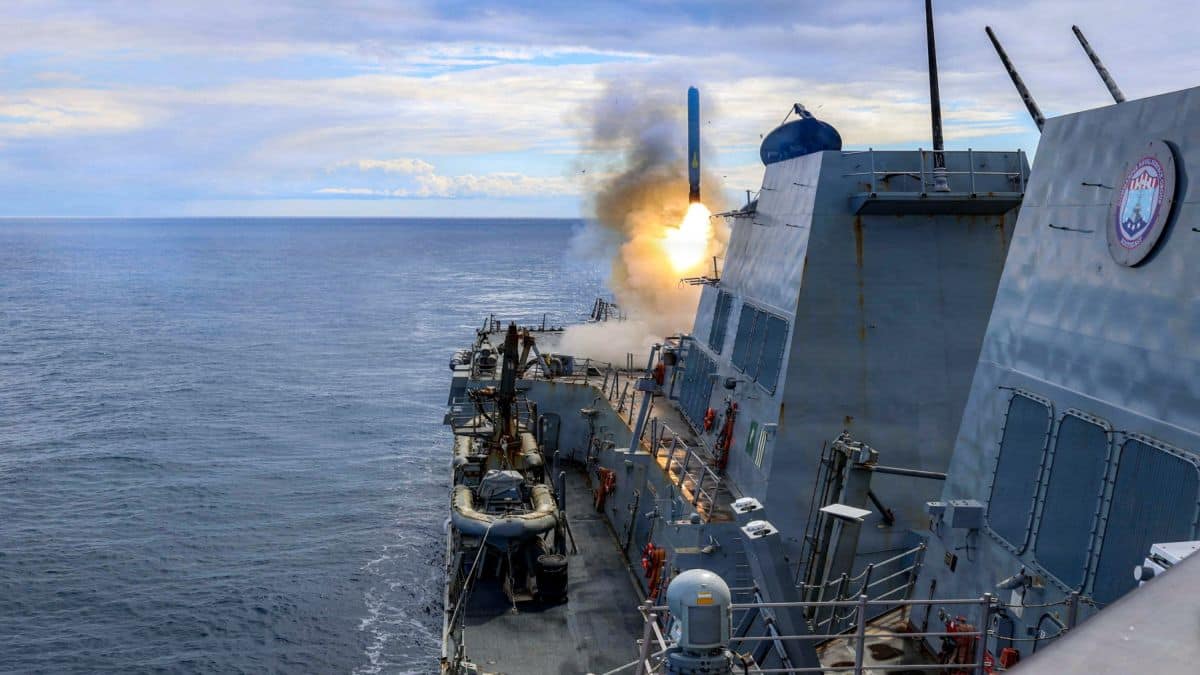
The engagement likely utilized a heavyweight torpedo, such as the Mark 48 ADCAP. To understand the catastrophic loss of life and the speed of the sinking, one must look at the fluid dynamics of a sub-keel detonation.
Modern torpedoes do not aim to "hit" the ship's hull. Instead, they use a proximity fuse to explode directly beneath the keel. This creates a high-pressure gas bubble that lifts the ship's center, followed immediately by a vacuum as the bubble collapses. This "back-breaking" effect causes the structural steel of the hull to fail under its own weight and the massive gravitational force of the falling water. For a vessel the size of the Dena (approximately 1,500 tons), a single successful sub-keel strike results in structural disintegration in under 60 seconds. This explains the high casualty rate; the time between the initial strike and total immersion is often insufficient for the deployment of life-saving equipment or the execution of "Abandon Ship" protocols.
Geopolitical Friction Points in the Laccadive Sea
The location of this engagement—near Sri Lanka—is strategically sensitive due to the convergence of global shipping lanes. The Indian Ocean serves as the primary artery for energy transit from the Persian Gulf to East Asia. By operating in these waters, the Iranian Navy sought to establish a "persistent presence" outside of its traditional Persian Gulf and Gulf of Oman bastions.
However, the "Blue Water" ambitions of a regional navy are constrained by the logistical "umbilical cord." Without a local port for repair, replenishment, or integrated air cover, a lone frigate like the Dena becomes a "sitting duck." The US Navy’s decision to engage suggests a shift from passive shadowing to active denial, likely triggered by a specific breach of maritime norms or an intelligence-backed threat assessment that necessitated immediate kinetic intervention.
The Cost Function of Surface Attrition
The loss of the Dena creates an asymmetric economic and psychological burden on the Iranian naval command.
- Replacement Lag: Replacing a Moudge-class vessel involves a multi-year procurement and commissioning cycle. Domestic Iranian shipyards face bottlenecks in high-end electronics and turbine manufacturing, meaning this loss cannot be mitigated in the short term.
- Personnel Erosion: The loss of 87 trained sailors, including specialized officers, represents a drain on the human capital required to man future indigenous builds.
- Deterrence Degradation: The primary value of a naval vessel is its "fleet-in-being" status—the threat it poses simply by existing. Once that vessel is sunk with impunity by a submerged hunter-killer, the psychological weight of the remaining fleet is halved.
Failure of the Iranian ASW Suite
The IRIS Dena was equipped with sonar and anti-submarine torpedoes, yet it failed to detect the approaching threat. This indicates a gap in "Acoustic Intelligence" (ACINT). Submarine stealth technology, particularly in the Virginia or Los Angeles-class boats, utilizes anechoic coatings and skewed-blade propellers to minimize cavitation.
If the ambient noise of the ocean is higher than the signature of the submarine, the surface ship is effectively blind. In the warm, high-salinity waters near the equator, sound waves refract in complex patterns. A skilled submarine commander can hide in "shadow zones" where sonar pings are bent away by temperature gradients, making the submarine invisible to the ship’s hull-mounted sonar.
Intelligence Sovereignty and Third-Party Data
A critical unanswered question involves the role of regional actors. Operating near Sri Lanka requires coordination or, at the very least, sophisticated monitoring of local coastal radar. The possibility that the US utilized data from the "Quadrilateral Security Dialogue" (Quad) partners or Indian Ocean monitoring stations cannot be ignored. This represents a "Data-Driven Encirclement" where the physical presence of a US submarine is supported by a digital network of regional sensors.
The IRIS Dena was likely operating under the assumption that its "Sovereign Immunity" as a state vessel would provide a layer of protection against kinetic strikes in international waters. This assumption proved fatal. In a high-tension maritime environment, legal status is secondary to tactical vulnerability.
The Strategic Pivot to Unmanned Denial
Moving forward, the Iranian Navy—and other middle-tier powers—must reckon with the obsolescence of the small-frigate model in high-threat environments. The capital expenditure required to make a 1,500-ton ship survivable against a nuclear-powered submarine is prohibitive.
The logical pivot is toward "Distributed Maritime Operations" (DMO). This involves:
- Unmanned Underwater Vehicles (UUVs): Low-cost, high-endurance drones that can loiter in shipping lanes.
- Swarm Tactics: Using dozens of small, fast-attack craft to saturate a target's defenses, though these lack the range for deep-ocean operations.
- Shore-Based Denial: Utilizing long-range anti-ship cruise missiles (ASCMs) to create a "No-Go Zone" extending from the coastline, rather than trying to contest the open sea with vulnerable hulls.
The sinking of the IRIS Dena serves as a brutal case study in the reality of modern naval warfare: if you can be seen, you can be targeted; and if you can be targeted, you can be destroyed. The Indian Ocean is no longer a permissive environment for surface vessels lacking integrated, multi-domain defense networks.
Naval planners must now prioritize "Signature Silencing" over "Weapon Saliency." The most heavily armed ship in the world is useless if it is broken in half by a torpedo it never saw coming. The focus must shift from the number of missiles on deck to the decibel level of the engine room and the efficacy of the onboard signal processing. For the Iranian Navy, the path forward requires a total withdrawal from high-visibility surface "show of force" missions in favor of a subsurface-first strategy that utilizes the same stealth principles that led to the Dena's demise.