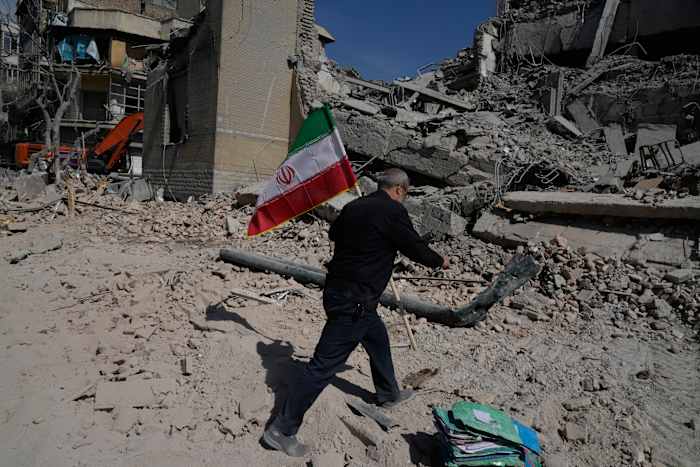
The Middle East hasn't just "entered a new phase." It's being fundamentally reordered in real-time. By Thursday morning, March 5, 2026, the pretense of a shadow war between Iran, Israel, and the United States has evaporated. We're now seeing a direct, high-intensity conflict that looks nothing like the "strategic patience" of years past.
Iran just launched a massive wave of ballistic missiles and drones targeting not only Israeli cities but several key U.S. military installations across the Persian Gulf. This follows the high-stakes sinking of the Iranian frigate IRIS Dena by a U.S. Navy submarine in the Indian Ocean just a day ago. While Washington and Jerusalem claim they're "degrading" threats, Tehran is signaling that it's willing to burn down the neighborhood's economic house to stay in the fight.
Iran targets the U.S. footprint
Tehran's "Operation Truthful Promise 4" isn't a symbolic gesture. It's a calculated attempt to make the U.S. presence in the region a liability rather than an asset. Iranian state media has been broadcasting footage of "superheavy" next-generation missiles, and the results on the ground are messy.
- Al-Udeid Air Base (Qatar): One ballistic missile evaded defenses and struck the base. While Qatar's Defense Ministry reports no casualties, the psychological impact of hitting the primary CENTCOM hub can't be overstated.
- NSA Bahrain: Smoke was seen billowing from the U.S. Fifth Fleet headquarters in Manama.
- Ali Al-Salem Air Base (Kuwait): The Pentagon confirmed the death of a fifth U.S. soldier, Maj. Jeffrey R. O'Brien, following a drone strike here.
- Al Dhafra (UAE): Heavy smoke and multiple explosions were reported near this facility, which houses roughly 5,000 U.S. personnel.
This isn't just about "bases." It’s an attack on the global economy. Iran has effectively throttled the Strait of Hormuz, through which 20% of the world’s oil flows. Brent crude is already up 15% since the weekend. If you’re wondering why your gas prices are about to spike, look no further than the IRGC’s latest orders.
Lebanon is the new front line
While the world watches the missile trails over Tehran and Tel Aviv, the situation in Lebanon has turned into a catastrophe. Israel isn't just "striking" anymore; it’s conducting what looks like a systematic dismantling of Hezbollah's infrastructure.
The Israeli Defense Forces (IDF) launched a "large-scale wave" of strikes on Thursday targeting Beirut’s southern suburbs. Lebanon’s Health Ministry says at least 31 people have died in the latest 24-hour window. This isn't a random escalation. It’s a response to Hezbollah’s decision to launch over a dozen attacks on Tuesday and Wednesday, including a rocket barrage aimed at the Tel Hashomer base near Tel Aviv.
Interestingly, the Lebanese government is trying to distance itself from the chaos. Prime Minister Nawaf Salam has called Hezbollah’s actions "irresponsible" and even announced a theoretical ban on their military activities. But on the ground, that means very little. Hezbollah leader Naim Qassem has already declared this an "existential defense," and the IDF is signaling that a ground invasion is on the table.
The regime change gambit
Let's be blunt about what's happening. The U.S. and Israel aren't just trying to stop a nuclear program anymore. Since the killing of Supreme Leader Ayatollah Ali Khamenei on February 28, the goal has shifted toward regime change.
U.S. Defense Secretary Pete Hegseth has stated that they'll have "complete control of Iranian skies" within days. The strategy is three-fold:
- Suppress air defenses: Make it impossible for Iran to protect its own airspace.
- Degrade retaliation: Blow up the missile silos and drone factories before they can fire.
- Disrupt command: Assassinate the people who give the orders.
But there’s a massive gap between "degrading" a military and "toppling" a regime. Iran is a country of 88 million people with a deeply entrenched security apparatus. While the U.S. and Israel have hit over 2,000 targets, the IRGC still manages to launch sophisticated barrages. They've also begun striking Kurdish groups in Iraq, claiming they’re "separatist threats," which only adds more fuel to the regional fire.
What this means for you
If you think this is a "faraway war," you're mistaken. The global supply chain for semiconductors and energy is currently sitting in the crosshairs. If the Strait of Hormuz stays closed or the conflict expands to include more Gulf states, we’re looking at a global economic shock that makes 2008 look like a rehearsal.
The next 48 hours are critical. Look for whether the U.S. begins using 2,000-pound "bunker busters" on Iranian hardened sites, as Hegseth suggested. Also, watch the border at Houla in South Lebanon; if Israeli tanks cross in force, the "limited" conflict is over.
If you have travel plans to the Middle East, cancel them. Airlines like Air India and others have already issued "exercise utmost caution" advisories, and the U.S. is currently running charter flights to get its citizens out of over a dozen regional countries. Don't wait for the situation to "stabilize" before making a move. It's getting worse before it gets better.