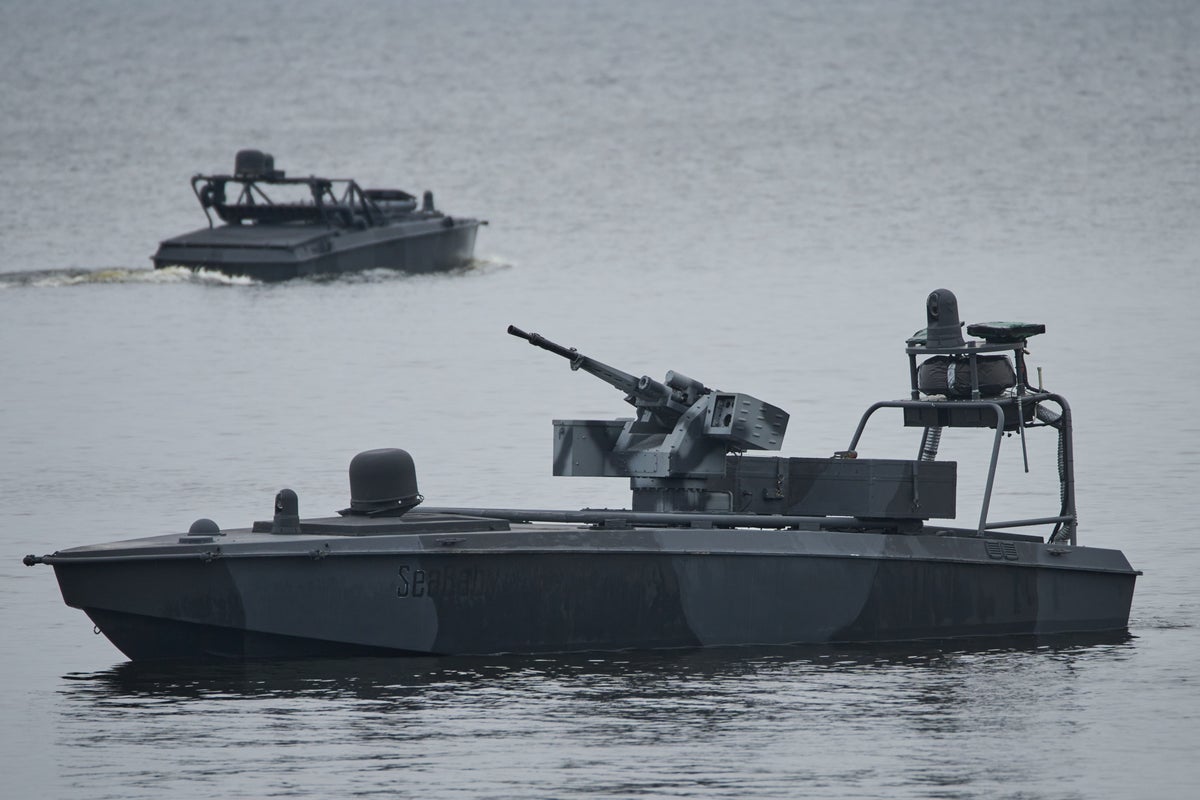
The Mediterranean just got a lot smaller, and a lot more dangerous. When a Russian-linked tanker ends up at the bottom of the sea, the ripples reach far beyond the shoreline. Russia is pointing the finger squarely at Ukraine, claiming a swarm of sea drones turned a routine transit into a shipwreck. This isn't just another headline about a sinking boat. It's a massive shift in how global powers protect their assets in waters once considered safe.
If you've been following the Black Sea conflict, you know Ukraine's Magura V5 and Sea Baby drones have been a nightmare for the Russian Navy. But the Mediterranean? That's a different beast. It’s crowded, heavily monitored by NATO, and thousands of miles from the primary front lines. If these claims hold water, the reach of asymmetric warfare just expanded exponentially. You aren't just looking at a regional skirmish anymore. You're looking at the blueprint for future maritime sabotage.
The Incident That Caught Everyone Off Guard
The tanker in question wasn't a warship, but in modern conflict, the line between commercial and military is thinner than a coat of paint. Russia asserts that Ukrainian special forces deployed unmanned surface vessels (USVs) to intercept the vessel. They say the strike was precise, intentional, and designed to choke off logistics. Ukraine, as per their usual playbook, remains largely tight-lipped, often letting the smoke speak for itself.
Wait a minute. How does a small, explosive-laden boat travel that far? Or was it launched from a "mother ship" hiding in plain sight? These are the questions naval analysts are scrambling to answer. You don't just drive a jet-ski-sized drone from Odessa to the middle of the Mediterranean without some serious help. This suggests a sophisticated network of intelligence and perhaps a few blind spots in international maritime surveillance.
Why This Sinking Changes the Security Map
For decades, the Mediterranean was the playground of big navies. High-tech destroyers and carrier strike groups ruled the waves. Now, a cheap piece of hardware built in a garage-style workshop can take down a massive tanker. It's a terrifying return on investment.
The Cost of Asymmetric Attacks
Think about the math. A standard naval missile might cost millions. A sea drone? You can build a dozen for the price of one luxury SUV. When Russia blames Ukraine for this specific sinking, they're acknowledging a gap in their own defenses. It’s an admission that their "blue water" navy can't even protect a slow-moving tanker in a sea surrounded by dozens of nations.
Impact on Global Shipping Routes
This isn't just Russia's problem. If sea drones are roaming the Mediterranean, every shipping company on earth just got a collective migraine. Insurance premiums for tankers are going to skyrocket. You'll see ships taking longer routes or demanding military escorts. That translates to higher prices at the pump and more expensive goods on your shelves. It’s a direct hit to the global supply chain, delivered by a remote control.
Sifting Through the Claims and Counterclaims
Russia's narrative is clear: they're the victim of "state-sponsored terrorism" on the high seas. Ukraine’s perspective, though often unofficial, is that any ship fueling the Russian war machine is a legitimate target. Who do you believe?
The truth usually sits somewhere in the middle of the debris field. We’ve seen satellite imagery in previous incidents that confirms the presence of wake trails consistent with USVs. We’ve seen the scorched hulls. But the Mediterranean is a crowded neighborhood. If a drone was launched there, someone saw something.
The Technical Leap Behind the Accusations
To understand why this is such a big deal, you have to look at the tech. These aren't the radio-controlled boats you played with as a kid. We’re talking about vessels equipped with Starlink terminals, high-definition thermal cameras, and hundreds of kilograms of explosives.
- Long-range communication: Using satellite links to stay connected across oceans.
- Low profile: They sit so low in the water that most civilian radars can't pick them up.
- Autonomous navigation: Some can now use AI to identify a target's silhouette and strike the most vulnerable part of the hull.
The NATO Factor and the Mediterranean Pressure Cooker
You can bet NATO is watching this with intense interest—and maybe a little sweat on the brow. If Ukraine did pull this off, they did it under the nose of some of the world's most advanced sonar and radar networks. That’s embarrassing for everyone involved.
Russia’s accusations serve a dual purpose. First, they want to paint Ukraine as a rogue actor threatening international waters. Second, they’re trying to pressure Western allies to rein in Kyiv's maritime ambitions. It's a diplomatic chess move played with a sunken ship.
Logistics and the Hidden War
Most people focus on the explosion. I focus on the fuel. Tankers are the lifeblood of any military operation. Without oil, the tanks stop, the jets stay grounded, and the trucks don't move. By targeting these vessels, the goal is to starve the front line. It’s a strategy as old as time, but the tools are brand new.
This specific sinking suggests that the "safe zones" for Russian logistics are shrinking. If you can't sail through the Mediterranean without looking over your shoulder for a robotic boat, your logistical tail is in serious trouble.
Moving Toward a New Maritime Reality
The era of the "safe sea" is over. We're entering a period where any body of water can become a combat zone in an instant. This incident proves that geographical distance doesn't provide the protection it used to.
If you're an investor, a policy-maker, or just someone who cares about global stability, you need to watch the "drone-ification" of the seas. It’s the most significant change in naval doctrine since the aircraft carrier replaced the battleship.
What to Watch for Next
Keep an eye on the official investigation reports—if they ever go public. Look for changes in how merchant ships are flagged and escorted in the region. Most importantly, watch for the inevitable "copycat" tech. Other nations are seeing how effective these drones are. It won't be long before we see similar tactics used in the South China Sea or the Red Sea.
To stay ahead of these shifts, start by tracking maritime insurance indices and the deployment patterns of European navies in the Mediterranean. The physical wreck might be at the bottom of the ocean, but the political and economic fallout is just starting to surface.


