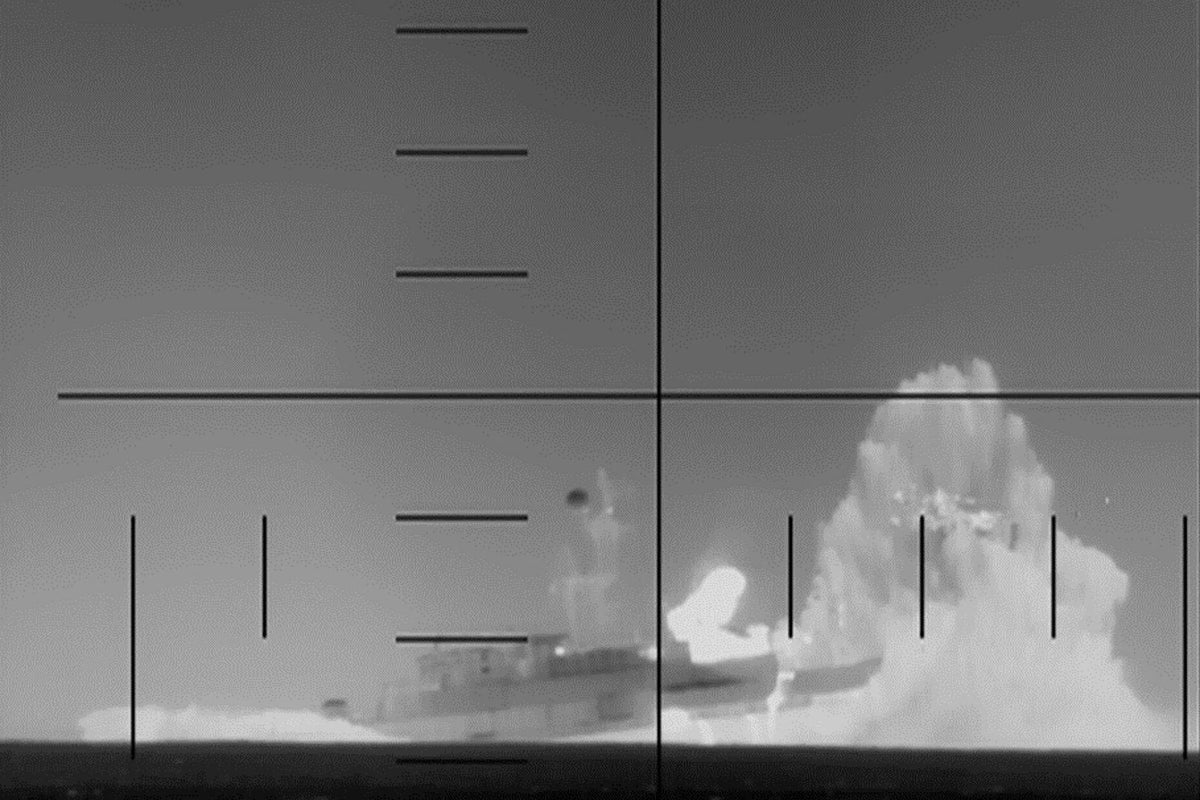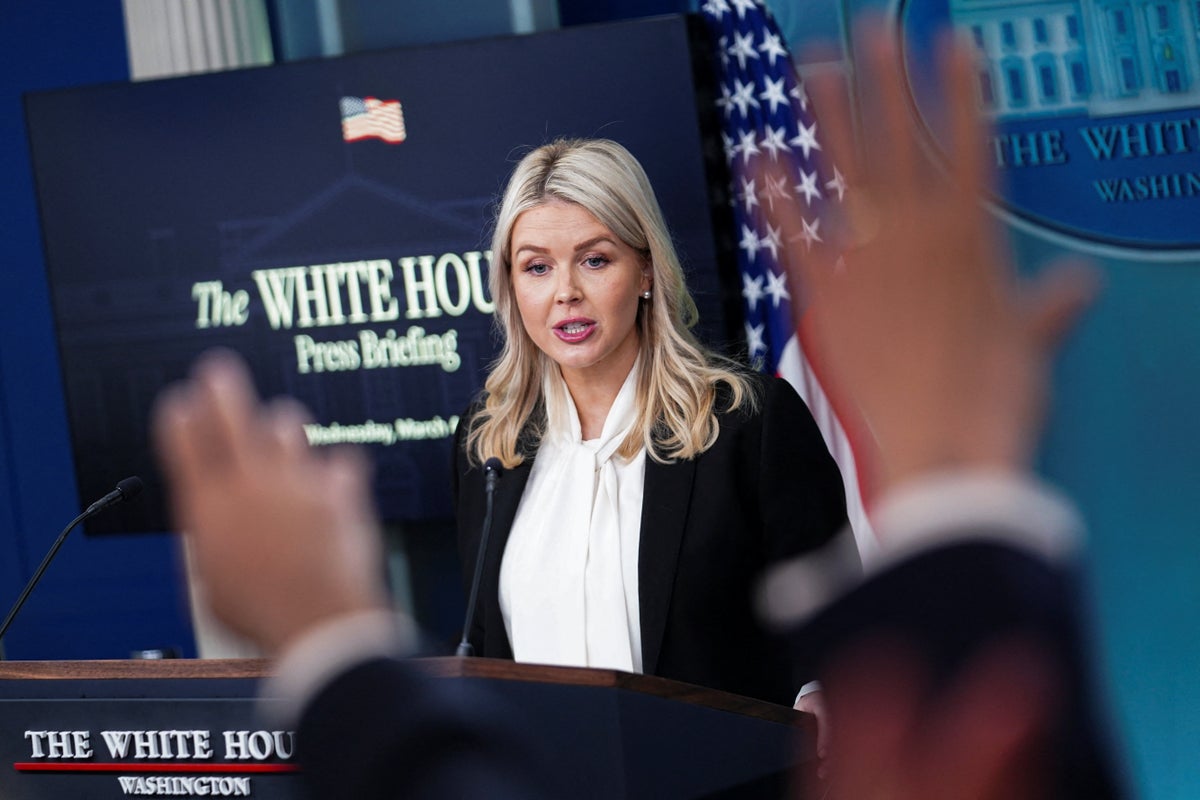
The deployment of military force against sovereign state actors relies on a precarious equilibrium between intelligence-led theater and the legal requirement for "imminent threat" justification. In the specific context of the U.S. strikes against Iranian interests, the communication strategy employed by the Trump administration—characterized by Karoline Leavitt as a "feeling based on fact"—represents a pivot from traditional evidentiary disclosure toward a model of Executive Intuitionism. This model prioritizes the speed of the OODA loop (Observe, Orient, Decide, Act) over the post-hoc transparency demanded by legislative bodies and the press.
To analyze the efficacy and risks of this strategy, one must deconstruct the components of "imminent threat" through the lens of modern intelligence gathering and the specific friction points of the U.S.-Iran shadow war.
The Architecture of Imminence in Asymmetric Warfare
The definition of an "imminent threat" has undergone significant structural erosion since the implementation of the War Powers Resolution of 1973. Traditionally, imminence required a "smoking gun": a localized troop movement, a fueled missile, or intercepted launch codes. In the current geopolitical framework, imminence is better defined as Probability Density over Time.
The administration’s refusal to provide granular data points—specific coordinates, dates, or intercepted communications—is not merely a defensive posture; it is a tactical choice to maintain Signal Dominance. Disclosing the "fact" behind the "feeling" risks burning sensitive collection methods, particularly if that data was harvested through signals intelligence (SIGINT) or human assets (HUMINT) within the Iranian Revolutionary Guard Corps (IRGC).
The Three Pillars of Intelligence-Based Intuition
The "feeling based on fact" can be mapped onto a logical triad that governs executive decision-making in high-stakes environments:
- Pattern Recognition (The Historical Baseline): Analysts look for deviations from the standard operational tempo of the adversary. If Iranian proxies in Iraq increase their encryption frequency or relocate high-value munitions, the "feeling" of a coming strike is a statistical projection based on prior cycles of escalation.
- Telemetry Synthesis: This involves the aggregation of disparate data streams—satellite imagery of airfield activity, financial shifts in regional accounts, and diplomatic back-channel silences. No single stream confirms a strike, but their convergence creates a high-probability vector.
- The Opportunity Cost of Inaction: The executive branch operates under a different risk-reward function than the legislature. For a press secretary or an analyst, the cost of a "false positive" (a strike based on faulty intel) is reputational. For the President, the cost of a "false negative" (failing to stop a strike that kills hundreds of Americans) is a catastrophic failure of the primary constitutional duty.
The Friction Between Transparency and Operational Security
When Karoline Leavitt or other administration officials decline to detail the specifics of a threat, they are navigating the Transparency Paradox. In a digital information environment, any fact released to satisfy domestic critics is simultaneously a data point for the adversary to perform a "post-mortem" on their own security breaches.
If the U.S. reveals it knew about a meeting in Baghdad at 3:00 PM, the Iranian security apparatus immediately narrows down the list of potential leakers or compromised devices present at that meeting. Therefore, the vagueness of the public narrative is a functional requirement for maintaining future surveillance capabilities.
Quantifying the Intelligence Gap
The tension in the public discourse arises from the gap between Raw Intelligence and Actionable Narrative.
- Raw Intelligence: "Agent X reports a 70% increase in chatter regarding 'Operation Redacted' scheduled for Q1."
- Actionable Narrative: "We have intelligence of an imminent threat."
The transition from the former to the latter involves a loss of precision that the public interprets as evasion. From a strategy consultant's perspective, the administration is choosing to accept a lower "Approval Rating" on transparency in exchange for a higher "Operational Success Rate."
The Cost Function of Strategic Ambiguity
Strategic ambiguity serves a dual purpose: it keeps the adversary guessing about the threshold for U.S. intervention, and it provides the Executive Branch with maximum maneuverability. However, this comes with a measurable cost to institutional trust.
The reliance on "feelings" or "intuition" as a public-facing justification creates a Precedent of Subjectivity. If "imminence" becomes a matter of executive interpretation rather than verifiable data, the structural checks and balances intended to constrain war-making powers are effectively bypassed. This creates a bottleneck in the legislative process, where Congress is asked to fund and support operations based on a "trust-but-don't-verify" model.
The Mechanism of Deterrence via Unpredictability
One must consider the possibility that the "feeling based on fact" is a deliberate exercise in Game Theory. By refusing to define the specific parameters that trigger a strike, the U.S. forces the IRGC into a state of hyper-caution.
In a standard deterrence model, the adversary knows that if they do $X$, the response will be $Y$. If the U.S. introduces a variable of "Executive Intuition," the adversary can no longer calculate the safety of $X$. They must account for the possibility that the U.S. will strike based on a "feeling" derived from subtle indicators they didn't even know they were projecting. This increases the "Cost of Aggression" by introducing an unquantifiable risk of massive retaliation.
Operational Realities of the IRGC-U.S. Interface
The conflict is not a series of isolated events but a continuous flow of kinetic and non-kinetic exchanges. The "imminent threat" cited by Leavitt likely refers to a surge in the Threat Lifecycle.
- Ideation: The adversary discusses potential targets.
- Resource Allocation: Munitions and personnel move toward the theater.
- Final Positioning: The window where a strike can be launched with zero additional warning.
The administration’s strategy appears to be striking at the "Resource Allocation" phase. While this technically precedes the traditional definition of imminence (Final Positioning), it is the only phase where a preemptive strike can effectively degrade the adversary's capability without triggering a full-scale regional war. Waiting for the "Final Positioning" phase often means the window to intercept has already closed.
The Logical Fallacy of the "Smoking Gun" Requirement
The demand for absolute proof before action assumes that intelligence is a binary state (True/False). In reality, intelligence is a Probability Distribution.
- A 90% probability of a strike killing 100 soldiers.
- A 10% probability that the intel is a deliberate plant by the adversary (Deception Ops).
The executive decision is a weighted calculation: is the 90% risk of loss greater than the 10% risk of a strategic blunder? By framing the decision as a "feeling based on fact," the administration is attempting to communicate this probabilistic reality to a public that thinks in binaries. The failure of this communication lies in the mismatch between the complexity of the calculation and the simplicity of the rhetoric.
Strategic Recommendation for Intelligence Communication
To bridge the gap between operational security and public trust, the communication framework must shift from "trust us" to "here is the logic of our caution."
The administration should adopt a Classified Briefing Tier System for the Gang of Eight (top Congressional leaders), while maintaining a Thematic Disclosure Model for the public. Instead of saying "we had a feeling," the messaging should focus on the "Structural Indicators of Escalation." This involves naming the categories of evidence (e.g., "unprecedented movement of short-range ballistic missiles in the Diyala province") without revealing the specific coordinates or the source of the imagery.
The move from "facts" to "feelings" in the public square signals a shift toward a more imperial presidency in matters of foreign policy. The long-term viability of this strategy depends on the continued success of the strikes; if a "feeling" leads to a quagmire, the lack of a "fact-based" paper trail will be the primary instrument of political deconstruction. The immediate strategic play is to institutionalize the "Probability-Based Imminence" model within the National Security Council to ensure that "Executive Intuition" is always backed by a rigorous, if undisclosed, data set.