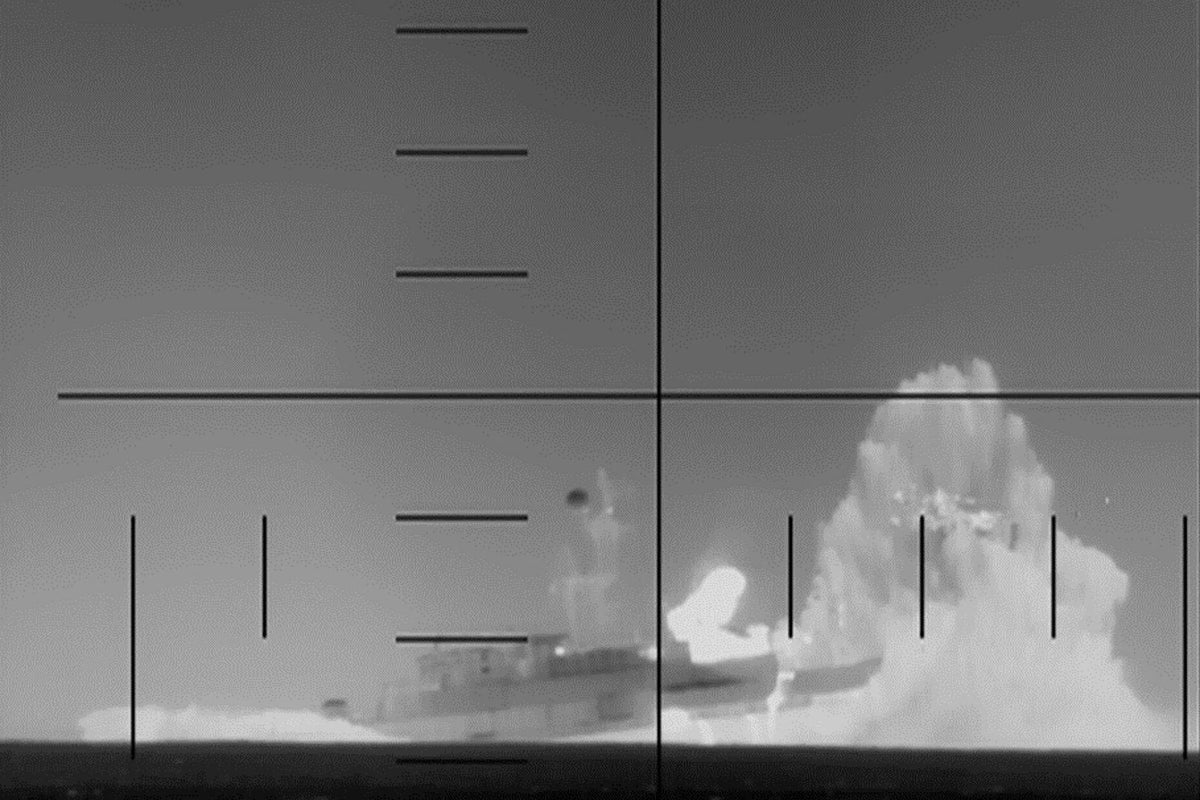
The current expansion of Iranian-aligned operations and the subsequent American kinetic response represents a shift from localized containment to a systemic war of attrition across three distinct geographic and functional theaters. To understand the trajectory of this conflict, one must move beyond the rhetoric of "warning" and examine the mathematical reality of asymmetrical warfare: the cost per engagement for Western forces is currently disconnected from the cost of production for Iranian-linked munitions. This mismatch creates a strategic deficit that cannot be solved by precision strikes alone.
The Triple-Theater Architecture
The conflict is no longer a series of isolated skirmishes but a synchronized multi-front engagement designed to overstretch Western naval and logistical assets. This architecture functions through three primary nodes: Recently making news in related news: Finland Is Not Keeping Calm And The West Is Misreading The Silence.
- The Levantine Node: Focused on high-intensity, short-range tactical engagements primarily involving Hezbollah. This serves as a "fix" mechanism, forcing the redirection of high-tier air defense assets (such as Iron Dome and David’s Sling) to a static geographical point.
- The Bab al-Mandab Node: Operationalized by Houthi forces, this theater targets the global maritime supply chain. By leveraging low-cost Loitering Munitions (LMs) and Anti-Ship Cruise Missiles (ASCMs), this node attacks the economic throughput of the Suez Canal, forcing a "Cape of Good Hope" reroute that adds roughly 10-14 days to global shipping cycles.
- The Mesopotamian-Syrian Node: Utilizing Islamic Resistance in Iraq (IRI) and various militias to target U.S. "tripwire" installations. These attacks are calibrated to remain below the threshold of total war while maintaining a constant pressure on the U.S. political appetite for regional presence.
The Cost-Curve Asymmetry
A fundamental failure in the current Western strategy is the reliance on high-cost interceptors to neutralize low-cost threats. The "Cost of Denial" is currently trending toward insolvency for the defender.
- Threat Vector: An Iranian-designed Shahed-136 drone costs approximately $20,000 to $50,000 to produce.
- Response Vector: A single RIM-162 Evolved SeaSparrow Missile (ESSM) or a RIM-156 SM-2 interceptor costs between $2 million and $4 million.
This creates a 100:1 cost ratio. While the U.S. Navy maintains technical superiority, the depth of the magazine becomes the primary bottleneck. If an adversary can launch 1,000 drones for the price of 10 interceptors, the defensive screen eventually experiences "saturation-induced leakage." This is the point where the volume of incoming fire exceeds the tracking and engagement capacity of the Aegis Combat System or similar platforms. Additional information into this topic are detailed by USA Today.
The "Initial Phase" Doctrine and its Limitations
When the U.S. administration states, "We have only just begun," it signals a transition from reactive defense to proactive degradation. This strategy relies on the Targeting Lifecycle (F2T2EA): Find, Fix, Track, Target, Engage, and Assess. However, the effectiveness of this lifecycle is hampered by the "Mobile Launcher Dilemma."
Iranian proxy assets are increasingly decentralized. Unlike traditional state militaries with fixed Command and Control (C2) centers, these groups use "Pop-Up" tactics. A Houthi missile crew can deploy a mobile launcher from a civilian-adjacent garage, fire, and relocate within minutes. The delay between detection and kinetic impact (the "sensor-to-shooter" loop) often exceeds the window of opportunity. Consequently, U.S. strikes often hit empty launch sites or secondary storage facilities, which are easily replaced due to Iran's robust "IKEA-style" kit-based distribution model.
Industrial-Scale Proxy Proliferation
Iran has mastered the art of "Technology Transfer without Traceability." Instead of shipping completed weapon systems, which are vulnerable to interdiction in international waters, Tehran exports the means of production. This involves:
- Standardized Component Kits: Smuggling high-end guidance chips and engines while using local materials for the airframes.
- Technical Advisory Cells: Deploying small teams of IRGC-QF (Quds Force) engineers to oversee local assembly, making the "factory" a distributed network of small workshops rather than a single identifiable target.
- Dual-Use Infrastructure: Utilizing civilian shipping and port facilities to move military-grade components under the guise of commercial trade.
This decentralization means that "destroying the source" requires a political and military escalation into Iranian territory—a move the U.S. and its allies have historically avoided to prevent a regional conflagration.
The Strategic Bottleneck: Port Security and Logistics
The true vulnerability in this expanding war is not the military base, but the commercial terminal. The global economy operates on "Just-in-Time" logistics. By forcing global shipping to bypass the Red Sea, the Iranian proxy network has effectively imposed a global tax.
Insurance premiums for Red Sea transits have spiked by over 1,000% since the onset of hostilities. This is not merely a military challenge; it is an economic blockade conducted by non-state actors using state-tier technology. The U.S.-led "Operation Prosperity Guardian" faces the challenge of protecting thousands of individual hulls across a vast maritime corridor. The "convoy model" used in World War II is inefficient for modern container traffic, leading to significant delays and inflationary pressure on energy and consumer goods.
Intelligence Failures and the "Gray Zone"
The expansion of this war into the "world stage" includes cyber operations and influence campaigns designed to erode Western domestic support. This "Gray Zone" activity occurs below the level of kinetic warfare but serves to constrain military options.
- Information Asymmetry: Proxies capitalize on civilian casualty incidents—real or staged—to trigger international diplomatic pressure on the U.S. and its allies.
- Cyber Interdiction: Iranian-linked groups have demonstrated the capability to target industrial control systems (ICS) in Western water and power utilities, serving as a reminder of the potential domestic costs of overseas escalation.
The Shift to "Active Defense" and Regional Integration
To pivot from a losing battle of attrition to a sustainable posture, the strategy must evolve toward Integrated Air and Missile Defense (IAMD) among regional partners. This involves:
- Sensor Fusion: Sharing radar and satellite data across Saudi, Emirati, Jordanian, and Israeli platforms to create a seamless tracking network. This reduces the "blind spots" that low-flying drones exploit.
- Directed Energy Transition: Accelerating the deployment of laser-based defense systems (like the Iron Beam) to collapse the engagement cost-curve. A laser shot costs roughly the price of the electricity used, effectively neutralizing the economic advantage of cheap drones.
- Financial Interdiction 2.0: Moving beyond simple sanctions to target the "Shadow Fleet" of tankers that fund these operations. This requires a level of maritime enforcement that risks direct confrontation with Iranian naval assets.
The Definitive Strategic Play
The U.S. cannot "strike" its way out of this conflict using its current inventory. The expansion of this war is a deliberate attempt by the Iranian-led axis to force a "Decisive Withdrawal" through cumulative exhaustion.
The strategic imperative is to decouple the defense of global commerce from expensive interceptors. This requires the immediate deployment of electronic warfare (EW) suites across commercial fleets to "soft-kill" incoming drones at zero cost per shot, combined with a sustained campaign against the assembly nodes within the proxy territories. If the U.S. continues to trade $2 million missiles for $20,000 drones, it is participating in a planned economic de-escalation of its own power. The next phase of the conflict will be defined by who controls the cost of the engagement, not who has the larger explosion.
Maintain a permanent, high-altitude persistence over launch zones with "Loitering Strike" capabilities to shrink the sensor-to-shooter loop to under 60 seconds. This is the only way to negate the mobile launcher advantage.
Would you like me to analyze the specific electronic warfare capabilities currently being integrated into commercial maritime defense systems?