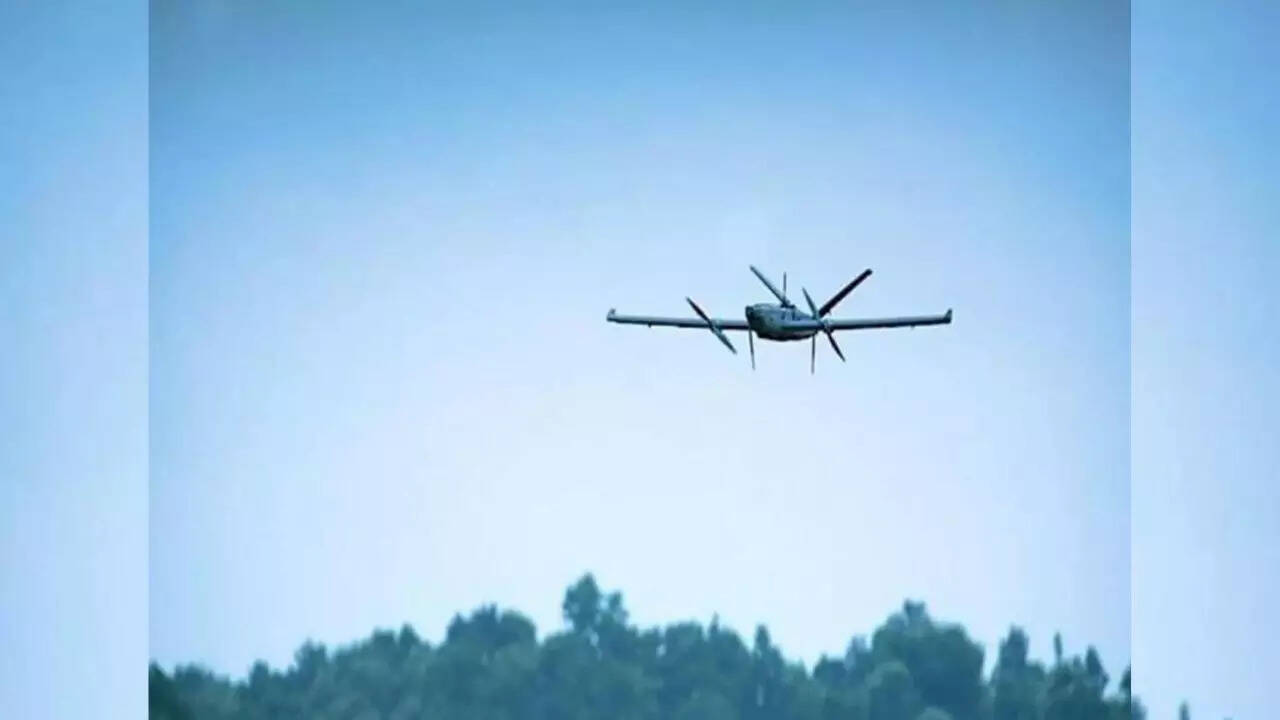
We're watching a financial train wreck in the skies over the Middle East. It’s not just about who has the better radar or the faster jet anymore. It’s about the checkbook. Right now, the United States and its allies are caught in a trap where they spend $4 million to swat away a $20,000 piece of flying junk. If you think that sounds sustainable, you haven't been paying attention to the math.
This isn't a theory. It’s happening in real-time as 2026 unfolds. Iranian-made Shahed drones—basically slow, loud lawnmowers with wings and explosives—are flooding the airspace. To stop them, the U.S. Navy and regional partners are reaching for the most sophisticated interceptors on the planet. We’re talking about the Patriot PAC-3 and the SM-6. These are engineering marvels designed to kill high-speed ballistic missiles. Using them on a Shahed is like using a Ferrari to run over an e-bike. You’ll win the collision, but you’ll go broke doing it.
The Asymmetric Arithmetic of Attrition
The numbers are staggering. A single Iranian Shahed-136 costs Tehran somewhere between $20,000 and $50,000. On the flip side, a PAC-3 MSE interceptor carries a price tag of roughly $4 million. That’s a cost ratio of 200-to-1 against the defender. When a swarm of 50 drones shows up, the attacker has "invested" maybe $1 million. The defender just spent $200 million in a single afternoon.
It’s a strategy of financial exhaustion. Iran and its proxies aren't trying to out-tech the Pentagon. They don't have to. They just have to out-produce us. The U.S. defense industrial base is set up to build a few hundred high-end missiles a year. Iran can churn out thousands of these "suicide drones" in the same timeframe using off-the-shelf parts and simple engines.
Why We Can't Just Stop Firing
You might wonder why we don't just let the cheap ones go. We can’t. Even a $20,000 drone carrying 50 kilograms of explosives can sink a billion-dollar destroyer or blow a hole in a critical oil refinery. The "value at risk" is too high. If a drone hits the Burj Al Arab or a U.S. embassy, the political and economic fallout is worth far more than the $4 million missile used to stop it.
But here’s the kicker: the interceptor stockpiles are finite. Reports from early 2026 suggest that some Gulf allies have nearly depleted their ready-to-fire Patriot reserves in just a few days of heavy engagement. You can’t just 3D print a Patriot missile overnight. When the high-end interceptors run out, the "cheap junk" starts hitting home.
Chasing the Cost Curve
The military is finally realizing they can't kill their way out of this with traditional missiles. They’re scrambling for "low-cost-per-shot" solutions, but the transition is messy.
- Directed Energy: Lasers like the Iron Beam or the UK’s DragonFire promise to kill drones for about $10 a shot. Sounds great, right? But lasers have range issues and struggle in bad weather or dust storms—which the Middle East has plenty of.
- Microwave Weapons: High-power microwave (HPM) systems can fry the electronics of an entire swarm at once. These are starting to see deployment, but they aren't everywhere yet.
- Kinetic Interceptors: The U.S. is now buying things like the Coyote interceptor—a small drone designed to ram other drones. It’s cheaper than a Patriot, but at $100,000 each, it’s still five times more expensive than the target it’s chasing.
The Reality of 2026
Warfare has shifted from a contest of quality to a contest of volume. We’ve spent decades perfecting the silver bullet, only to find ourselves in a fight against a cloud of bees. The U.S. and its allies are currently winning the tactical battles—the interception rates are often over 90%—but they’re losing the economic war.
Every time a $4 million missile leaves the rail to hit a $20k drone, the "attacker" wins a little bit, even if their drone is destroyed. They’ve successfully traded a cheap, expendable asset for a rare, expensive one. Honestly, the only way to fix this is to stop playing the game by the old rules.
The immediate next step for defense planners isn't buying more $4 million missiles. It’s the aggressive integration of AI-guided gun systems and electronic warfare that can jam or shoot down these threats for the price of a few dozen bullets or a burst of radio waves. Until that happens, the math of modern war remains fundamentally broken.