The modern global economy operates on the assumption that if you are banned from the ledger, you cease to exist. For the Islamic Republic of Iran, existence is a matter of moving 1.5 million barrels of crude oil every single day while the world’s most powerful financial systems try to freeze them out. This is not a story about simple smuggling. It is an industrial-scale operation involving hundreds of aging tankers, shell companies in the Marshall Islands, and "ship-to-ship" transfers conducted in the dead of night off the coast of Malaysia.
Iran manages to sustain its economy through a "ghost fleet"—a shadow maritime network that circumvents Western sanctions with clinical precision. While the U.S. Treasury Department blacklists vessels, Tehran simply renames them, reflags them, and sends them back into the fray. This system has become so efficient that it no longer feels like a desperate workaround. It is a parallel market, one that dictates the price of oil in Asia and keeps the geopolitical scales balanced in the Middle East.
The Architecture of a Shadow Navy
To understand how a sanctioned nation keeps its lights on, you have to look at the vintage of the ships. The ghost fleet is comprised largely of VLCCs (Very Large Crude Carriers) that are well past their prime. Typically, a tanker is sent to the scrapyard after 20 years. In the shadow market, a 25-year-old vessel is a prized asset. These ships are bought through opaque layers of ownership, often using cash and intermediary brokers in Dubai or Hong Kong who specialize in making paper trails vanish.
Once a ship enters the Iranian service, it undergoes a digital lobotomy. The crew disables the Automatic Identification System (AIS), the transponder meant to prevent collisions and track global shipping. On satellite monitors, the ship disappears near the Strait of Hormuz. In reality, it is docking at Kharg Island, filling its belly with heavy Iranian crude.
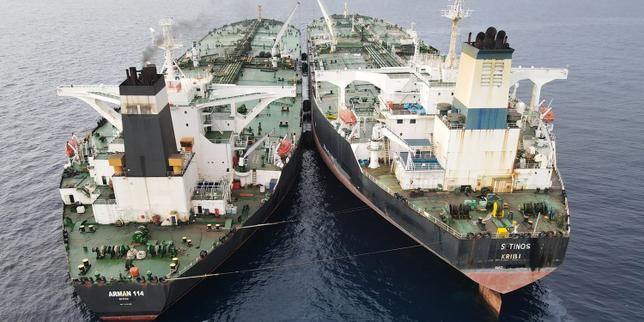
The most critical part of the journey occurs in the "middle of nowhere" spots of the South China Sea. Here, the ghost tanker meets a "clean" vessel—one with no obvious ties to Tehran. Under the cover of darkness, they tether together. Hoses are connected, and the oil is pumped from the sanctioned ship to the unsanctioned one. This is known as a ship-to-ship (STS) transfer. By the time that oil reaches a refinery in Shandong, China, the paperwork describes it as "Malaysian Blend" or "Omani Crude." The origin has been laundered as effectively as a stack of hundred-dollar bills.
The China Connection and the Private Teapots
China is the primary patron of this underground trade. However, it isn't the state-owned giants like Sinopec or PetroChina doing the heavy lifting. They have too much exposure to the U.S. dollar and Western markets to risk being caught. Instead, the oil flows to "teapots"—independent refineries located mostly in the Shandong province.
These teapots are the lifeblood of the Iranian export strategy. They operate with high margins because they buy Iranian crude at a steep discount, often $10 to $15 below the Brent benchmark. For a refinery processing 100,000 barrels a day, that discount represents a staggering profit motive. The transaction is rarely settled in U.S. dollars. Instead, the parties use the Chinese Yuan or barter arrangements, trading oil for consumer goods, machinery, or infrastructure projects. This bypasses the SWIFT banking system entirely, leaving Western regulators shouting into a void.
The High Cost of Cutting Corners
The existence of the ghost fleet creates a massive, unquantified risk to the global environment. Because these ships are old and operate outside the bounds of international maritime insurance (like the P&I Clubs), they are floating environmental disasters waiting to happen. A major spill from an uninsured, 26-year-old tanker in the Malacca Strait would be a nightmare. There would be no clear owner to sue, no insurance policy to tap for cleanup, and no accountability.
Furthermore, the maintenance on these vessels is often substandard. They avoid major ports where they might be inspected by authorities. They undergo "patch-and-pray" repairs at sea or in friendly jurisdictions. This creates a two-tier maritime world: one that follows the rules of the International Maritime Organization (IMO) and another that operates in a lawless gray zone, driven by the necessity of survival and the lure of high-risk profits.
The Flag of Convenience Shell Game
A ship’s flag is its identity. To stay ahead of sanctions, Iranian-linked vessels frequently switch their registration between "flags of convenience" like Panama, Liberia, or the Cook Islands. When a registry faces pressure from Washington to de-flag a suspected Iranian tanker, the owners simply move the registration to a different, less scrupulous flag within weeks.
- Vessel Renaming: Ships change names as often as seasons. A tanker might start the year as the "Galaxy" and end it as the "Abyss."
- Corporate Layering: The "owner" of the ship is often a single-vessel company registered in a jurisdiction that does not disclose beneficial ownership.
- Spoofing: Advanced crews now use technology to "spoof" their AIS signals. A ship might appear on GPS to be anchored off the coast of Singapore while it is actually hundreds of miles away loading oil in Iran.
Why Sanctions Fail to Stop the Flow
The primary reason the ghost fleet persists is that the global demand for cheap energy outweighs the political will to enforce total isolation. For many nations, the moral high ground is a luxury they cannot afford when their domestic industries require low-cost fuel. Washington can tighten the screws, but as long as there is a buyer willing to look the other way, the oil will find a path.
The Iranian regime has also become masters of domestic resilience. They have built their own internal insurance schemes and specialized shipping arms like the National Iranian Tanker Company (NITC). They aren't just reacting to sanctions; they have built a permanent, parallel infrastructure designed to withstand them indefinitely. This is no longer a temporary crisis management strategy. It is the new business model.
The Evolution of Maritime Surveillance
Western intelligence agencies and private satellite firms are in a constant arms race with the ghost fleet. They use Synthetic Aperture Radar (SAR) to see through clouds and identify ships by their "wake signatures" even when their transponders are off. They track the "dark activity" clusters where STS transfers occur.
Yet, for every ship caught, two more seem to emerge. The sheer volume of global shipping makes it nearly impossible to monitor every aging VLCC. The ocean is vast, and the profit margins for those willing to facilitate the trade are too high to ignore. Brokers in the UAE and Singapore make millions in commissions for simply "not asking questions" about the origin of a cargo or the true identity of a buyer.
The Profitability of Pariah Status
There is a perverse irony in the sanctions regime. By forcing Iranian oil into the shadows, the West has created a highly lucrative niche for middlemen. This "sanctions tax" doesn't just go to the Iranian government; it enriches a global network of facilitators. This includes:
- Independent Tanker Owners: Individuals who buy scrapped vessels for a few million dollars and make their entire investment back in three or four successful runs.
- Private Refiners: The Chinese teapots that have become some of the most profitable small refineries in the world.
- Black Market Financiers: Money exchange houses that move funds through hawala networks, bypassing the digital eyes of the Treasury.
The system is now self-sustaining. It has its own supply chain, its own fleet, and its own banking. Even if sanctions were lifted tomorrow, the infrastructure of the shadow market wouldn't disappear. It would likely just pivot to the next sanctioned commodity, whether that be Russian oil, Venezuelan crude, or North Korean minerals.
The ghost fleet is the ultimate proof that in a connected world, total isolation is an illusion. You can ban a country from the front door of the global economy, but if they have something the world needs, they will always find the back door. The water is too deep, the night is too dark, and the hunger for cheap oil is simply too strong.
Monitor the price gap between Brent crude and the "Malaysian" blends appearing in Asian ports if you want to see the true strength of Tehran's grip on the shadow market.