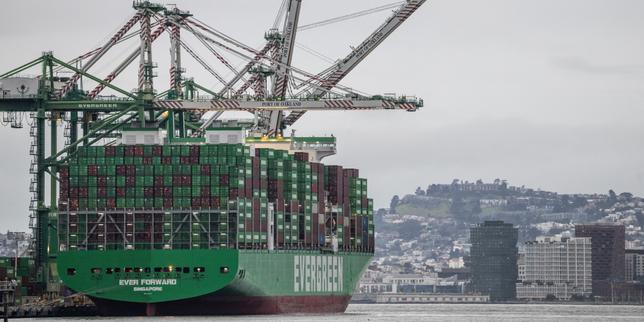
The French government is finally acknowledging a reality that industrial insiders have whispered about for twenty years. France, and by extension the European Union, is tethered to a Chinese supply chain for the critical metals required for the energy transition. Without lithium, cobalt, nickel, and rare earths, the "Green Revolution" is nothing more than a collection of expensive sketches. Bercy’s latest roadmap to reduce this dependency is an ambitious mixture of public subsidies, diplomatic maneuvering, and a desperate hope that domestic mining can be rebranded as an environmental necessity.
To understand the scale of the challenge, one must look at the numbers. China currently processes roughly 90% of the world’s rare earth elements and a staggering majority of the lithium used in electric vehicle batteries. France’s plan involves a multi-billion euro investment fund designed to secure primary materials and boost recycling. However, money is the easy part. The difficult part is the decades of industrial atrophy and environmental regulation that have made Europe a "not in my backyard" zone for heavy industry.
The Strategy of State Intervention
The French Ministry of Economy and Finance is moving away from the hands-off neoliberalism of the past. They are now embracing a "dirigiste" approach, where the state acts as both a shield and a financier. The centerpiece of this effort is a dedicated investment fund for critical raw materials. This isn't just about writing checks to mining companies; it is about taking equity stakes in projects abroad and at home to ensure that French manufacturers get first dibs on the output.
This shift mirrors the moves made by the United States with the Inflation Reduction Act. France realizes that if it doesn't subsidize its way to mineral security, its automotive industry—the pride of the nation—will effectively become a subsidiary of Chinese battery giants. The government is pushing for a "European preference" in subsidies, essentially rewarding companies that source their materials from within the bloc or from "trusted" partners.
The Mirage of Domestic Mining
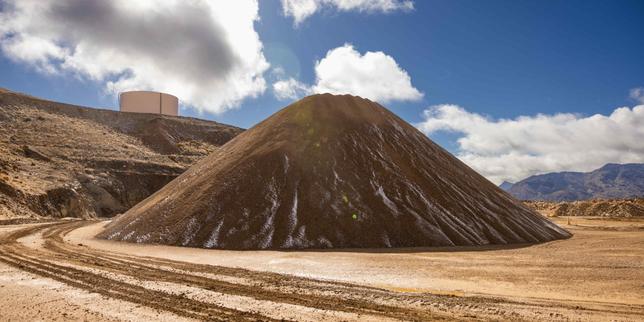
For years, France pretended its underground wealth didn't exist or wasn't worth the political headache. That changed with the announcement of the Emili project in the Massif Central. This lithium mine, led by the company Imerys, is slated to become one of Europe’s largest. The government is touting it as a "clean" mine, but the technical reality is more complicated.
Extracting lithium from mica—the specific type of rock found in the Beauvoir quarry—is more energy-intensive than extracting it from the brine flats of South America or the spodumene of Australia. It requires a massive amount of chemical processing. The "green" label depends entirely on the French nuclear grid providing low-carbon electricity for the refining process. If the costs of this electricity rise, or if the local opposition in the Allier region hardens, the economic viability of the project evaporates.
Furthermore, France's mining code was written for a different era. The government is rushing to streamline the permitting process, but they are hitting a wall of bureaucratic inertia. In the mining world, five years is a blink of an eye. In the political world, it's an eternity. Bercy wants results by 2027, but most mining engineers will tell you that getting a new site from discovery to full production usually takes twelve to fifteen years.
The Recycling Trap
A major pillar of the French proposal is the "circular economy." The idea is simple: if we can’t mine it, we’ll recycle what we already have. It sounds perfect on paper. We take the batteries from the first generation of electric vehicles (EVs), break them down, and use the minerals for the next generation.
There is a significant lag time in this logic. Most EVs currently on the road won't reach the end of their lives for another decade. The volume of "scrap" available for recycling today is a fraction of what is needed to build millions of new cars. Relying on recycling to solve a 2026 supply crisis is like trying to build a house using only the wood from a house that hasn't been torn down yet.
Moreover, China is already the world leader in battery recycling technology. They aren't just ahead in digging holes; they are ahead in the chemistry of recovery. If France wants to lead in recycling, it needs to invent better, cheaper ways to separate lithium and graphite than the methods currently patented by Chinese firms.
Diplomacy and the Global Race for Scraps
France is also looking toward "mineral diplomacy." This involves building alliances with countries like Kazakhstan, Canada, and Australia to diversify away from China. This is a crowded field. Every major economy is currently knocking on the same doors in Ottawa and Perth.
The leverage France brings to these negotiations is limited. Unlike the U.S., France cannot offer massive military protection umbrellas in exchange for mineral rights. Unlike China, it cannot deploy thousands of state-backed workers to build infrastructure overnight in the Global South. France’s pitch is "ESG compliance"—the promise that they will mine more ethically than the competition. Whether a mining minister in a developing nation cares more about French ethics or Chinese infrastructure is a question Bercy has yet to answer convincingly.
The Economic Cost of Sovereignty
Reducing dependence on China will not be cheap. Chinese minerals are inexpensive because of massive scale, low environmental standards, and state-subsidized energy. If France insists on sourcing "ethical" minerals from domestic or allied sources, the cost of the final product—the electric car—will go up.
There is a fundamental tension here. The government wants to speed up the transition to EVs to meet climate goals, but they also want to decouple from the cheapest supplier of the necessary components. You cannot have both a cheap transition and a sovereign transition. Someone has to pay the difference. Currently, the plan suggests that the taxpayer will pick up the tab through subsidies, but that is a temporary fix. Long-term, the consumer will feel the "sovereignty premium" at the dealership.
The Forgotten Metals
While the focus remains on lithium and nickel, there is a dangerous lack of attention on the "minor" metals. Gallium, germanium, and magnesium are equally vital for high-tech applications and defense systems. China recently restricted the export of gallium and germanium as a shot across the bow in the ongoing trade war.
France’s plan mentions these, but the infrastructure to process them is non-existent in Europe. We are not just missing the mines; we are missing the smelters, the refineries, and the specialized chemical plants. Building a mine is hard, but building a chemical ecosystem is harder. It requires a workforce of specialized metallurgists that Europe has allowed to dwindle over the last thirty years as industrial jobs moved East.
The Sovereignty of the Grid
The entire minerals strategy hinges on one thing: cheap, reliable nuclear power. Without it, the "Green" minerals produced in France will be too expensive to compete on the global market. The mining and refining of metals are brutal, energy-hungry processes. If France's nuclear fleet continues to face maintenance delays or if the price of electricity is indexed to volatile gas markets, the plan for mineral independence will collapse under the weight of its own utility bills.
Industrialists are watching the "Map of Critical Metals" with skepticism. They have seen government white papers before. The difference this time is the sense of urgency. The "de-risking" strategy is no longer a choice; it is a survival mechanism. However, the path to independence is blocked by a lack of skilled labor, a complex regulatory environment, and a public that wants green technology but doesn't want the mines that make it possible.
The Reality of the Mid-Stream
The biggest hole in the French strategy isn't extraction—it’s the "mid-stream" processing. Even if France opens three new lithium mines tomorrow, the raw ore often has to be sent to China to be turned into battery-grade chemicals. China has built a "moat" around the chemical processing stage that is incredibly difficult to cross.
France needs to build "Gigafactories" for chemicals, not just for battery assembly. We are currently building the end of the chain (the cars) and trying to secure the beginning (the mines), but the middle of the chain is still owned by Beijing. Until France or its EU neighbors can turn rock into high-purity chemicals at scale, the reliance on China remains absolute.
The French government's plan is a bold admission of a strategic failure that lasted for a generation. It is a necessary pivot, but it is being executed on a timeline that ignores the physical and chemical realities of the mining industry. To succeed, Bercy will need to do more than sign checks; it will have to convince a skeptical public that the "ugly" business of mining is the only way to reach a "beautiful" green future.
If the Emili project or the recycling initiatives stall due to local protests or technical hurdles, France will remain exactly where it is today: a customer of a Chinese monopoly, building a "green" future on a foundation of foreign dependence. The clock is ticking toward the 2035 ban on internal combustion engines, and the minerals for the replacements are still mostly on the other side of the world.
Audit the supply chain of any major French industrial project today and you will find a trail that leads back to a processing plant in Ningbo or Tianjin. Breaking that trail requires more than just a five-year plan; it requires an industrial mobilization not seen since the post-war era. Without it, French "sovereignty" is just a buzzword used to mask a profound and ongoing vulnerability.