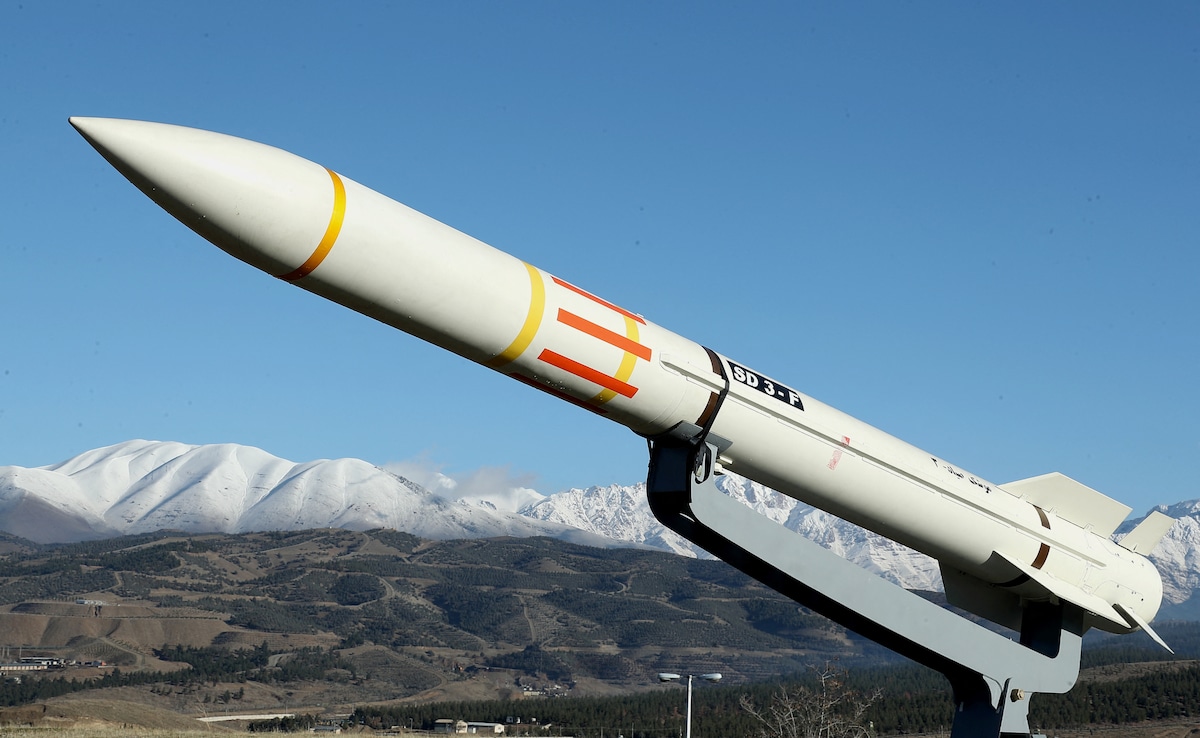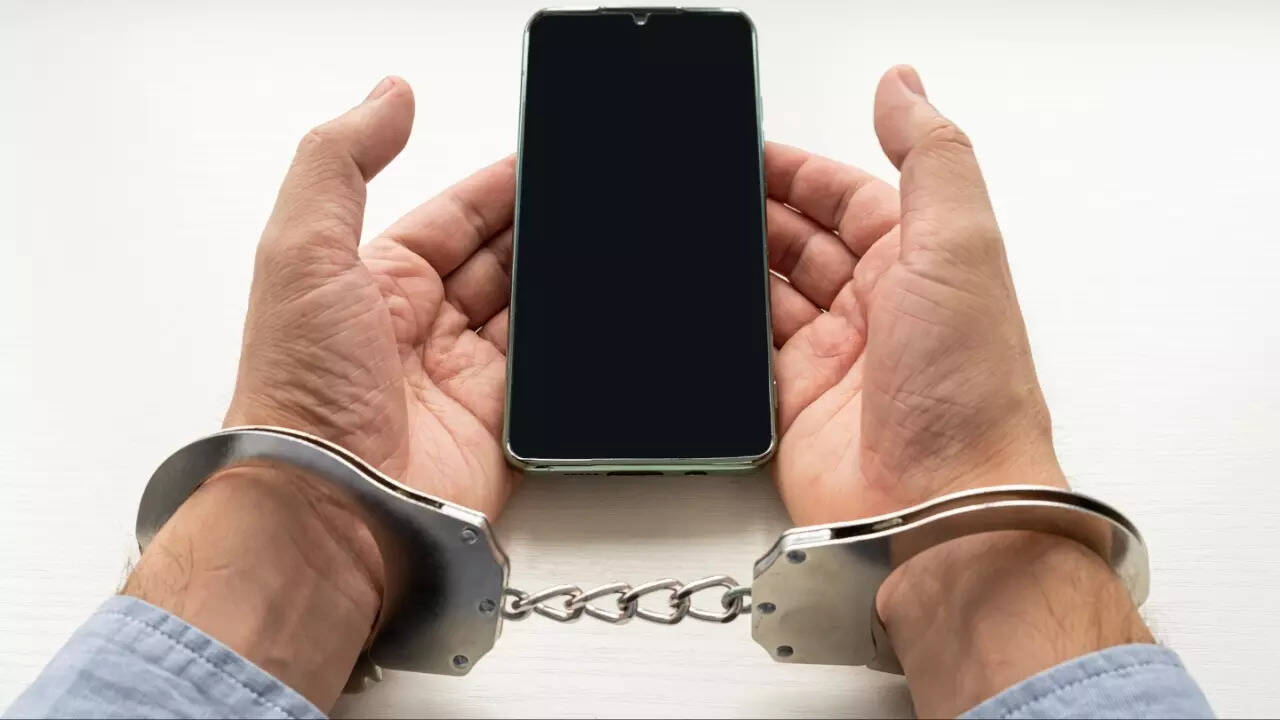
The arrest of two individuals in Kuwait for social media content satirizing the national armed forces and air defense capabilities is not a localized incident of censorship, but a strategic deployment of legal force to maintain the integrity of national defense signaling. In the context of the triad conflict between Iran, Israel, and the United States, the Gulf Cooperation Council (GCC) states operate under a specialized security constraint: the "Domestic-External Feedback Loop." This mechanism dictates that any internal perception of military weakness or incompetence directly degrades the state's external deterrence posture. When viral media targets technical infrastructure—specifically air defense systems—it transitions from protected speech to a vulnerability in the state’s psychological operations (PSYOP) defense layer.
The Tri-Border Security Framework
To understand the severity of the Kuwaiti response, one must categorize the state's current security environment through three distinct pressure points. In similar news, we also covered: The Sabotage of the Sultans.
- The Geographical Vulnerability Factor: Kuwait’s proximity to the northern Gulf makes it a primary corridor for projectile trajectories and drone incursions originating from regional proxies. Unlike larger landmasses, Kuwait lacks strategic depth. Any degradation in the public's trust in the military’s interception capabilities can trigger immediate economic flight and domestic instability.
- The Information Integrity Mandate: In modern asymmetric warfare, the "Front End" is the kinetic battlefield (interceptors, radars, personnel), while the "Back End" is the digital perception of those assets. By mocking the air defense efforts during a period of high regional alert, the accused individuals introduced "signal noise" that adversaries can use to gauge public morale or identify perceived gaps in coverage.
- The Legal-Military Intersection: Kuwaiti law, specifically Article 25 of the State Security Law and the Cybercrime Law of 2015, treats the disparagement of the military as a direct threat to national sovereignty. The state views the digital space as an extension of the physical garrison; thus, a viral video is processed with the same severity as physical sabotage of a radar installation.
The Cost of Perceived Incompetence in Air Defense
Air defense is a psychological product as much as a kinetic one. The efficacy of a Patriot or Skyguard system is predicated on the "Deterrence by Denial" theory. If a population believes the system is a failure, the deterrent value drops to zero, regardless of the actual interception rate.
The mocked videos specifically targeted the perceived readiness of Kuwaiti forces during a period where Iran-Israel tensions necessitated 24/7 combat air patrols and active sensor monitoring. The logic of the Kuwaiti Interior Ministry follows a strict "Contagion Model." If satirized military content remains unpunished, it creates a precedent for "Information Decay," where the civilian population begins to prioritize social media narratives over official Ministry of Defense (MoD) communications. This decay leads to three measurable risks: TIME has analyzed this fascinating topic in great detail.
- Panic-Induced Economic Volatility: Rapid withdrawals from local markets or hoarding of goods triggered by rumors of air defense failures.
- Intelligence Leakage: Satirical videos often inadvertently film military installations, equipment locations, or personnel movements, providing Open Source Intelligence (OSINT) to hostile actors.
- Recruitment and Morale Erosion: High-frequency mockery of the armed forces during active duty cycles negatively impacts the retention and psychological readiness of the rank-and-file.
The Digital Sovereignty Doctrine
The Kuwaiti state’s reaction reflects a broader shift toward "Digital Sovereignty," a doctrine where the state asserts absolute authority over the narrative within its digital borders. This is particularly critical for GCC states that host foreign military assets. Kuwait houses several U.S. installations, including Camp Arifjan and Ali Al Salem Air Base. Any domestic narrative suggesting Kuwaiti air defense is inadequate indirectly calls into question the security of these high-value partner assets, potentially complicating diplomatic and military cooperation frameworks.
The arrests function as a "Hard Reset" on the domestic information environment. By applying the "Broken Windows Theory" to digital discourse—addressing minor infractions (satirical videos) with high-intensity legal responses—the state signals to the broader public that the cost of information interference during active regional conflict is prohibitively high.
Structural Vulnerabilities in Public Perception
The tension between the state and social media users arises from a technical misunderstanding of air defense metrics. Most civilians measure air defense success by a "Binary 100% Success Rate" (every target must be hit). In reality, military air defense operates on a "Probability of Kill" ($P_k$) formula:
$$P_k = 1 - (1 - p)^n$$
In this equation, $p$ represents the probability of a single missile hitting the target, and $n$ represents the number of interceptors fired. Even with high-tier technology, success is never absolute. When social media users mock a system for a perceived gap, they are often reacting to standard operational variances. However, the state cannot educate the public on the $P_k$ variables without revealing classified performance data. Therefore, the state resorts to legal suppression to close the gap between technical reality and public perception.
Kinetic Implications of Social Media Sentiment
Adversarial actors utilize "Sentiment Analysis" algorithms to monitor the domestic mood of their targets. If a significant percentage of a population is seen mocking their own air defense on platforms like X or TikTok, an adversary may calculate that a limited strike would cause disproportionate psychological damage.
The "Threshold of Provocation" is lowered when the target population appears fragmented or skeptical of its own defense. The Kuwaiti security apparatus identifies this as a "Force Multiplier" for the enemy. By arresting the creators of these videos, the Ministry of Interior is effectively removing the data points that an adversary would use to calibrate a psychological or kinetic operation.
Algorithmic Radicalization vs. National Security
The viral nature of the content in question is driven by engagement algorithms that prioritize high-arousal emotions—specifically humor and outrage. In a state of war or near-war, these algorithms work against the state’s need for "Strategic Boredom." The state requires its citizens to remain calm, follow official directives, and refrain from speculative or satirical engagement with defense systems.
The second arrest—a follow-up to the first—reinforces the state’s commitment to an "Extinction Burst" policy. By targeting not just the initial content creator but those who perpetuate the narrative, the Kuwaiti security forces aim to rapidly extinguish the satirical trend before it can become a durable cultural phenomenon or a normalized form of dissent.
The Geopolitical Context of Kuwaiti Information Management
The arrest is inextricably linked to the current "Axis of Resistance" activities and the potential for a direct Iran-Israel escalation. In this scenario, Kuwait, like its neighbors, acts as a geographical buffer. Any domestic dissent within Kuwait that targets the military is analyzed by regional powers as a sign of a "Soft Target."
Kuwait’s strategic playbook involves:
- Redundancy in Interception: Deploying both domestic Patriot batteries and cooperating with U.S.-led Regional Integrated Air and Missile Defense (IAMD).
- Narrative Discipline: Ensuring that the domestic population reflects the military’s "High Readiness" state.
- Legal Deterrence: Proactive policing of the cyber-sphere to prevent the emergence of an "Anti-Military Social Media Culture."
The legal framework employed in these arrests is not an anomaly but a component of a larger "Information Defense Layer" ($IDL$). This layer is integrated with the kinetic defense layer to ensure that the state’s deterrent signal remains clear, unified, and uncompromising.
Strategic Recommendation for Kuwaiti Internal Security
The Ministry of Interior and the Ministry of Defense must transition from a purely reactive "Arrest and Prosecute" model to a "Preemptive Strategic Communication" (STRATCOM) framework. Relying solely on the legal system to suppress viral mockery is a high-cost strategy with diminishing returns as the digital population grows.
To maintain the integrity of the state’s defense signaling, Kuwait must:
- Establish a Technical Fact-Checking Bureau: An MoD-linked unit capable of debunking military satire with declassified technical data in real-time, reducing the "Information Vacuum" that satirists exploit.
- Segmented Public Education: Launching non-classified education campaigns regarding the complexities of air defense to align public expectations with the mathematical realities of $P_k$ and saturation attacks.
- Cyber-Civilian Integration: Creating a formal channel for citizens to report potential security breaches or misinformation without the immediate threat of prosecution, fostering a "Security-First" digital culture.
The state’s current tactical victory in arresting two individuals must be followed by a structural overhaul of how the military engages with the domestic digital population. Failure to do so will result in a "Whack-a-Mole" security environment where the state is constantly chasing decentralized satire while its regional adversaries exploit the resulting narrative fractures.
The final strategic move for Kuwait is the institutionalization of the "Narrative Shield." This involves treating the digital perception of the military as a high-value asset, equivalent to an F/A-18 or a Patriot battery, requiring constant maintenance, tactical deployment, and protection from both internal and external subversion.
Would you like me to develop a comparative analysis of how other GCC states, such as Saudi Arabia or the UAE, have structurally integrated their cyber-crime laws with their national defense strategies?