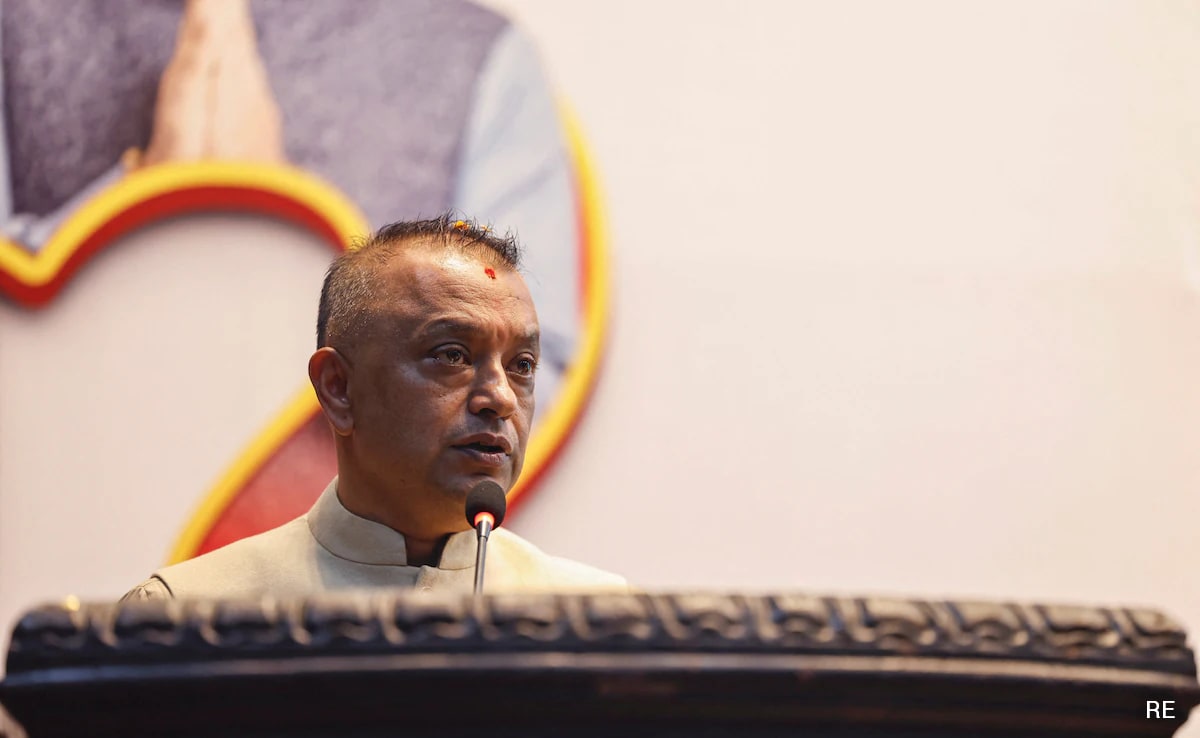
The political pundits are salivating over the "courage" of Gagan Thapa. They see a Kathmandu-bred elite migrating to the plains of Madhesh and call it a masterstroke of national integration. They are wrong. This isn't a demonstration of strength; it is a desperate hedge against the crumbling foundations of the Nepali Congress in its traditional urban strongholds.
Moving Gagan Thapa to Madhesh is a tactical retreat disguised as a strategic expansion. Expanding on this topic, you can find more in: Why the Green Party Victory in Manchester is a Disaster for Keir Starmer.
To understand why this move is actually a signal of panic, you have to look past the superficial narrative of "One Nepal." The mainstream media treats the Madhesh province as a playground for experimentation, a place where high-profile leaders can "test their mettle." In reality, the Nepali Congress is treating the Madhesh like a venture capitalist treats a distressed asset: they are dumping their most valuable personal brand into a volatile market because they are losing the war at home.
The Myth of the Pan-Nepal Leader
The "lazy consensus" argues that Thapa, as a General Secretary of the Nepali Congress, needs to prove he can win outside the valley to solidify his claim for the Prime Minister’s chair. This is a fundamental misunderstanding of how Nepali voter psychology works. Analysts at BBC News have shared their thoughts on this situation.
Voters in Madhesh are not looking for a savior from the hills to explain federalism to them. They have spent two decades fighting for a distinct identity that specifically rejects the paternalism of Kathmandu’s "educated" elite. By parachuting Thapa into the Madhesh, the Congress is inadvertently validating the Madheshi parties' core argument: that the "Big Three" parties view the plains as a colonial outpost to be harvested for seats whenever the Kathmandu numbers don't add up.
Why Kathmandu is Toxic for the Congress
Let’s look at the data the party hierarchy is trying to ignore. In the last local and general elections, the rise of the Rastriya Swatantra Party (RSP) and independent movements didn't just dent the Congress—it eviscerated their future. The urban youth, once Thapa’s ironclad base, have shifted. They don't want a "reformer within the system"; they want to burn the system down.
If Thapa stays in Kathmandu, he risks a humiliating defeat at the hands of a 25-year-old with a TikTok account and zero political baggage. By moving to Madhesh, he isn't seeking a challenge; he is seeking a sanctuary. He is betting that the traditional, "feudal" voting blocks of the plains—which the Congress still partially controls through local patronage networks—are safer than the volatile, unpredictable voters of the capital.
It is a coward’s gambit wrapped in a hero’s flag.
The Madhesh Calculation: A Zero-Sum Game
The competitor's narrative suggests this move will bridge the hill-plain divide. It won't. It will likely ignite a fresh wave of resentment.
- Displacement of Local Leadership: Every time a "central leader" moves to a new constituency, they kill the careers of five local aspirants who have spent decades building grassroots support. This creates a vacuum of trust.
- The "Tourist" Label: In Madhesh, the label of "Pahade" (Hill person) is still a potent political weapon. Thapa might be a charismatic orator, but charisma doesn't translate across linguistic and cultural barriers when the underlying sentiment is "You only come here when you need our thumbprints."
- The Proxy War: Thapa isn't just fighting the opposition; he's fighting the Deuba faction within his own party. The establishment would love nothing more than to see Gagan bogged down in a grueling, expensive, and culturally alien campaign far away from the power centers of Sanepa.
The Fatal Flaw in "People Also Ask" Logic
When people ask, "Can Gagan Thapa become the Prime Minister by winning in Madhesh?", they are asking the wrong question. Winning a seat is the easy part. The real question is: "Can the Nepali Congress survive the abandonment of its urban identity?"
The Congress was built on the back of the urban middle class and the intellectual elite. By signaling that their brightest star can no longer hold the capital, they are admitting that the party is no longer the voice of the modern Nepali. They are becoming a rural-only party, a collection of local warlords trading votes for favors, while the RSP and others claim the future.
The Tactical Nightmare
Let’s talk mechanics. A campaign in Madhesh is not a series of town halls and intellectual debates. It is a grueling exercise in managing "the 3 Ms": Money, Muscle, and Manipulation. Thapa’s brand is built on transparency and "new politics." The moment he enters the Madhesh electoral ecosystem, he will be forced to play by the old rules.
If he plays clean, he loses to the entrenched local machinery of the JSP or Loktantrik Samajwadi Party. If he plays dirty, he destroys the very brand that makes him a national contender. There is no middle ground.
I’ve seen this play out before. Leaders think they can "transform" a constituency, only to find that the constituency transforms them. By the time the election is over, Gagan Thapa won't be the fresh face of the New Nepal; he will be just another politician who traded his principles for a safe path to Parliament.
The Downside of This Perspective
To be fair, there is a risk in staying. If Thapa stays in Kathmandu and loses, his career is effectively over. The risk of the Madhesh move is "brand dilution," while the risk of the Kathmandu stay is "political death." But great leaders don't choose the "lesser death." They win where it's hardest, or they go down with the ship.
By fleeing to the plains, Thapa is admitting that the "Congress Reform" project has failed. He is admitting that he cannot convince his own neighbors to vote for him anymore.
The Reality Check
The Madhesh does not need another Kathmandu politician telling them how much he loves the Terai. They need representation that emerges from their own soil. Thapa’s move is the ultimate act of "Kathmandu Privilege"—the belief that a seat in the plains is a backup option for a valley elite whose luck has run out.
Stop calling this a "bold move." Call it what it is: an exit strategy.
If the Nepali Congress wants to prove it is still relevant, it should stop moving its pieces around the board and start changing the way it plays the game. But that would require actual courage, not just a change of address.
Don't watch Gagan Thapa’s speeches in the Madhesh. Watch the vacancy he leaves behind in Kathmandu. That empty space is the sound of a party dying.
Would you like me to analyze the specific demographic shifts in the Kathmandu-4 constituency that are driving this relocation?