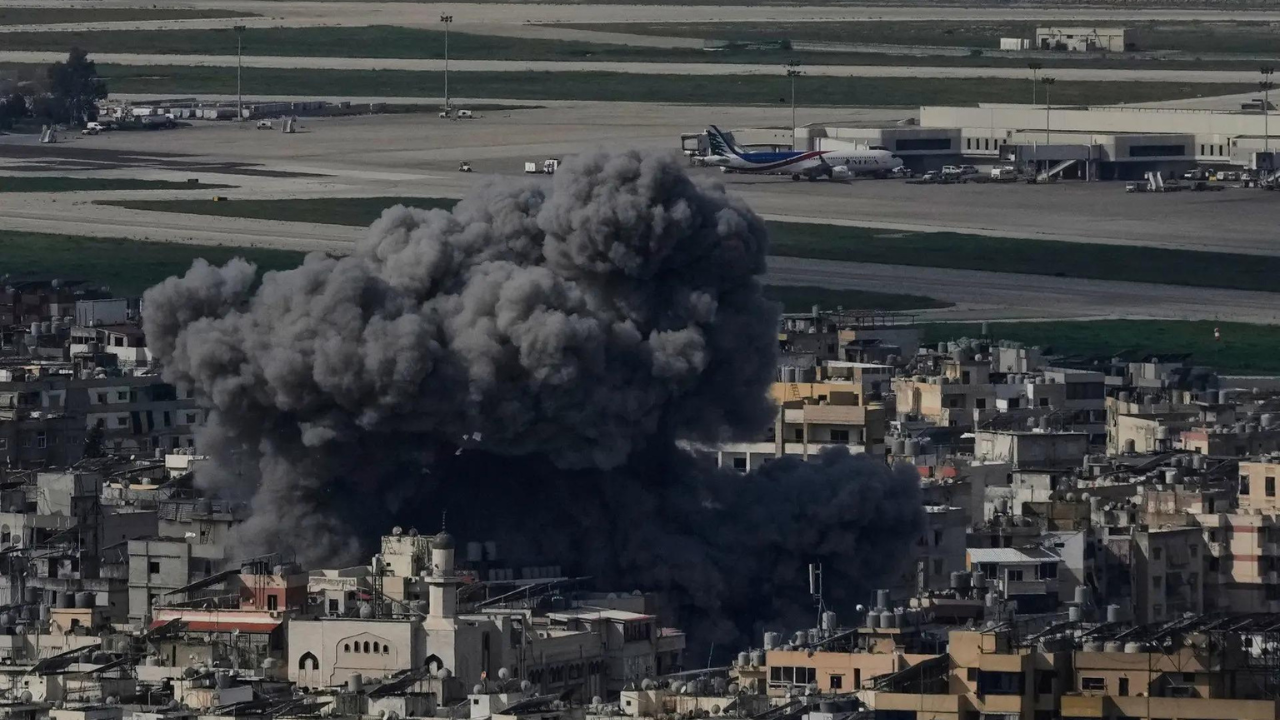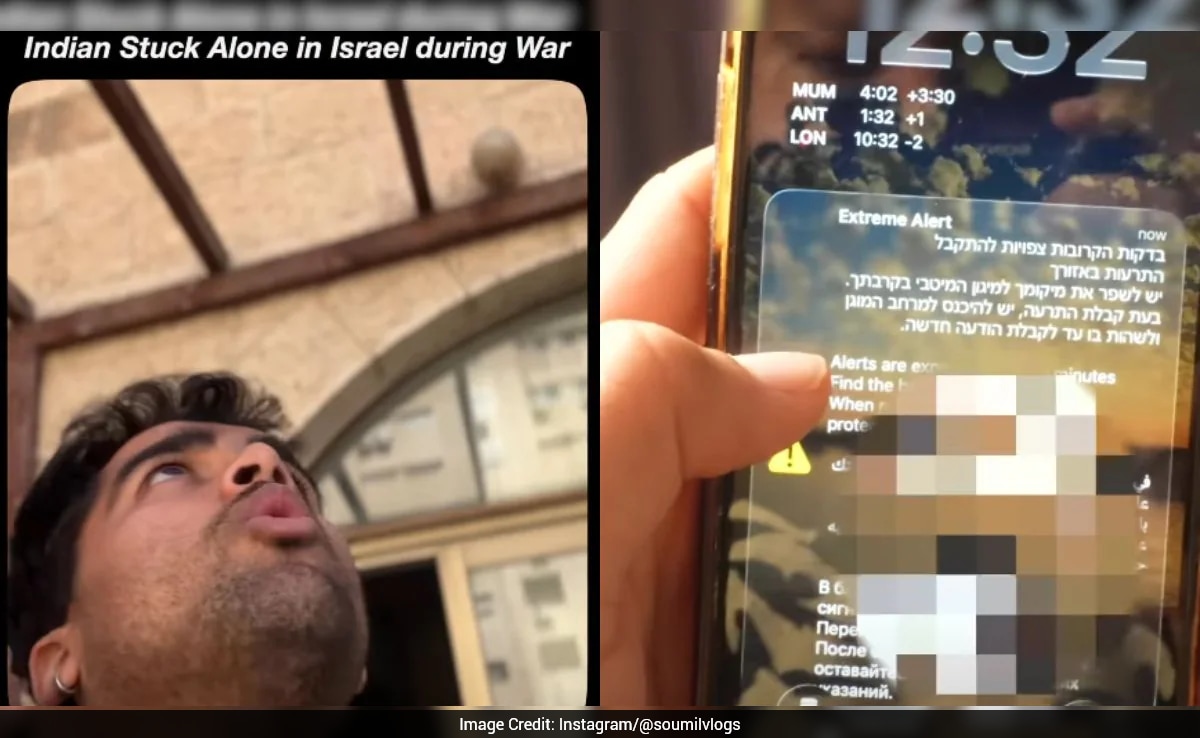
The sirens began as a distant wail before the sky over Tel Aviv turned into a grid of orange streaks and white smoke. For the roughly 18,000 Indians living in Israel, this was no longer a headline back home in Kerala or Haryana. It was a visceral, chest-rattling reality. While social media clips often focus on the "crazy experience" of capturing missile interceptions on a smartphone, the actual mechanics of survival for the Indian diaspora in the Middle East reveal a far more complex story of economic desperation, sophisticated civil defense, and a calculated gamble with life.
The immediate concern for any foreign national in a strike zone is the location of the nearest mamad—the reinforced security room required in every modern Israeli apartment. However, for the thousands of Indian caregivers and construction workers living in older, cheaper districts, these shelters are often minutes away rather than seconds. When Iran launched its ballistic missile volleys, the math of survival became brutal. You have between 90 seconds and several minutes depending on your location. If you are on the fourth floor of a walk-up in south Tel Aviv, those seconds vanish quickly.
The Economics of Risk in a War Zone
Why do they stay? This is the question that critics and worried families ask every time the Red Alert app screams. The answer is found in the widening gap between the Indian and Israeli economies. A caregiver in Israel can earn significantly more than a professional in many Indian states, often sending home enough to build houses, clear ancestral debts, or fund siblings' educations.
This financial tether creates a unique psychological state. Many Indian workers have developed a conditioned stoicism. They view the Iron Dome and the Arrow defense systems not just as military hardware, but as the guarantors of their monthly paycheck. If the missiles are intercepted, the work continues. If the work continues, the remittances flow. It is a high-stakes trade-off where the threat of a kinetic strike is weighed against the certainty of poverty back home.
The Invisible Infrastructure of Survival
The Indian Embassy in Tel Aviv operates a massive logistical network that rarely makes it into viral videos. Beyond the "Operation Ajay" evacuation flights, there is a constant stream of communication through WhatsApp groups and community leaders. These digital lifelines provide real-time translations of Home Front Command instructions.
In Hebrew-speaking environments, nuances in siren patterns or instructions regarding "shelter-in-place" can be lost on a new migrant. The community has stepped in to fill this gap. They have mapped out the public shelters (miklatim) and established "buddy systems" for the elderly or those who lack mobility. This isn't just a "crazy experience" to be shared for likes; it is a labor-intensive, grassroots effort to ensure that not a single member of the diaspora is left standing in the street when the sky opens up.
Geopolitical Shifts and the Labor Vacuum
The presence of Indian workers in Israel has taken on a new, more sensitive dimension following the suspension of work permits for Palestinian laborers. This created a massive vacuum in the construction and agricultural sectors—sectors that Indian laborers are now increasingly filling.
This shift has moved the Indian worker from the periphery of Israeli society into its essential core. They are no longer just caregivers in private homes; they are the backbone of the infrastructure that keeps the country functioning during a prolonged conflict. This increased visibility brings increased risk. Agricultural workers in the north, near the Lebanese border, face a different threat than those in Tel Aviv. Here, the warning time is measured in heartbeats, and the weapons are often short-range rockets or drones that fly under the radar of traditional defense systems.
The Psychological Toll of the "Golden Cage"
Living in a permanent state of high alert creates a specific type of trauma that isn't captured in a 60-second video. It is the exhaustion of sleeping in your clothes, the hyper-vigilance toward loud noises, and the guilt of lying to parents back in India about how close the blasts really were.
Many migrants describe Israel as a "golden cage." The money is excellent, the standard of living is high, and the technology is world-class, but the ceiling is made of high explosives. They are trapped between the desire for safety and the necessity of income. When a missile is intercepted, the flash of light is a reminder that the cage held—for today.
Beyond the Viral Clip
The "crazy experience" narrative pushed by casual observers misses the structural reality of modern warfare. In the past, war meant total evacuation. Today, because of advanced missile defense, war means a strange coexistence. You go to work, you buy groceries, you take a video of an interception, and then you go back to cooking dinner.
This normalization of conflict is perhaps the most striking aspect of the Indian experience in Israel. They have integrated the threat into their daily routine. They know the difference between the "boom" of an outgoing interceptor and the "thud" of a successful hit. This is expertise born of necessity, a grim skill set acquired by people who simply wanted a better life for their children.
The Indian government faces a diplomatic tightrope. They must protect their citizens without appearing to interfere in the internal security decisions of a key strategic partner. While evacuation remains an option, the reality is that most Indians in Israel do not want to leave. They have calculated the odds, and they are betting on the technology.
If you are an Indian national currently in Israel, your most critical asset is not your passport, but your proximity to hardened cover. Do not rely on the visual of a "clear sky" after an interception. Falling shrapnel from a destroyed missile is just as lethal as the warhead itself. Stay in the shelter for the full ten minutes after the siren stops, regardless of what you see on social media.