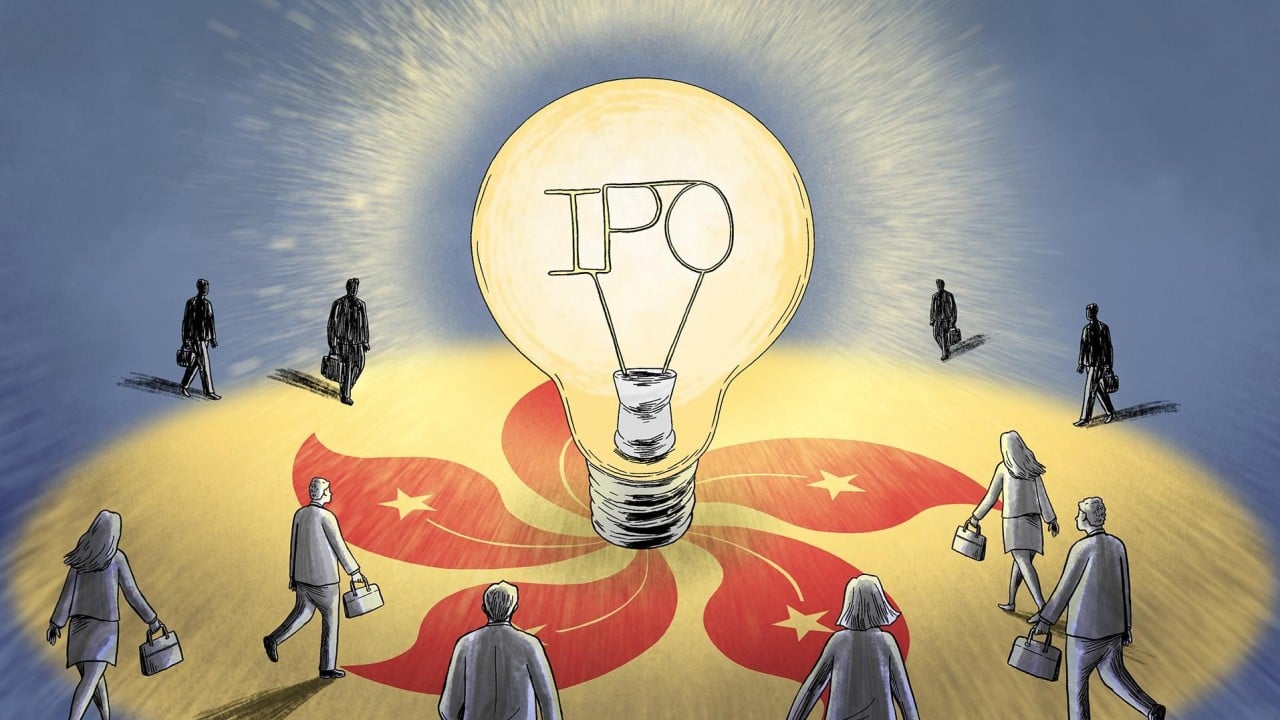
Cornerstone investors are the security blankets of the Hong Kong Stock Exchange. They are the pacifiers used to calm a nervous market. When you see a "big comeback" in cornerstone participation, you aren't seeing a recovery. You are seeing a structural failure being masked by institutional handouts.
The common narrative suggests that heavy cornerstone backing is a "vote of confidence." It is nothing of the sort. It is a desperate liquidity trap designed to manufacture the appearance of demand where none exists. If a company were actually worth the valuation it claims, it wouldn't need to lock up 50% or 60% of its float with hand-picked allies before the first retail trade even hits the tape.
The Illusion Of Price Discovery
The fundamental purpose of an Initial Public Offering (IPO) is price discovery. In a healthy market, the price is set by the collective intelligence of thousands of participants. Hong Kong has abandoned this. By leaning on cornerstones, issuers are effectively fixing the price in a smoke-filled room and then asking the public to validate it.
When a cornerstone investor agrees to a six-month lock-up in exchange for a guaranteed allocation, they aren't "investing" in the traditional sense. They are participating in a signaling exercise. They are the shills at the auction house bidding on their own painting to trick the guy in the back row into raising his paddle.
Why The 50 Percent Rule Is A Warning Sign
I have watched dozens of deals where the cornerstone tranche exceeds half of the total offering. The "lazy consensus" says this ensures a successful debut. The reality? It destroys the secondary market.
- Artificial Scarcity: By locking up the majority of shares, you create a tiny "free float."
- Volatility Spikes: With no shares available to trade, even small buy or sell orders send the price swinging wildly.
- The Six-Month Cliff: Every retail investor is now playing a game of musical chairs, trying to exit before the lock-up expires and the cornerstones dump their massive positions.
This isn't a market. It's a hostage situation.
Dismantling The "State-Backed Stability" Myth
A recurring theme in the pro-HK IPO literature is the "stabilizing influence" of state-owned enterprises (SOEs) and local government investment vehicles acting as cornerstones. These are often referred to as "anchor investors."
Let's be blunt: An anchor doesn't just provide stability; it drags you to the bottom.
When a local government fund invests in a regional tech IPO, they aren't looking for $alpha$. They are fulfilling a policy mandate. They are supporting a "local champion." This creates a massive misalignment of interests. You, the retail or institutional trader, want the stock to go up. The cornerstone just wants the deal to close so they can check a box on a government report.
If the largest holders of a stock don't care about the stock price, why should you?
The "Friends And Family" Valuation Loop
Imagine a scenario where a pre-IPO company is struggling to justify a $5 billion valuation. In a rational market, they would cut the price to $3 billion. In the Hong Kong cornerstone model, they simply call three "friendly" firms and promise them future favors or business partnerships if they take up the cornerstone slack at the $5 billion mark.
The valuation is protected, but the underlying business is still only worth $3 billion. The public gets left holding the $2 billion gap when the "friends" eventually exit. This is how you get the "bleeding IPO" phenomenon where stocks lose 40% of their value in the first year of trading despite a "successful" launch.
The Retail Trap: Don't Follow The Smart Money
The most dangerous advice in the financial press right now is to "follow the smart money" into these cornerstone-heavy deals. This assumes the cornerstones are "smart."
In reality, many cornerstones are:
- Index Huggers: Forced to buy because the company will eventually hit a specific benchmark.
- Strategic Partners: Buying shares to secure a supply chain deal or a joint venture, making the stock price secondary to their operational goals.
- Distressed Buyers: Swapping debt for equity under the guise of an "investment."
None of these motivations align with your goal of capital appreciation. When a deal is 70% cornerstoned, the "smart money" has already sucked the oxygen out of the room. There is no meat left on the bone for the public.
How To Actually Evaluate A Hong Kong Listing
If you want to survive the current IPO cycle, you have to invert the standard checklist. Stop looking at who is in the deal and start looking at why they need to be there.
The Low-Cornerstone Alpha
The highest-performing IPOs are often those with the lowest cornerstone participation. Why? Because it proves the issuer was confident enough to face the open market. They didn't need a safety net. They didn't need to bribe institutions with guaranteed allocations.
Watch for these red flags:
- Cornerstone concentration > 50%: This is a sign of a "forced" listing.
- Unrelated cornerstones: Why is a construction firm buying a stake in a biotech IPO? It’s a favor, not an investment.
- Lack of Tier-1 Global Funds: If the only cornerstones are local entities you've never heard of, the global "smart money" has already passed on the deal.
The Cost Of "Stability"
The Hong Kong exchange (HKEX) prides itself on being a bridge between East and West. But by allowing—and effectively encouraging—the cornerstone crutch, it is becoming a private club for institutional insiders.
This behavior actively discourages the kind of high-conviction, fundamental investing that built the world's great markets. When you remove the risk for the big players via guaranteed allocations and price-fixing, you shift all that risk onto the retail public.
The "comeback" of cornerstones isn't a sign of Hong Kong's strength. It's an admission that the market can no longer price assets on its own.
Stop cheering for the "anchor" investors. They are the weight that will keep your portfolio submerged while the insiders row away in the lifeboats.
Look for the deals the "experts" say are risky because they lack cornerstone backing. Those are the only ones where the price actually means something. Everything else is just a staged performance for an audience of one: the bagholder.
Go find a listing that doesn't need a bodyguard.