The era of the Gulf Arab mediator is over. For years, Riyadh and Abu Dhabi bet their economic futures on a delicate balancing act, whispering in Washington’s ear to keep the peace while keeping a back channel open to Tehran. They believed that money, trade, and strategic patience could insulate their glittering skylines from the scorched-earth realities of regional proxy wars. That illusion has shattered. As ballistic missiles and suicide drones bypass sophisticated defense nets to strike energy infrastructure and commercial shipping, the calculation in the palaces of the Middle East has shifted from cautious diplomacy to a grim preparation for inevitable conflict.
The shift isn't just about security. It is about the fundamental realization that the United States cannot, or will not, provide the absolute security umbrella the Gulf states once took for granted. When the "maximum pressure" campaigns of the past failed to produce a compliant Iran, and when subsequent diplomatic overtures failed to stop the flow of advanced weaponry to non-state actors, the Gulf leadership arrived at a cold conclusion. They are no longer interested in being the bridge between two rivals. They are picking a side, and they are preparing for the fallout.
The Mirage of De escalation
For nearly a decade, the prevailing narrative in Riyadh and Dubai was one of "Vision" and "Transformation." These are not just buzzwords; they represent a multi-trillion-dollar bet that the region could transition away from oil. This transition requires stability. You cannot build a global tourism hub or a tech corridor in a war zone. This economic imperative drove the push for the Abraham Accords and the surprising restoration of ties between Saudi Arabia and Iran mediated by Beijing.
However, these diplomatic breakthroughs were always fragile. They were built on the hope that Iran would trade its regional influence for economic integration. It was a misreading of the room. Tehran’s strategic depth is built on its network of militias, a "ring of fire" that it has no intention of dismantling. When the drones started hitting tankers and the missiles began targeting the very infrastructure meant to fund the new Arab economy, the diplomatic mask slipped.
The realization hit hard. Diplomacy had not bought peace; it had bought time for adversaries to refine their targeting. The Gulf states now see that their previous efforts to lobby the U.S. for a "Grand Bargain" were effectively an attempt to buy insurance from a company that was already looking for the exit.
The New War Footing
The change in tone is audible to anyone listening to the state-aligned media and the quiet briefings in the capital cities. The language of "regional partnership" has been replaced by the language of "deterrence." This isn't just rhetoric. We are seeing a massive pivot in procurement and military doctrine.
The Shift to Offensive Capability
Historically, Gulf militaries were designed for defense and prestige. They bought the most expensive American jets and missile batteries, creating a formidable "Fortress Gulf." That strategy is failing. Cheap, mass-produced drones can overwhelm a million-dollar Patriot missile battery through sheer volume.
The new strategy is different.
- Domestic Production: Saudi Arabia and the UAE are moving aggressively to build their own defense industries. They want to be able to strike back without waiting for a green light or a resupply from a fickle Washington.
- Intelligence Integration: There is a deepening, albeit often quiet, cooperation with any regional power that views Tehran as an existential threat. This isn't about shared values; it's about shared targets.
- Economic Warfare: The Gulf is beginning to use its financial weight as a weapon, tightening the screws on any entities that facilitate the movement of weapons to insurgent groups.
This isn't the behavior of states looking for a seat at the negotiating table. It is the behavior of states that have decided the table has been burned down.
Washington’s Credibility Gap
The core of this crisis lies in a total breakdown of trust between the Gulf monarchies and the U.S. State Department. The memory of the 2019 attacks on the Abqaiq and Khurais oil facilities remains a raw nerve. The lack of a decisive U.S. military response at that time was a watershed moment. It taught the Gulf Arabs that the "Carter Doctrine"—the idea that the U.S. would use military force to defend its interests in the Persian Gulf—was effectively dead.
The current administration's attempts to revive the nuclear deal while simultaneously trying to reassure the Gulf of their security were seen as contradictory and weak. From the perspective of a Gulf strategist, the U.S. is trying to have it both ways: exiting the region while promising to keep it safe.
This has led to a dangerous brand of "strategic autonomy." When the Gulf states no longer believe the U.S. will protect them, they feel compelled to act more aggressively themselves. This increases the risk of a "hair-trigger" response to any perceived provocation. If a drone hits a refinery in 2026, the response won't be a phone call to the U.S. Secretary of State. It will be a direct, unilateral retaliation.
The Energy Weapon Redefined
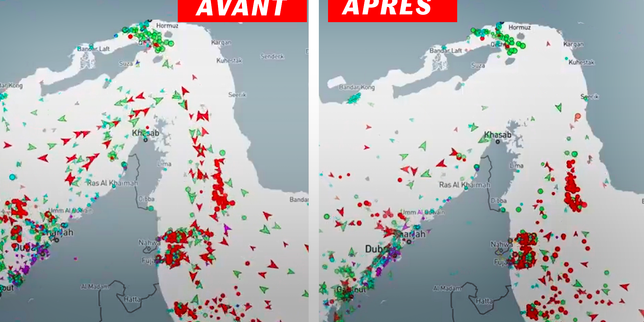
In the past, the Gulf used oil production levels to influence global politics. Now, they are realizing that their energy infrastructure is their greatest vulnerability. The concentration of the world’s energy supply in a few square miles of the Eastern Province and the Straits of Hormuz makes for a target-rich environment.
We are seeing a desperate rush to diversify export routes. Pipelines to the Red Sea and the Gulf of Oman are no longer just logistical projects; they are survival projects. The goal is to make the Iranian threat to the Straits of Hormuz irrelevant. But these projects take years, and the threat is immediate.
This vulnerability is what’s driving the tilt toward war. If the Gulf states believe that a conflict is inevitable, they may decide it is better to have that conflict now, on their own terms, rather than waiting until their entire economic future is held hostage by a precision-strike capability they cannot stop.
The Failure of the Middle Man
The Sultanate of Oman and the State of Qatar have long played the role of the region’s "fixers," providing a neutral ground for enemies to talk. This space is shrinking. As the regional heavyweights move toward a war footing, the pressure on these smaller states to pick a side is becoming immense.
Neutrality is becoming a luxury that the region can no longer afford. When the rockets start flying, being "in the middle" usually just means you get hit from both sides. The diplomatic "Third Way" is being squeezed out by the reality of a bipolar Middle East, divided between an Iranian-led axis and an Arab-Israeli-American alignment that is increasingly militarized and impatient.
The Calculus of Preemption
The most dangerous element of this shift is the growing belief in preemption. In the hallways of power in Riyadh, there is a burgeoning school of thought that suggests the only way to stop the "slow-motion strangulation" of the Gulf is to force a decisive confrontation.
This is a radical departure from the conservative, risk-averse foreign policy that defined the Saudi state for decades. The new leadership is younger, more nationalist, and significantly less patient. They have seen what happened to Syria, Yemen, and Iraq. They have no intention of letting their own countries become the next battlefield for a proxy war. They would rather take the fight to the source.
This brings us to the uncomfortable reality of the current moment. The "lobbying for diplomacy" that defined the last decade was a test. The Gulf states gave the West a chance to solve the problem through sanctions and signatures. The West failed. Now, the diplomats are being moved to the back of the room, and the generals are being brought to the front.
The world continues to look at the Middle East through the lens of the 1990s or the early 2000s, expecting the U.S. to be the primary actor. That is a mistake. The next great conflict in the region will be driven by regional actors who feel they have been backed into a corner. They are no longer asking for permission. They are no longer looking for a deal. They are preparing for the worst, and in doing so, they are making the worst-case scenario almost certain to happen.
Stop looking for the next round of talks. Start looking at the troop movements and the silent shift in the oil markets. The bridge between the two shores of the Gulf hasn't just been closed; it has been rigged with explosives.
Ask yourself what happens to the global economy when the world's gas station decides that its only path to survival is to burn down the neighborhood. That is the question the Gulf leadership is currently answering behind closed doors. They have weighed the costs of a devastating war against the costs of a slow, humiliating decline under the shadow of a dominant Iran. They are choosing the former.
The transition from lobbyist to combatant is nearly complete. The next time a crisis erupts in the Gulf, do not expect a flurry of diplomatic cables or a call for a summit. Expect a kinetic response that will reshape the map of the Middle East for a generation. The time for talking ended when the first drone hit the heart of the world's energy supply, and the world did nothing.