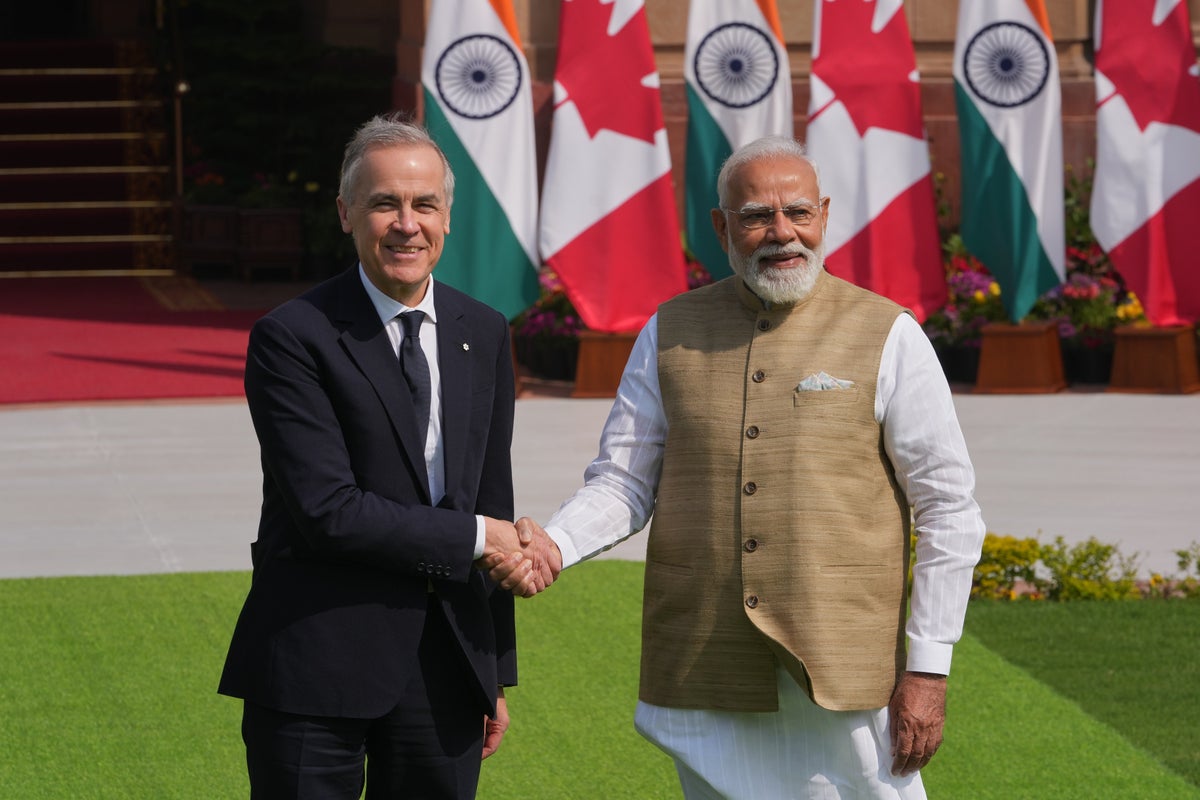
The resumption of bilateral uranium trade between Canada and India represents a structural realignment of the global nuclear supply chain, transitioning from a decade of diplomatic inertia to a synchronized energy security framework. This is not merely a trade agreement; it is a calculated de-risking strategy for two nations seeking to insulate their power grids from volatile fossil fuel markets and geopolitical chokepoints. By securing a long-term supply of Canadian high-grade uranium, India stabilizes the fuel cycle for its pressurized heavy water reactor (PHWR) fleet, while Canada restores its position as a Tier-1 exporter in the Indo-Pacific.
The Triad of Strategic Interdependence
The viability of this deal rests on three distinct pillars: resource density, technological compatibility, and regulatory synchronicity. Without the alignment of all three, the agreement would be a political gesture rather than an economic catalyst.
1. Resource Density and the Saskatchewan Advantage
Canada’s Athabasca Basin contains the highest-grade uranium deposits globally. While the average global ore grade hovers around 0.1%, deposits in this region frequently exceed 10% or even 20% $U_3O_8$. This concentration reduces the marginal cost of extraction and significantly lowers the carbon footprint per unit of energy produced. For India, which operates a massive nuclear expansion program, the high energy density of Canadian ore translates to reduced logistics overhead and more efficient stockpile management.
2. PHWR Technological Convergence
India’s nuclear architecture is heavily predicated on the Pressurized Heavy Water Reactor (PHWR) design, a technology originally derived from the Canadian CANDU (Canada Deuterium Uranium) system. This shared heritage creates a seamless integration for fuel specifications. Unlike Light Water Reactors (LWRs) that require enriched uranium, PHWRs typically utilize natural uranium. Canada’s ability to export $U_3O_8$ directly into India’s processing stream eliminates the need for third-party enrichment services, which are currently a major bottleneck in the global nuclear market due to over-reliance on Russian State Atomic Energy Corporation (Rosatom) facilities.
3. The Civil Nuclear Cooperation Agreement (CNCA) Framework
The legal scaffolding of this deal is the 2010 Civil Nuclear Cooperation Agreement, which was revitalized during this visit. This framework provides the "peaceful use" guarantees required by the International Atomic Energy Agency (IAEA). By adhering to these protocols, Canada and India bypass the historical friction that followed India’s 1974 nuclear test, signaling a shift toward pragmatism over historical grievance.
Quantifying the Energy Security Function
The economic logic of this partnership is best understood through the lens of a supply-demand mismatch. India’s Department of Atomic Energy (DAE) has set a target to triple its nuclear capacity by 2031, moving toward a 22,480 MWe threshold.
The current domestic production in India, primarily from mines in Jharkhand and Andhra Pradesh, cannot sustain this growth trajectory. This creates a structural deficit. The Canadian supply acts as a stabilizer in the following equation:
$$S_t = (P_d + I_c) - D_n$$
Where:
- $S_t$ is the strategic reserve stability.
- $P_d$ is domestic Indian production.
- $I_c$ is Canadian imports.
- $D_n$ is the annual consumption of the reactor fleet.
By increasing $I_c$, India moves from a just-in-time fuel model to a strategic reserve model, protecting its industrial base from energy-induced inflation.
Geopolitical De-risking: The Exit from the Russian Orbit
Before this realignment, the global uranium market faced a dangerous concentration of supply and processing power within the CSTO (Collective Security Treaty Organization) influence sphere. Kazakhstan produces over 40% of the world's uranium, much of which is processed or influenced by Russian interests.
The Canada-India deal functions as a Western-aligned alternative to the Rosatom monopoly. For Canada, this provides a guaranteed, high-volume buyer that is not subject to the shifting trade policies of the United States or the European Union. For India, it diversifies the "upstream" portion of its nuclear cycle, ensuring that a single geopolitical flare-up in Eastern Europe or Central Asia cannot paralyze its domestic power generation.
Operational Bottlenecks and Execution Risks
The success of the Carney-Modi agreement is not guaranteed. Several operational friction points remain that could dampen the projected economic impact.
- Logistical Throughput: Saskatchewan is landlocked. Transporting large quantities of radioactive material requires specialized infrastructure, rail security, and port facilities capable of handling Class 7 hazardous materials. Any disruption in the Canadian rail network or at West Coast ports directly impacts India’s fuel security.
- Liability Legislation: India’s Civil Liability for Nuclear Damage (CLND) Act remains a point of contention for international suppliers. While this specific deal focuses on fuel (the "front end" of the cycle) rather than reactor construction, the underlying legal environment for nuclear cooperation remains complex. Suppliers often demand indemnity that Indian law currently complicates.
- Regulatory Lag: The IAEA safeguards require rigorous tracking of every gram of imported material. The administrative burden of maintaining these "separated" fuel streams—ensuring Canadian uranium only powers civilian reactors—requires high-level bureaucratic coordination between Ottawa and New Delhi.
The Strategic Shift in Canadian Foreign Policy
Canada’s pivot back to India signifies an "Energy First" foreign policy. Previously, Canadian engagement in the Indo-Pacific was often sidelined by human rights concerns or domestic political pressures. The Carney-led mission indicates that economic realism now dictates the agenda. Canada possesses what the world needs—decarbonized, reliable energy—and India is the world’s most significant growth market for that specific commodity.
This relationship is also a hedge against a cooling relationship with China. As Canada limits Chinese investment in its critical minerals sector, it must find replacement capital and markets. India’s burgeoning industrial sector is the logical successor for Canadian raw materials, ranging from uranium and potash to metallurgical coal.
The Three-Stage Integration Roadmap
To maximize the utility of the uranium deal, both nations must move beyond simple buyer-seller dynamics into a deeper technological partnership.
Stage 1: Immediate Fuel Stabilization
The first 24 months will focus on clearing the backlog of orders and establishing a steady-state shipping schedule. This phase is characterized by bulk $U_3O_8$ transfers and the replenishment of Indian stockpiles.
Stage 2: Technical Synergy in SMRs
Small Modular Reactors (SMRs) represent the next frontier. Canada is a leader in SMR regulatory licensing, while India has an unparalleled ability to mass-produce standardized industrial components. A joint venture in SMR deployment could allow both nations to export "turnkey" nuclear solutions to the Global South, providing an alternative to the Chinese "Belt and Road" energy projects.
Stage 3: The Thorium Transition
India’s long-term goal is the utilization of its vast thorium reserves. Transitioning to a thorium-based fuel cycle requires advanced breeder reactors. Canada’s research expertise in materials science and heavy water moderation could accelerate this transition, moving the partnership from resource extraction to intellectual property co-development.
Strategic Action: The Decoupling Play
Industry leaders and policy architects should view this agreement as the blueprint for "Friend-Shoring" critical energy assets. The play here is not just about uranium; it is about the creation of a closed-loop, democratic supply chain for the net-zero economy.
Investment should flow toward the mid-stream processing capabilities in both nations. Canada must increase its domestic conversion and fabrication capacity to move up the value chain, while India must continue to streamline its nuclear regulatory environment to allow for faster site approvals. The window for this alignment is narrow; as other nations scramble for energy independence, the first-mover advantage established by this visit will only hold if the infrastructure for shipping and processing is scaled immediately to meet the projected 2031 demand.