British drivers are currently caught in a geopolitical pincer movement that has nothing to do with their daily commute and everything to do with a deteriorating security situation 3,000 miles away. As of March 2, 2026, the short answer is yes: UK petrol prices are already spiking, with Brent crude jumping 13% in a single session to hit $82 per barrel following direct military engagements between US-Israeli forces and Iran. This isn't just a "market wobble"—it is a fundamental repricing of risk as the Strait of Hormuz, the world’s most vital energy artery, faces an indefinite blockade.
The immediate fallout at the pump is predictable but painful. Average UK petrol prices, which sat comfortably around 132.6p per litre in February, are now on a trajectory toward 136p in the coming days, with 150p a distinct possibility if Brent touches the $100 mark. This surge arrives at the worst possible moment for the Treasury, which is already grappling with the scheduled tapering of the 5p fuel duty cut.
The Hormuz Chokehold and the Illusion of Energy Security
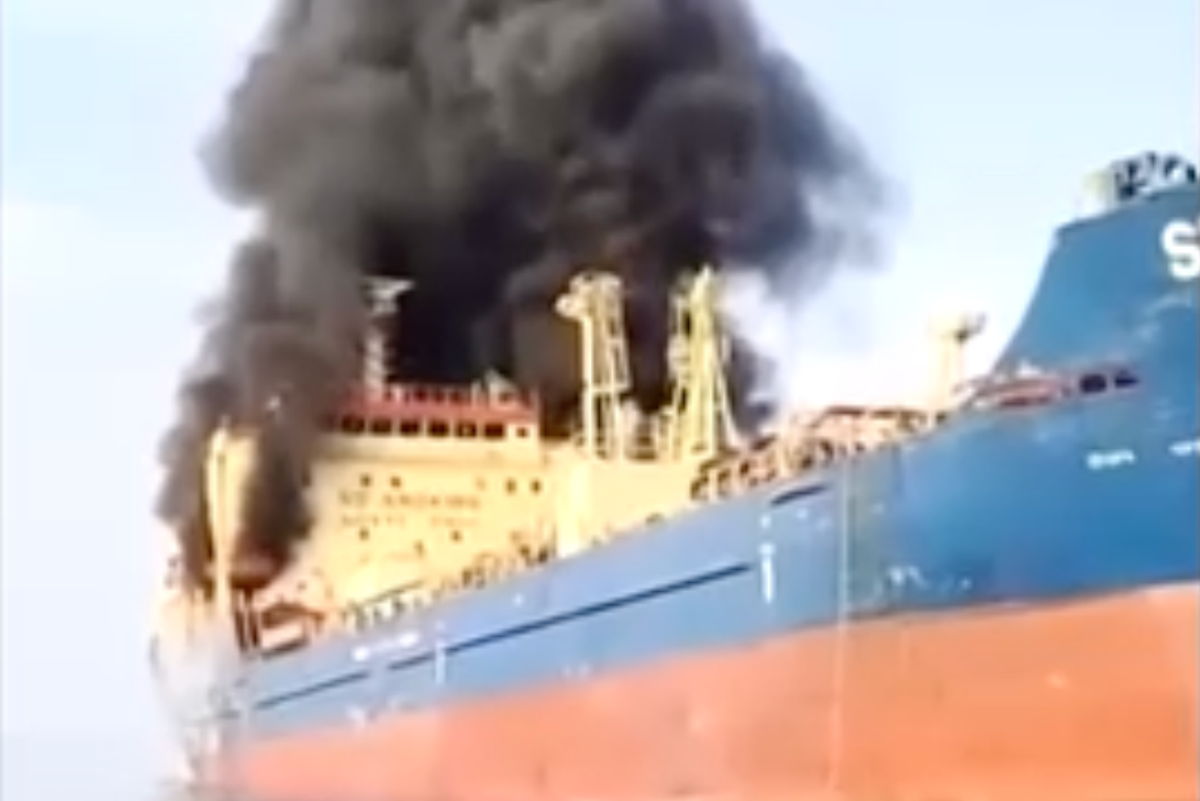
The crisis centers on a strip of water only 21 miles wide at its narrowest point. Roughly 20% of the world’s daily oil consumption passes through the Strait of Hormuz. When Iran’s Revolutionary Guards issued warnings to commercial shipping this week, they weren't just making a rhetorical point; they were effectively holding the global economy hostage.
For the UK, the "why" behind the price hike is a lesson in the brutal reality of globalized supply chains. We do not import much crude directly from Iran, but oil is a fungible global commodity. If the Strait closes, tankers from Saudi Arabia, Kuwait, Iraq, and the UAE are trapped. This creates an immediate global deficit that forces every refiner from Rotterdam to Fawley to outbid one another for the remaining "safe" barrels from the North Sea or US shale fields.
The mechanism is simple. When supply vanishes, the "risk premium" explodes. Traders are currently pricing in a worst-case scenario where navigation in the Gulf doesn't return to normal for months. This is why you see wholesale costs jump 25 cents in a weekend while the actual physical shortage hasn't even hit the refineries yet.
The Treasury's Fuel Duty Dilemma
While the Middle East burns, Westminster is facing its own internal combustion. Chancellor Rachel Reeves is currently under immense pressure from the logistics industry to scrap the planned reversal of the 5p fuel duty cut. Under current plans, the 5p relief—a relic of the 2022 energy crisis—is set to expire at the end of August 2026, with a phased increase starting in September.
The Planned Fuel Duty Escalation
| Date | Duty Increase |
|---|---|
| 1 September 2026 | +1p per litre |
| 1 December 2026 | +2p per litre |
| 1 March 2027 | +2p per litre |
This creates a "perfect storm" for the British motorist. If global oil remains elevated due to the war, and the government proceeds with tax hikes to plug the "black hole" in public finances, we could see the fastest rise in transport costs since the 1970s. The Bank of England is watching this with gritted teeth. With inflation recently lowered to 3.75%, a sustained energy shock threatens to "cascade" through the economy, forcing interest rates to stay higher for longer just when the public was expecting relief.
Why "Homegrown" Energy Won't Save the Pump
There is a common misconception that North Sea oil protects the UK from Middle Eastern volatility. It doesn't. North Sea production is in a terminal decline, and what we do extract is sold on the open market at global prices.
Furthermore, the UK's refining capacity has been hollowed out over the last decade. We are increasingly reliant on imported refined products—petrol and diesel that have already been processed elsewhere. When global shipping routes are disrupted, the cost of insurance (War Risk Premiums) for these tankers skyrockets. These "invisible" costs are passed directly to the forecourt. You aren't just paying for the oil; you are paying for the massive insurance policy required to move a vessel through a combat zone.
The Algorithm Factor
In the 1973 oil crisis, it took weeks for supply shocks to manifest. In 2026, it takes milliseconds. High-frequency trading algorithms now monitor social media feeds and satellite imagery of the Persian Gulf. The moment a missile is launched or a tanker changes course, billions of dollars shift in the commodities markets.
This creates a "volatility tax." Even if the actual flow of oil isn't fully cut off, the perception of risk is traded instantly. This is why UK wholesale prices jumped sharply over this past weekend before most drivers even knew a strike had occurred. The forecourts then play a game of "rocket and feather"—prices go up like a rocket when wholesale costs rise but drift down like a feather when they fall.
The Long Road to 150p
If the conflict escalates into a full-scale regional war, the $100 barrel is a mathematical certainty. At that level, the AA and RAC warn that 150p per litre becomes the new baseline. For a standard 55-litre family car, that’s an extra £10 per fill-up compared to last month.
Logistics firms, which operate on razor-thin margins, will have no choice but to pass these costs onto supermarkets. This means the war in the Middle East doesn't just hit your fuel tank; it hits your grocery basket. Fertilizers and plastics are also petroleum-based, meaning the agricultural sector is equally exposed to the ripples of the Hormuz blockade.
We are currently in a phase of "information aggregation." The markets are trying to determine if this is a three-day skirmish or a three-year war. Until that clarity emerges, expect the price at your local BP or Tesco to move daily, driven by events in a waterway half a world away that most people couldn't find on a map.
The only remaining buffer is the US Strategic Petroleum Reserve and potential production increases from OPEC+ members like Saudi Arabia. However, the Saudis face the same shipping bottleneck as everyone else. If the tankers can't get out of the Gulf, it doesn't matter how much they pump.
Don't wait for a "spike"—the climb has already begun.
Check your local fuel tracking apps tonight, as the lag between wholesale jumps and forecourt adjustments is narrowing by the hour.