Europe is currently facing its most significant foreign policy identity crisis since the end of the Cold War. For decades, the European Union and its major powers—France, Germany, and the United Kingdom—operated under the comfortable umbrella of the transatlantic alliance, assuming that American military might and European diplomatic finesse could jointly stabilize the Middle East. That assumption has been shattered. As Donald Trump’s administration executes a series of disruptive, unilateral moves across the region, from the Abraham Accords to the abandonment of traditional nuclear containment strategies, Europe has found itself relegated to the role of a concerned spectator. The crisis is not just one of policy, but of relevance.
The core of the problem lies in the disconnect between European bureaucratic inertia and the new era of transactional "deal-making" diplomacy. While Brussels issues statements calling for restraint and adherence to international law, the ground in the Middle East is being physically and politically reshaped by actors who view those laws as optional suggestions. The European dream of a rules-based order is currently being crushed by a more primal reality of power projection and bilateral pacts that bypass the old continent entirely.
The Architecture of Irrelevance
European influence in the Middle East was traditionally built on two pillars: the promise of developmental aid and the prestige of the "Middle East Quartet." Both are now failing. When the United States moved its embassy to Jerusalem and later brokered the Abraham Accords, it did so without consulting its European allies. This was a deliberate choice. It signaled that the old way of doing business—multilateral summits, slow-moving peace processes, and consensus-building—was dead.
Europeans were left holding the bag of the Joint Comprehensive Plan of Action (JCPOA), the Iran nuclear deal. Despite desperate attempts to create financial mechanisms like INSTEX to bypass American sanctions, the effort was a total failure. No major European bank or corporation was willing to risk the wrath of the U.S. Treasury Department to trade with Tehran. This revealed a brutal truth: Europe has no financial sovereignty if it cannot protect its own companies from American secondary sanctions. This isn't just a diplomatic snub. It is a fundamental economic weakness that prevents Europe from offering a credible alternative to the American path.
The Technological Gap in Modern Warfare
Beyond the diplomatic failures, there is a stark technological divide that has sidelined European military intervention. The wars of the current decade are being fought with cheap drones, sophisticated electronic warfare, and real-time satellite intelligence that the U.S. and regional powers like Israel and Turkey have mastered. European defense remains a fragmented mess of competing national interests and aging hardware.
The Rise of the Drone Powers
While Europe spent years debating the ethics of armed drones, other nations simply built them. Turkey, once a peripheral player, has become a kingmaker in Libya and Syria through its Bayraktar program. Meanwhile, the U.S. has integrated artificial intelligence into its targeting and surveillance systems in ways that the EU's privacy-focused regulations make difficult to replicate.
- Reliance on US Intelligence: Most European missions in the region cannot function without American heavy-lift transport, refueling, and satellite data.
- The Procurement Trap: Because European nations buy American hardware, their foreign policy is tethered to Washington’s export licenses.
- Electronic Warfare: The ability to jam communications and disrupt GPS is now a standard requirement for Middle Eastern conflicts, an area where European investment has lagged behind.
If you cannot control the skies or the digital spectrum, you cannot dictate the terms of a ceasefire. Europe has found that its traditional "soft power"—cultural exchange and humanitarian aid—is a weak shield against the "hard power" of kinetic strikes and cyber-sabotage.
Energy Security and the Green Contradiction
Europe's struggle to find its voice is also tied to its stomach—or rather, its gas tanks. The frantic push for a green energy transition was supposed to make the continent less dependent on Middle Eastern oil and Russian gas. Instead, it has created a new dependency on the minerals and technologies required for the transition, many of which are controlled by China or transit through volatile Middle Eastern shipping lanes.
The Red Sea crisis and the disruption of the Suez Canal have shown that Europe is uniquely vulnerable to regional chaos. When American policy fluctuates, causing ripples of instability, it is European consumers who pay the price at the pump and the supermarket. This vulnerability makes European leaders hesitant. They cannot afford to alienate Washington, yet they cannot afford to follow Washington into a conflict that might shut down the Strait of Hormuz.
The Migration Weapon
There is an internal European factor that makes their Middle East policy particularly paralyzed: the fear of the next migration wave. Every time a bomb falls in the Levant or North Africa, the political temperature in Berlin, Paris, and Rome rises. Migration has become the primary domestic political issue for almost every EU member state.
This has allowed regional leaders to use migration as a geopolitical lever. By threatening to "open the gates," leaders in the Middle East and North Africa can extract concessions and funding from Brussels. This is not the behavior of a global power; it is the behavior of a victim of geography. While the U.S. is protected by two oceans, Europe is physically connected to the instability. This proximity should lead to a more assertive and unified policy, but instead, it has led to a policy based on fear and short-term bribes to local autocrats.
The Failure of the Unified Voice
The European Union’s foreign policy is managed by the High Representative, a role that often seems designed to fail. To take a definitive stance, all 27 member states must agree. This is a mathematical impossibility when dealing with the Middle East.
- Hungary and the Visegrád Group: Often align more closely with the Trump administration’s pro-Israel stance, vetoing any harsh criticism from Brussels.
- France: Seeks to maintain its historical influence in Lebanon and North Africa, often acting unilaterally and annoying its neighbors.
- Germany: Burdened by its history, it is often the most cautious, prioritizing the survival of the JCPOA and avoiding any military commitment.
This internal friction means that by the time Europe manages to issue a "joint statement," the situation on the ground has already changed three times. It is the diplomacy of the lowest common denominator.
The Transatlantic Divorce
The most painful realization for the veteran diplomats in Brussels is that the United States no longer views the partnership as an alliance of equals. In the eyes of the current American administration, Europe is a market to be sold to, a junior partner to be commanded, or a competitor to be constrained. The Middle East has become the primary stage where this power dynamic is displayed.
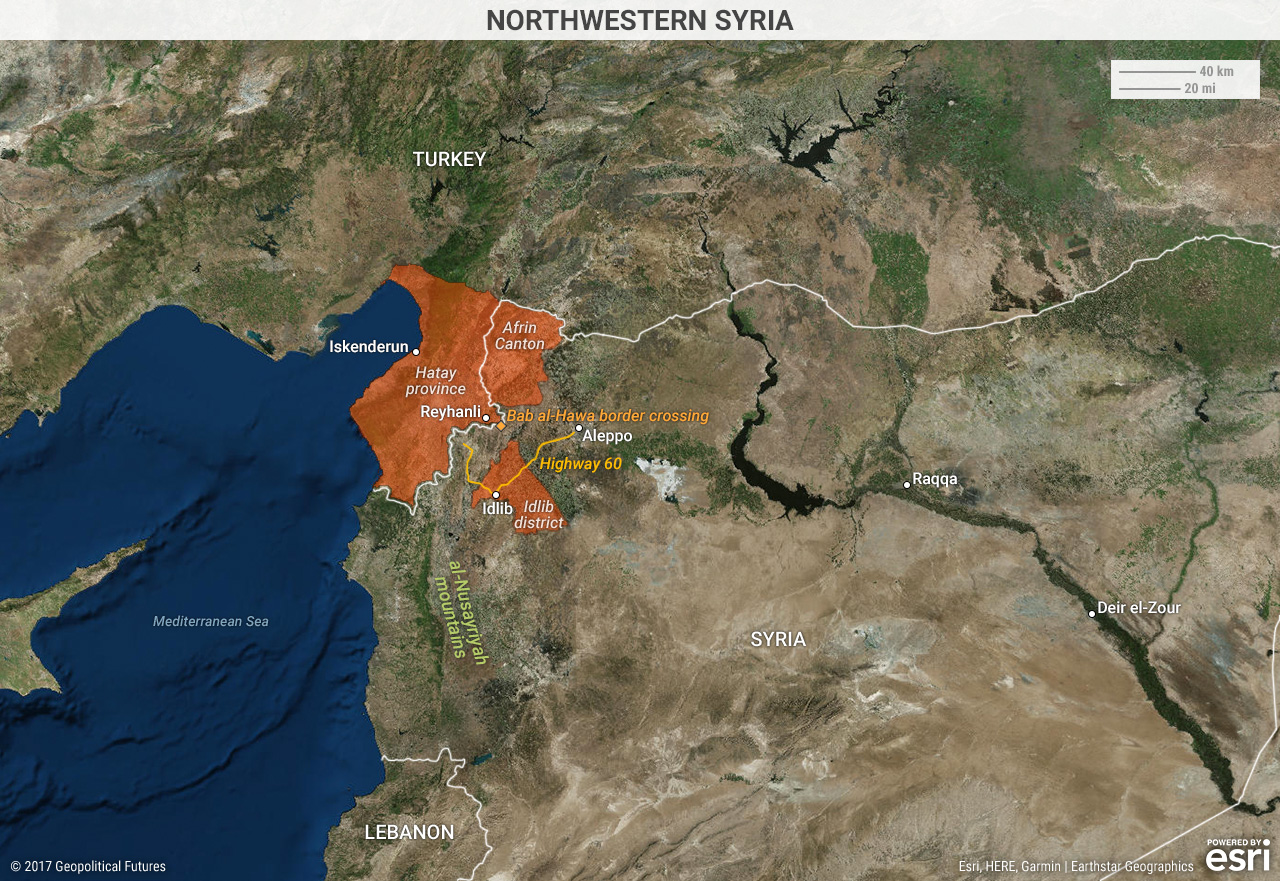
When the U.S. pulled out of Northern Syria, leaving Kurdish allies exposed, European nations were caught off guard despite having special forces on the ground. It was a clear message: the American exit strategy does not include a European consultation phase.
The Middle East is Moving On
Perhaps the most stinging reality is that Middle Eastern capitals—Riyadh, Abu Dhabi, Cairo, and Tehran—no longer look to London or Paris for leadership. They look to Washington for weapons, Moscow for security deals, and Beijing for infrastructure investment. Europe is seen as a wealthy, aging boutique—a nice place to visit or buy luxury goods, but irrelevant to the existential struggles of the region.
The Saudi-Iran rapprochement brokered by China was a hammer blow to European prestige. It proved that a third party could mediate regional disputes, but that party wasn't the EU. It was a power that could offer massive trade deals and security guarantees without the "lecturing" on human rights that typically accompanies European diplomacy.
The Hard Reality of Re-Armament
If Europe wants to be more than a bank for humanitarian crises, it must undergo a radical transformation. This requires more than just increased defense spending; it requires a unified military command and a sovereign technological base. As long as European security is a subset of American policy, European diplomacy will be a footnote.
The current chaos in the Middle East, fueled by a disruptive American approach, is a stress test that Europe is failing. The old continent is discovering that "values-based" foreign policy is an expensive luxury that can only be sustained if you have the military hardware to back it up. Without a credible threat of force or the economic independence to defy sanctions, Europe’s voice will continue to be nothing more than a faint echo in a room where the real deals are being made.
The time for issuing "deeply concerned" press releases has passed. The Middle East is being carved into new spheres of influence, and Europe is currently on the menu, not at the table.