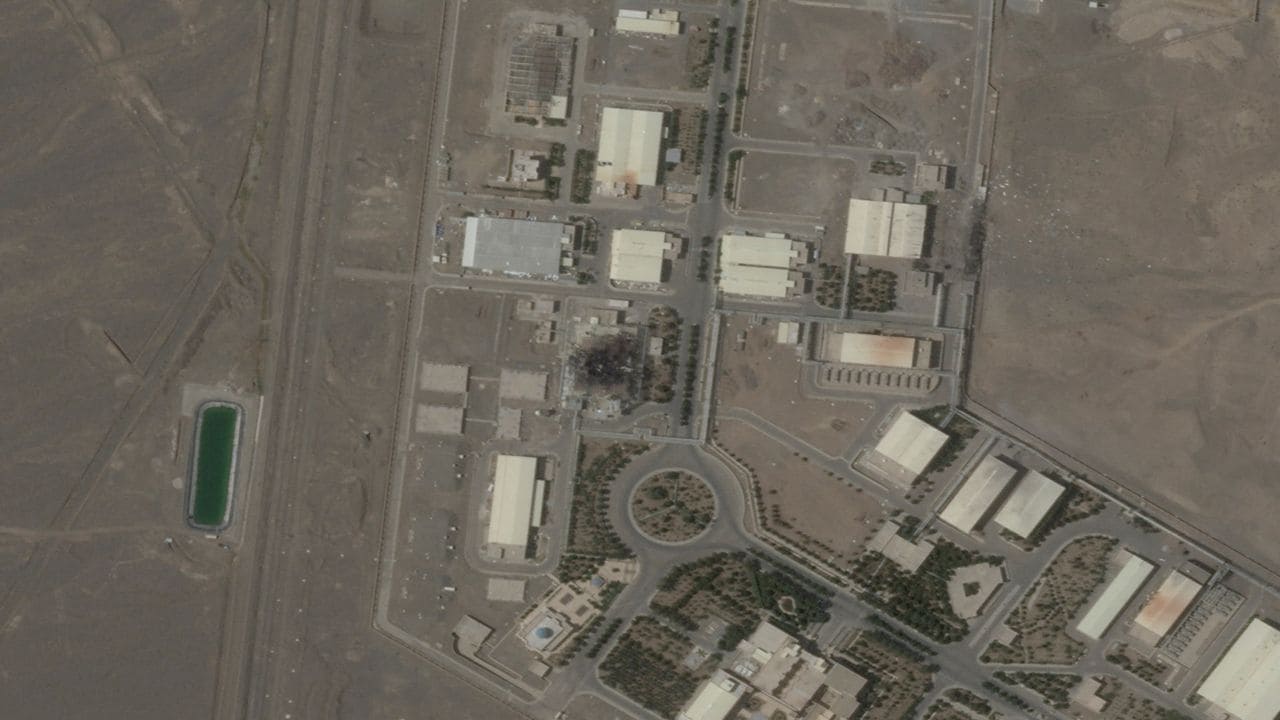
The strategic ambiguity surrounding the physical state of Iran's nuclear infrastructure following high-intensity kinetic exchanges is not a failure of intelligence, but a reflection of the asymmetric verification gap between International Atomic Energy Agency (IAEA) monitoring and national technical means. When a regional power executes a strike, the immediate objective is the degradation of specific functional nodes; the subsequent information war focuses on the "denial of effect." Determining whether a facility like Natanz or Esfahan has been compromised requires a systematic decomposition of three distinct layers: structural integrity, containment functionality, and operational continuity.
The Verification Gap and the IAEA Mandate
The IAEA’s initial reports of "no damage" to nuclear sites must be parsed through the narrow lens of their operational mandate. The Agency's primary function is the accounting of nuclear material to ensure no diversion to military programs. Their inspectors are not combat damage assessment experts. An IAEA "clearance" typically signifies that the seals on the centrifuges remain intact and that there is no immediate atmospheric release of radioactive isotopes.
This creates a structural blind spot. A facility can remain "undamaged" in terms of nuclear containment while being functionally neutralized. For example, the destruction of the external power grid, the severance of cooling water intake systems, or the collapse of administrative and security annexes would not necessarily be categorized as a "hit" on a nuclear site by the IAEA, yet it would render the enrichment cycle inert.
The Three Pillars of Nuclear Facility Resilience
To evaluate the conflicting claims between Iranian officials (alleging a strike near Esfahan) and international monitors, we must apply a tri-node resilience framework:
- Passive Hardening: This refers to the physical depth and reinforcement of the facility. The Fordow Fuel Enrichment Plant, buried deep within a mountain, represents the apex of passive hardening. A "hit" at the surface level—even one that destroys the tunnel entrance—does not technically damage the nuclear site according to a literalist interpretation, even if it entombs the technology within.
- Active Redundancy: The ability of a site to maintain ultra-stable power and cooling through decentralized internal grids. If a strike targets the 400kV substation feeding a site like Natanz, the facility’s reliance on backup diesel generators or battery arrays introduces a time-limited failure window.
- Containment Architecture: The multi-layered barriers designed to prevent the escape of $UF_6$ (Uranium Hexafluoride) gas. The IAEA focuses almost exclusively on this pillar. If the containment is unbreached, the "nuclear site" is reported as safe, regardless of the status of the surrounding support infrastructure.
Quantifying the Esfahan Incident
The Iranian Nuclear Technology Center at Esfahan is a critical node because it handles the conversion of yellowcake into $UF_6$, the gaseous precursor for enrichment. Unlike the deeply buried centrifuges at Fordow, portions of the Esfahan complex are vulnerable to conventional precision-guided munitions (PGMs).
The logic of a "limited" strike on Esfahan would not be the destruction of the nuclear material itself—which would risk widespread environmental contamination—but the precision degradation of the conversion chemistry labs. This is a surgical objective: remove the "top of the funnel" for the enrichment process. If Iran alleges a hit while the IAEA denies it, the discrepancy likely lies in the definition of the "site perimeter." A strike on a radar battery or a surface-to-air missile (SAM) site protecting the facility is, in military terms, a successful neutralization of the nuclear target’s defenses. To the IAEA, it is an external event unrelated to the material balance.
The Cost Function of Kinetic Neutralization
The decision to strike a nuclear facility involves a complex cost function where the variable of "delay" is weighed against the risk of "escalation."
$$C = (D \cdot R) - (E + I)$$
Where:
- $C$ = Total Strategic Cost/Benefit
- $D$ = Duration of delay to the nuclear program
- $R$ = Reliability of the intelligence regarding the target’s current stage
- $E$ = Probability of a regional retaliatory cycle
- $I$ = International diplomatic friction generated by the breach of IAEA norms
A strike that damages the auxiliary cooling towers of a reactor at Arak or Esfahan achieves a high $D$ (delay) without the $E$ (escalation) associated with a radioactive plume. The "no damage" narrative serves both parties temporarily: it allows the IAEA to maintain its status as a neutral arbiter and allows Iran to project an image of invulnerability, avoiding the domestic pressure to retaliate with maximum force.
Strategic Bottlenecks in the Enrichment Cycle
Understanding the impact of a potential strike requires identifying the "narrowest" part of the Iranian nuclear supply chain.
- Centrifuge Component Manufacturing: High-strength carbon fiber and specialized maraging steel are required for IR-4 and IR-6 rotors. If a strike targets the machine shops rather than the enrichment halls, the "site" remains intact, but the ability to replace failing units is severed.
- The Power Stability Variable: Centrifuge cascades are sensitive to frequency fluctuations. A millisecond drop in power can cause thousands of rotors spinning at supersonic speeds to touch their casings and disintegrate (a "crash"). Cyber-kinetic operations targeting the industrial control systems (ICS) of the power supply provide the same outcome as a physical bomb without the forensic footprint of a missile.
Geopolitical Signaling vs. Tactical Reality
The disparity in reporting reflects two different games being played. The IAEA is playing a game of Material Control, where the only truth is the weight of the uranium on the scale. The regional actors are playing a game of Deterrence Signaling, where the truth is the demonstrated ability to penetrate "impenetrable" airspace.
The strategic reality is that Iran's nuclear program has moved beyond the "single point of failure" stage. Unlike Iraq’s Osirak (1981) or Syria’s Al-Kibar (2007), which were centralized facilities, the Iranian program is a distributed network. Neutralization now requires the simultaneous degradation of dozens of nodes, many of which are hardened beyond the reach of standard 2,000lb class munitions.
The "one site hit" allegation by Iran, if true, serves as a test of the international community's appetite for enforcement. By claiming a hit, Tehran gauges the level of condemnation directed at the aggressor. By denying a hit, the IAEA maintains the fiction of a manageable, monitored environment.
The Operational Pivot
Future assessments of Iranian nuclear integrity must move away from "crater analysis" and toward "functional analysis." If the enrichment rates at Natanz drop by 30% over the next quarter despite the IAEA reporting "no damage," the conclusion is clear: the strike targeted the invisible infrastructure—the engineers, the spare parts, or the power stability—rather than the concrete.
The strategic play is to monitor the output metrics (kilograms of 60% enriched uranium produced per month) rather than the visual metrics (satellite imagery of rooftops). Any sustained deviation from the projected growth curve of the Iranian stockpile will be the only verifiable evidence of a successful kinetic or cyber intervention. Tactical observers should focus on the movement of heavy machinery to Esfahan and the activation of redundant power lines as the primary indicators of a structural breach that the official reports are designed to obfuscate.


