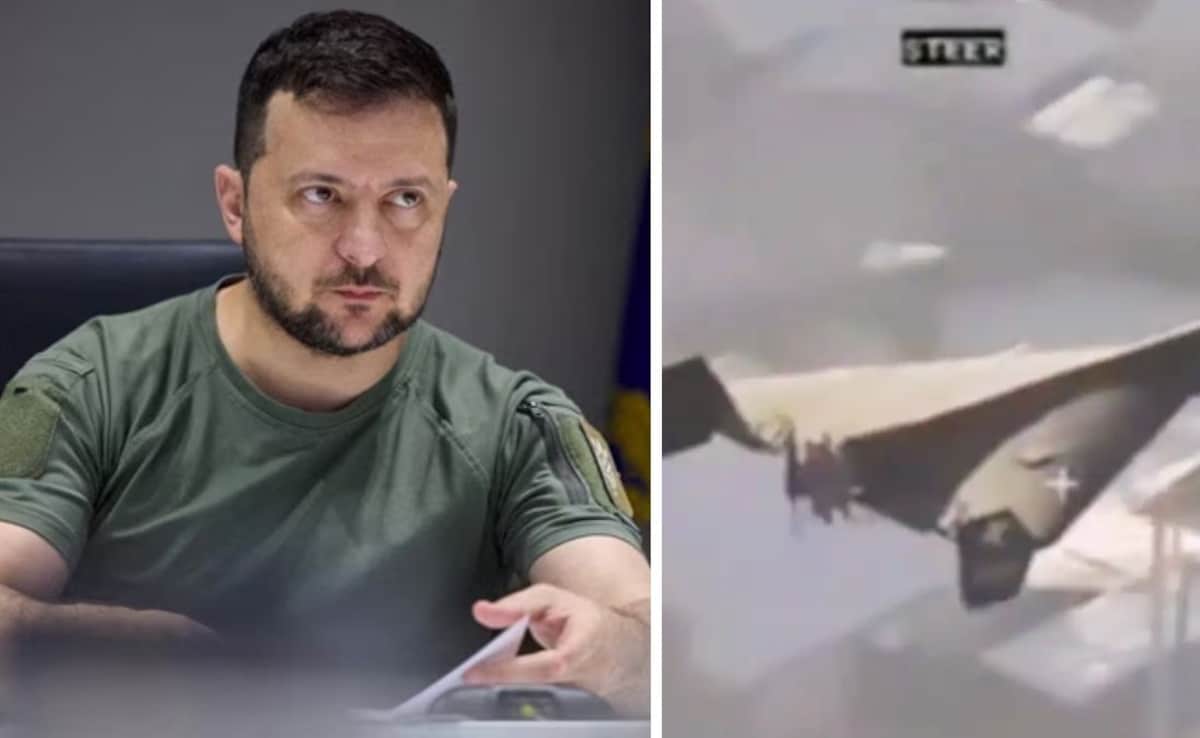
Ukraine currently possesses the world’s most comprehensive real-time dataset on the operational performance and failure rates of Iranian-made loitering munitions, specifically the Shahed-131 and Shahed-136. This data represents a unique commodity in the global arms market. While the Middle East remains the primary theater for Iranian regional projection, Ukraine has become the primary laboratory for Iranian kinetic evolution. Kyiv’s proposal to assist Middle Eastern partners in countering these systems is not a diplomatic gesture; it is a calculated monetization of tactical intelligence gained through sustained high-intensity conflict.
The strategic value of this exchange rests on three distinct pillars: Electronic Warfare (EW) signatures, Acoustic Detection Arrays, and Kinetic Intercept Optimization. By deconstructing these pillars, we can map the exact mechanism by which Ukraine intends to trade combat-proven survivability for geopolitical capital and hardware procurement.
The Technical Anatomy of the Shahed Threat
To understand the value of the Ukrainian dataset, one must define the Shahed-136 not as a sophisticated missile, but as a low-cost "picket" weapon designed to overwhelm air defense through saturation. The unit cost, estimated between $20,000 and $50,000, creates an immediate economic asymmetry for the defender.
Signal Intelligence and GNSS Interference
The Shahed family utilizes a combination of civil-grade GPS and GLONASS for navigation, often supplemented by Inertial Navigation Systems (INS) to maintain a heading when signals are jammed. Ukraine has developed specialized EW "bubbles" that do more than merely block signals; they spoof coordinates to induce controlled crashes or navigational drift.
The data Ukraine offers includes the precise frequencies and modulation patterns used by the latest iterations of Iranian flight controllers. For Middle Eastern nations—specifically those facing threats from Houthi or Hezbollah-aligned groups—this specific electronic "fingerprint" is the difference between a successful intercept and a strike on critical infrastructure like desalination plants or oil refineries.
Acoustic Mapping and Passive Detection
Radars often struggle with the low Radar Cross-Section (RCS) and low-altitude flight paths of these drones. Ukraine’s solution has been the deployment of a nationwide network of thousands of acoustic sensors (networked microphones) that detect the specific "moped" engine hum of the Shahed. This system triangulates the position of the drone and pushes the telemetry to a centralized command-and-control (C2) node.
The software logic behind this—filtering out ambient noise to isolate the 50cc-type engine signature—is a proprietary asset. Exporting this logic allows a partner state to build a persistent, low-cost early warning net without the massive energy signature or cost of active radar.
The Economic Model of the Intercept
The primary bottleneck in drone defense is the "Cost-per-Kill" ratio. If a $2 million Patriot interceptor is used to down a $30,000 drone, the defender is losing the war of attrition even if every drone is destroyed. Ukraine’s contribution to the Middle East is the optimization of the "Low-End" intercept.
- Mobile Fire Groups: Ukraine has refined the doctrine of using heavy machine guns and MANPADS mounted on civilian pickups, guided by laser designators.
- Ammo Conservation Logic: Ukrainian software determines the minimum required force to neutralize a target based on its flight path and proximity to assets.
- Post-Kinetic Analysis: Ukraine performs forensic deep-dives on every downed unit to track changes in the Iranian supply chain, such as the substitution of Western-made microchips with localized or Chinese alternatives.
This forensic data allows Middle Eastern intelligence agencies to map the Iranian industrial base with surgical precision, identifying which sanctioned components are still reaching Tehran and through which transit nodes.
Geopolitical Arbitrage The Ukrainian Price Tag
Kyiv is not offering this intelligence for cash alone. The "price" mentioned in diplomatic circles is a complex basket of military-industrial reciprocity.
Technology for Hardware
Ukraine requires immediate infusions of Soviet-era munitions and Western-compatible air defense systems. Countries in the Middle East hold significant stockpiles of 152mm artillery shells and older variants of the Hawk or Crotale missile systems. The trade is simple: Ukraine provides the "brain" (the data and EW logic to stop Iranian drones) in exchange for the "muscle" (the kinetic rounds required to hold the front line against Russia).
The Regional Deterrence Factor
By empowering Iranian rivals with superior drone-countering capabilities, Ukraine creates a secondary front of pressure on Tehran. If Iranian drones become less effective in the Middle East due to Ukrainian-provided countermeasures, the perceived value of Iranian military exports drops. This weakens the Russo-Iranian axis by degrading the very technology that Tehran uses as leverage in its partnership with Moscow.
Structural Vulnerabilities in the Proposal
No defense strategy is a silver bullet. The Ukrainian offer faces three significant hurdles that both parties must calibrate.
- Environmental Variability: A detection algorithm tuned for the humid, forested terrain of Northern Ukraine will require significant recalibration for the thermal inversions and high-wind sand environments of the Arabian Peninsula.
- Operational Security (OPSEC): Sharing EW signatures carries the risk of "signal rot." Once a countermeasure is deployed widely, Iran can iterate the hardware—shifting frequencies or adding anti-jamming CRPA antennas—thereby neutralizing the advantage for both the Middle East and Ukraine.
- Political Sensitivity: Middle Eastern capitals must balance the benefit of Ukrainian data against the risk of direct Iranian retaliation or the straining of delicate diplomatic ties with Moscow.
The Strategic Playbook for Implementation
For a Middle Eastern defense ministry, the integration of Ukrainian battle-data should follow a phased adoption model to maximize the Return on Investment (ROI).
- Phase I: Forensic Data Integration. Import the current database of Iranian component serial numbers and circuit board layouts. This allows for the immediate identification of local threats and the mapping of regional smuggling routes.
- Phase II: Passive Sensor Deployment. Mirror the Ukrainian acoustic network model around high-value targets (HVTs). This provides a redundant layer of detection that operates beneath the radar floor.
- Phase III: Joint EW Development. Establish a closed-loop feedback system where data from Middle Eastern intercepts is fed back to Ukrainian engineers for rapid software patching.
The long-term trajectory suggests that the "Shahed" is merely the first generation of a new class of attritional weapons. The partnership between Ukraine and the Middle East creates a global "Anti-Drone Commons." In this framework, the value of the intelligence grows with the scale of the network. Each drone downed in the Middle East provides data that helps protect Kyiv, and every drone intercepted over Odesa provides the telemetry that secures the skies over Riyadh or Abu Dhabi.
The strategic recommendation for regional actors is to secure access to the Ukrainian "Threat Library" before the next generational shift in Iranian drone design. The window of high-fidelity data relevance is narrow; once the conflict in Ukraine stabilizes or moves into a different phase, the real-time feedback loop that makes this data so valuable will begin to degrade. Immediate technical integration is the only way to ensure the cost of defense remains lower than the cost of the threat.