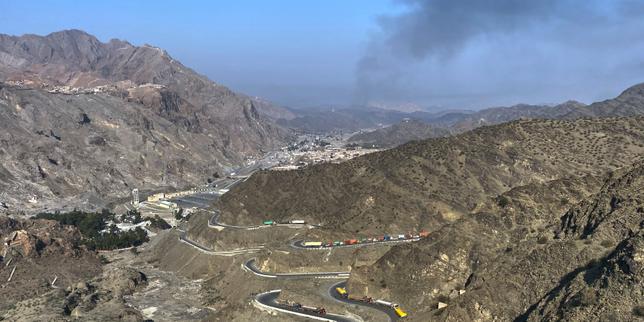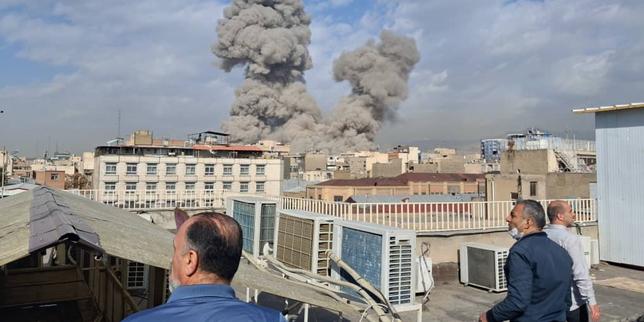
The headlines are predictable. They speak of "surgical strikes," "neutralized assets," and "coordinated dominance." They paint a picture of a masterclass in modern warfare where Israel and the United States dismantled Iranian capabilities in a few hours of high-tech pyrotechnics.
They are lying to you.
The breathless reporting surrounding the latest bombardment of Iranian soil misses the most obvious, glaring reality of 21st-century conflict: tactical success is the new strategic failure. While the media counts craters and analyzes satellite imagery of charred hangars, they ignore the fact that every missile launched is a confession of diplomatic and strategic bankruptcy. We are watching a billion-dollar fireworks display designed to mask a total lack of long-term vision.
The Myth of the Surgical Strike
Military analysts love the word "surgical." It implies a clean, clinical removal of a tumor without damaging the patient. But geopolitics isn't an operating room, and Iran isn't a passive body on a table.
When the IAF and US assets hit "integrated air defense systems" or "missile production facilities," they are operating on a 1991 mindset. In the Gulf War, destroying a command center meant severing the brain of an army. Today, in the age of decentralized proxy networks and hardened, subterranean infrastructure, a "hit" is often nothing more than an expensive inconvenience.
I’ve seen intelligence assessments where a "destroyed" facility was back at 80% capacity within three months. Why? Because the knowledge—the blueprints, the centrifuge designs, the telemetry data—cannot be bombed. We are hitting the hardware while the software remains untouched, iterating and evolving in the dark.
By focusing on the "first hours" of the attack, the mainstream narrative treats war like a sporting event with a definitive scoreboard. In reality, these strikes function as a massive, live-fire testing ground for Iranian resilience. We aren't just destroying targets; we are training their survivors.
The Escalation Ladder is Broken
The standard doctrine of "deterrence" suggests that if you hit someone hard enough, they will stop. It’s a playground logic that fails at the nation-state level.
- The Cost-Exchange Ratio: We are firing $2 million interceptors at $20,000 drones.
- The Political Capital: Every strike provides the Iranian hardliners with the domestic oxygen they need to justify further repression and nuclear expansion.
- The Intelligence Burn: To hit these targets, you burn assets, informants, and signals intelligence that took decades to build.
If the goal was to stop Iran’s regional influence, the strike failed. If the goal was to dismantle their nuclear ambitions, the strike was a distraction. What remains is a performance—theatre intended for domestic voters in Tel Aviv and Washington, rather than a decisive blow against an adversary.
Imagine a Scenario
Imagine a scenario where the "devastating" blow to Iran’s S-300 batteries actually accelerates their transition to indigenous, more mobile, and harder-to-track systems like the Bavar-373. By removing their legacy Russian gear, we’ve effectively forced them to modernize. This isn't a theory; it’s a pattern we’ve seen in every theater from Ukraine to Yemen. Technology is a shifting tide, not a static wall. When you punch a hole in it, the water just flows around your fist and fills the space.
The Intelligence Community’s Dirty Secret
Behind closed doors, the people who actually plan these sorties aren't as arrogant as the pundits on TV. They know that "air superiority" is a fleeting, localized illusion.
The real danger isn't the missiles that hit. It's the ones that weren't there. Iran has spent twenty years perfecting the art of the "decoy economy." For every real missile rack destroyed, how many plywood replicas did Western pilots risk their lives—and $100 million airframes—to hit?
The obsession with "hard kills" (physical destruction) ignores "soft kills" (cyber, financial, and psychological). The competitor's narrative treats this as a kinetic triumph. It isn't. It’s a kinetic indulgence. We are addicted to the visual of a building exploding because it’s easier to explain to a cable news audience than the slow, grinding reality of a failed sanctions regime or a porous intelligence net.
Why "People Also Ask" Is Asking the Wrong Questions
If you look at the common queries—"Will Iran retaliate?" or "Is the US at war?"—you see the fundamental misunderstanding of modern conflict.
The question isn't whether Iran will retaliate in a conventional sense. They won't send a fleet of F-14s to bomb Haifa. That's not how they play. They will retaliate in the Red Sea through the Houthis. They will retaliate in the digital infrastructure of Western banks. They will retaliate by accelerating the enrichment of uranium at Fordow, deep beneath a mountain that no "surgical strike" can touch.
The premise that this bombardment "resets" the status quo is a delusion. It merely moves the pieces on a board that is already on fire.
The Logistics of Hubris
Let’s talk about the math of modern warfare. It’s ugly.
$$C_{strike} = \sum (M_{ordnance} + F_{operational} + I_{intelligence_loss})$$
When you calculate the total cost ($C_{strike}$) of these operations against the actual strategic gain, the numbers never add up. We are spending trillions to maintain a status quo that is actively deteriorating.
I’ve sat in rooms where "success" was defined as "delayed the inevitable by six months." That’s not a victory. That’s a subscription model for war. We are paying the monthly premium in ordnance and blood just to keep the nightmare at bay for another quarter.
The Problem with "Red Lines"
Every time a Western leader draws a red line, the Iranian IRGC takes out a pencil and turns it into a roadmap. They know exactly how far they can push before the "theatre" begins. They've learned the rhythm of the West's periodic outbursts. They absorb the blow, collect the shrapnel for reverse engineering, and continue the long game.
The competitor's article focuses on the how—the planes, the routes, the refueling tankers. But the how is the most boring part of the story. The why is where the tragedy lies. We are doing this because we don't know what else to do.
The Technological Dead End
We are approaching a point where stealth and precision no longer provide the asymmetric advantage they once did. AI-driven sensor fusion and cheap, ubiquitous surveillance mean that the "first hours" of any attack are now broadcast in real-time on Telegram. There is no surprise. There is no shock and awe.
There is only the grind.
If you want to understand the "bombing of Iran," stop looking at the infrared footage of explosions. Look at the shipping lanes. Look at the price of oil. Look at the strengthening of the Moscow-Tehran-Beijing axis. Those are the real fronts of the war. Everything else is just a very expensive distraction for people who want to believe that the world can still be managed with a joystick and a laser-guided bomb.
Stop celebrating the "accuracy" of the strike. Accuracy is irrelevant when you’re aiming at the wrong target. The target isn't a missile base; it’s a mindset, a regime, and a global shift in power that doesn't care about your flight path or your sortie count.
We are winning the battles and losing the century. Buy more missiles if you want, but don't call it a strategy. Call it what it is: a desperate attempt to look like we are in control of a situation that has long since spiraled out of our grasp.
Go back to your satellite maps and count your craters. Just don't be surprised when the "neutralized" enemy is standing right behind you tomorrow, stronger, smarter, and more patient than ever.
The theatre is over. The reality is much worse.
Finish the mission. Burn the press release. The next strike won't save us either.