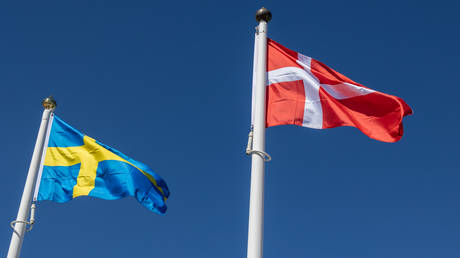
The strategic map of Northern Europe has been rewritten. For decades, the Nordic region operated under a self-imposed "Nordic Balance," a delicate geopolitical dance designed to keep the Cold War from turning hot. Norway and Denmark, though founding members of NATO, famously barred foreign bases and nuclear warheads from their soil during peacetime to avoid provoking the Soviet Union. Sweden and Finland remained officially non-aligned, acting as a massive geographical buffer.
That buffer is gone. With Finland and Sweden now integrated into the NATO command structure, the conversation has shifted from "if" the alliance will reinforce its northern flank to "how" it will do so. Most critically, the taboo surrounding nuclear weapons in the High North is evaporating. Recent legislative shifts and military cooperation agreements suggest that the legal and political infrastructure for hosting nuclear assets is already being laid, even if the warheads themselves haven't arrived yet. For a closer look into this area, we suggest: this related article.
This isn't just about defense. It is a fundamental shift in the global nuclear posture.
The Legal Trapdoor
The most significant movement isn't happening on a battlefield, but in the fine print of Defense Cooperation Agreements (DCAs). These bilateral deals, particularly the ones recently signed between the United States and Sweden, Finland, and Norway, grant the American military access to dozens of "agreed facilities" across the region. For further information on this development, in-depth reporting can also be found on USA Today.
Unlike the restrictive policies of the 1960s, these new agreements often lack explicit, ironclad prohibitions against the storage of nuclear weapons. In Sweden, the government’s refusal to include a specific clause banning nuclear arms during the DCA negotiations sparked a fierce internal debate. Critics argue this omission is a "silent invitation" for the U.S. to use Swedish territory as a staging ground for its nuclear triad.
The military logic is simple. If you want to deter a peer competitor, you don't leave options off the table. By refusing to say "never," the Nordic nations are adopting a policy of strategic ambiguity. This forces an adversary to assume that any strike against a NATO facility in the Arctic could be met with a tactical nuclear response. It is a high-stakes gamble that replaces the old "balance" with a "shield."
The Arctic Vacuum
Why now? The answer lies in the melting ice and the hardening of Russian military infrastructure on the Kola Peninsula. The Kola Peninsula, bordering Finland and Norway, is the most heavily militarized piece of land in the world relative to its size. It houses the Russian Northern Fleet and its sea-based nuclear deterrent.
For years, the West viewed the High North as an area of "low tension." That era ended when Russia began refurbishing Soviet-era bases and testing "doomsday" weapons like the Burevestnik nuclear-powered cruise missile in the region. NATO’s northern expansion is a direct response to a perceived vacuum.
If Russia views its nuclear bastions in the Arctic as existential, NATO now views the defense of the Nordic region as inseparable from the defense of the entire Atlantic. Bringing nuclear capabilities—or the credible threat of them—into the Nordic fold closes the gap between the European theater and the North Pole.
The Logistics of Deterrence
Hosting a nuclear weapon is not as simple as parking a truck in a hangar. It requires specialized "Vault Storage and Retrieval Systems" (WS3), specific security protocols, and personnel cleared for Nuclear Surety.
Currently, only a handful of European nations—Belgium, Germany, Italy, the Netherlands, and Turkey—host U.S. tactical nuclear B61 bombs under "nuclear sharing" arrangements. Expanding this to the Nordics would require a massive investment in infrastructure that does not yet exist on the ground. However, the capability to host is different from the permanent presence of weapons.
The real threat to the status quo is "dual-capable" infrastructure. This involves building airbases and hangars that meet the technical requirements for nuclear storage, even if the storage vaults remain empty during daily operations. This creates a "plug-and-play" nuclear deterrent. In a crisis, warheads could be flown into Finnish or Swedish bases within hours. For an adversary, the distinction between a base that does host nukes and a base that can host nukes is irrelevant in their targeting calculus.
Public Consent and the Democratic Deficit
The most volatile element of this strategy is the people. Nordic societies have a deep-rooted history of anti-nuclear activism. In Sweden and Finland, the rush to join NATO happened with record speed, largely bypassing the slow, deliberative public debate that usually characterizes these democracies.
A poll from late last year indicated that a majority of Swedes remain opposed to hosting nuclear weapons on Swedish soil. In Norway, the Labor-led government continues to insist that its 1957 ban on foreign bases and nuclear weapons remains "firm," yet the DCA allows for U.S. "pre-positioning" of equipment in a way that many legal scholars say renders the old ban meaningless.
There is a growing gap between the strategic elite in Stockholm and Helsinki and the voting public. The elite see nuclear ambiguity as a necessary evil for national survival. The public sees it as a target on their backs. If a nuclear-capable B-52 bomber lands at Luleå-Kallax airport, it is a signal of strength to Washington, but to the local population, it is an escalation they never explicitly voted for.
The Russian Counter-Move
We must look at the inevitable reaction. Russia has already signaled that it will reorganize its military districts and move "strike systems" closer to its western border in response to Finnish and Swedish NATO membership.
If the Nordics become a platform for NATO’s nuclear mission, Russia will likely respond by deploying tactical nuclear weapons to the Kaliningrad exclave or increasing their presence in Belarus. This creates a feedback loop of escalation. The Baltic Sea, once a "sea of peace," is effectively becoming a NATO lake, but one that is ringed by nuclear-tipped missiles.
The danger isn't necessarily a planned nuclear exchange. It is a mistake. When you increase the density of high-end weaponry in a confined geographical space, the margin for error shrinks. A transponder failure, a misunderstood exercise, or a GPS spoofing incident in the high-stakes environment of the Arctic could trigger a response that neither side can easily dial back.
Beyond the B61
While most focus is on the B61 gravity bombs, the real shift might involve sea-launched cruise missiles and the Aegis Ashore missile defense systems. The integration of the Nordic region into the global missile defense network is arguably more provocative than a few bombs in a bunker.
If Sweden or Finland hosts sensors or interceptors that can degrade Russia's ability to launch a retaliatory strike, they undermine the principle of Mutually Assured Destruction. This makes a "first strike" more thinkable for both sides. The Nordics are no longer just members of a defensive alliance; they are becoming the front-end sensors for a global nuclear architecture.
The Erosion of the Middle Ground
The era of the "honest broker" is dead. Finland and Sweden once used their neutrality to host historic summits and mediate global conflicts. By moving toward a nuclear-capable posture, they have traded their diplomatic leverage for military hardware.
This is a one-way street. Once the infrastructure is built and the treaties are signed, reverting to a state of non-alignment is nearly impossible. The Nordic nations have decided that the risk of being unprotected outweighs the risk of being a nuclear target.
Whether this makes the world safer is an open question. What is certain is that the Arctic frontier is no longer a peripheral concern. It is the new center of the nuclear chessboard.
Check the local legislative records for upcoming votes on "status of forces" agreements to see exactly how much sovereignty is being handed over.