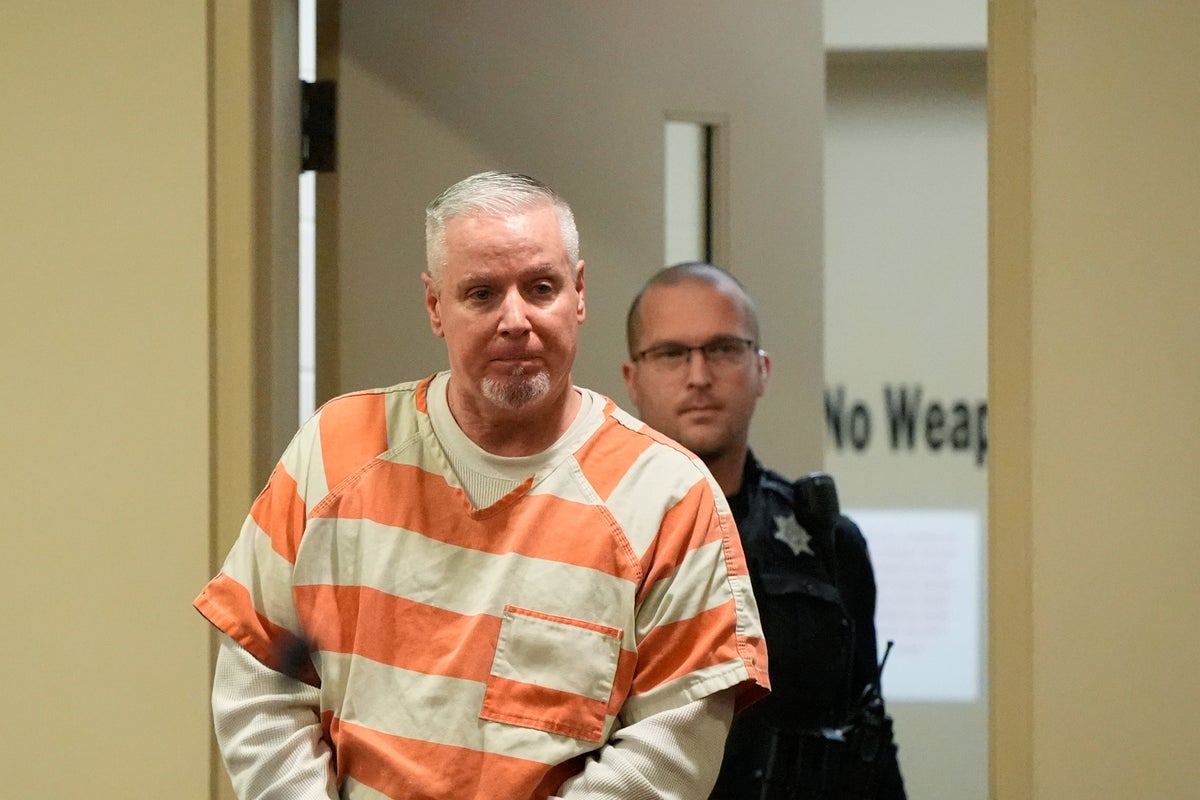
The wood of the witness stand is old, polished by the nervous palms of a thousand broken people. When Colin Gray sat there, he wasn't just a father. He was a mirror. In his tired eyes and the slump of his shoulders, every parent in America could see a terrifying version of their own reflection—the one that asks, too late, exactly where the line sits between a gift and a catastrophe.
He spoke into a room heavy with the scent of floor wax and grief. Outside the courtroom, the Georgia sun likely felt the same as it did on the morning of the shooting at Apalachee High School. But inside, time had curdled. Gray was there to explain the unexplainable: why he bought his fourteen-year-old son an AR-15 style rifle for Christmas, knowing the boy was already haunted by the ghosts of a fractured home and the chilling visit of local authorities a year prior. Meanwhile, you can explore similar events here: The Calculated Silence Behind the June Strikes on Iran.
It wasn't a trial about a trigger pull. It was a trial about the silence that precedes it.
The Anatomy of a Christmas Gift
In December, most parents are hunting for the latest console or a pair of sneakers that will be out of style by Easter. Colin Gray went to a gun store. He purchased a Sig Sauer M400. To see the bigger picture, check out the detailed article by USA Today.
To a certain subset of American culture, this is a rite of passage. It is steel and wood, a mechanical bond between father and son. It represents responsibility, marksmanship, and a heritage of self-reliance. But context is the gravity that holds these choices together. Without it, everything floats into chaos.
Consider the year leading up to that purchase. The Gray household wasn't a sanctuary; it was a debris field. There were reports of domestic instability. There was a direct knock on the door from the Jackson County Sheriff’s Office in 2023, following a tip from the FBI about online threats. At that time, Colin told investigators he kept his guns locked away. He promised his son didn't have unfettered access.
Then, he went out and bought him a new one.
This is where the narrative of "responsible gun ownership" fractures. We often talk about rights as if they exist in a vacuum, sterile and clinical. We forget that rights are exercised by humans with messy, complicated, and sometimes dangerous lives. Gray’s defense didn't lean on malice. It leaned on a desperate, perhaps delusional, attempt to connect with a son who was drifting into the gray fog of mental isolation. He saw a rifle as a bridge. The world saw it as a fuse.
The Invisible Stakes of Parental Liability
For decades, the legal system treated parental negligence in school shootings as a civil matter—a tragic series of "what ifs" settled with insurance money and hushed tones. That changed with the Crumbley case in Michigan. Now, the precedent is a jagged, unforgiving blade.
Colin Gray is facing second-degree murder charges. Not because he was at the school. Not because he knew the date and time. But because the prosecution argues he provided the "instrument of death" to a person he knew, or should have known, was a walking powder keg.
The stakes are no longer just about the loss of a child; they are about the total dismantling of the American domestic veil. The court is effectively peering into the gun safe, the medicine cabinet, and the dinner table conversations of every home in the country. It asks a brutal question: When does "poor parenting" become "criminal homicide"?
If you have a child struggling with depression, and you leave the keys to the car on the counter after they’ve expressed a desire to drive into a wall, are you a murderer? The legal answer is shifting toward a terrifying yes.
A House Built on Echoes
To understand the weight of Gray’s testimony, you have to look at the boy who isn't there. Colt Gray, the son, remains the primary actor in this tragedy, but in his father’s trial, he is a ghost.
The defense paints a picture of a man trying to hold a crumbling world together. They speak of a mother who was absent or volatile. They speak of a father trying to be the "good guy," the provider, the one who shares a hobby to keep his son from slipping further away.
But the facts are stubborn things.
The FBI warning wasn't a suggestion; it was a flare sent up in a dark night. When Colin Gray took the stand, he had to reconcile the image of a protective father with the reality of a man who ignored the flare. He spoke of the boy’s interests, his struggles, and the "normalcy" he hoped to foster.
It is a human instinct to normalize our surroundings. We tell ourselves the cough isn't cancer. We tell ourselves the teenager’s anger is just "a phase." We tell ourselves that the gun is just a tool.
Then the tool is used.
The Math of Tragedy
The numbers coming out of the Apalachee High School investigation are clinical, but they pulse with a rhythmic horror. Two students. Two teachers. Four lives extinguished in a flurry of high-velocity rounds. Nine others wounded, their bodies forever mapped by scars and lead.
- Mason Schermerhorn, 14
- Christian Angulo, 14
- Richard Aspinwall, 39
- Christina Irimie, 53
When Gray sat on that stand, he wasn't just answering to a prosecutor. He was answering to the empty desks these names left behind. The prosecution’s strategy is to bridge the gap between the purchase of the gun and the pulling of the trigger with a single word: Foreseeability.
Could he see it coming?
If the answer is yes, then the father is as much a part of the crime as the shooter. If the answer is no, then we have to admit that we live in a society where a parent can be completely blind to the monster growing in the bedroom next door. Neither option offers much comfort.
The Cultural Fault Line
The trial of Colin Gray is a lightning rod because it sits directly atop the deepest crack in the American psyche. On one side, there is the belief in absolute individual responsibility—the idea that the son alone is the criminal, and the father is just a man who made a tragic mistake in judgment. On the other, there is the belief in collective accountability—that we are all responsible for the environment we curate and the weapons we introduce into it.
Gray’s testimony felt like a man trying to walk across that crack without falling in. He spoke of his love for his son. He spoke of the difficulties of the divorce. He spoke of the "quietness" of the boy.
But love is not a safety catch.
In the courtroom, the air grows thin when the evidence is presented. Photos of the rifle. Recordings of the 2023 interview. The juxtaposition of a father’s "hope" against a detective’s "warning." It’s a collision of two different languages. One is the language of the heart, which is messy and prone to denial. The other is the language of the law, which is cold and obsessed with the sequence of events.
The Sound of the Gavel
There is a specific kind of silence that follows a parent’s testimony in a case like this. It’s not the silence of respect; it’s the silence of a collective breath being held. Every person in that gallery, every person watching the feed at home, is doing the same mental math. They are looking at their own children. They are looking at their own choices.
We want to believe we would be different. We want to believe we would see the signs, lock the door, and hear the screams before they become bullets.
Colin Gray sat on that stand as a reminder that the transition from "average dad" to "defendant" happens in the space between a choice and a consequence. He didn't look like a villain from a movie. He looked like a man who had run out of excuses and was finally, painfully, looking at the wreckage he helped build.
The jury will eventually leave the room. They will deliberate. They will weigh the statutes and the definitions of negligence. But the real verdict was written the moment that Christmas gift was unwrapped.
The true cost of the rifle wasn't the price tag at the store. It was the permanent, echoing silence in a high school hallway that should still be filled with the sound of slamming lockers and teenage laughter.
Colin Gray stepped down from the stand, but the seat remains. It stays there for every parent who thinks they can outrun the reality of their own household. It stays there as a monument to the fact that in a house built on echoes, eventually, something is going to break.
The court adjourned for the day, leaving only the polished wood and the heavy, stagnant air. The father walked away in handcuffs, his shadow stretching long across the floor, a dark silhouette of a man who tried to buy a connection and ended up paying with the world.