European capitals are currently engaged in a quiet, desperate act of geopolitical resistance. While Washington accelerates its campaign of maximum pressure against Tehran, the primary obstacle to a unified Western front isn't Iranian diplomacy—it’s the collective memory of 2003. Europe has decided that the cost of being "right" about Iraq was too high to risk being "wrong" about Iran. This rift is not a temporary disagreement over sanctions or enrichment levels. It is a fundamental breakdown in the transatlantic security architecture that has governed the West since the end of the Cold War.
The United States views Iran as a problem to be solved, primarily through economic strangulation and the credible threat of force. Europe, conversely, views Iran as a reality to be managed. This discrepancy has created a dangerous vacuum. As American officials move through Brussels and London seeking signatures on new containment protocols, they are meeting a wall of polite, bureaucratic inertia. The Europeans aren't just worried about a new war; they are worried that the American intelligence apparatus has not learned how to distinguish between a regional nuisance and an existential threat.
The Intelligence Gap and the Credibility Deficit
The shadow of the "dodgy dossier" and the non-existent weapons of mass destruction in Iraq still haunts the hallways of the Berlaymont and the Quai d'Orsay. When American intelligence agencies present data regarding Iranian drone shipments or nuclear breakthroughs, European analysts now apply a layer of skepticism that would have been unthinkable twenty years ago. This is the "Iraq Tax." Every claim made by Washington is subjected to an exhaustive vetting process by French, German, and British intelligence services.
This skepticism is not purely academic. It has practical, ground-level consequences. When the U.S. Treasury Department attempts to blackball Iranian-linked shipping firms, European regulators frequently demand a level of evidentiary proof that exceeds what the U.S. is willing to share. The result is a patchwork of enforcement that Iran exploits with surgical precision. The Iranians have mastered the art of operating in the "gray zone" between American bans and European permissions.
The Economic Shield and the Failure of INSTEX
Europe’s attempt to build an independent financial architecture—the Instrument in Support of Trade Exchanges, or INSTEX—was widely mocked in Washington as a toothless gesture. In reality, it was a profound declaration of independence. Even though the mechanism ultimately failed to facilitate significant trade, the intent behind it revealed a Europe willing to risk the wrath of the U.S. dollar to maintain a diplomatic door to Tehran.
The failure of INSTEX didn't drive Europe back into the American camp. Instead, it pushed European corporations to become more secretive. Major industrial players in Germany and Italy have not stopped eyeing the Iranian market; they have simply moved their discussions into the shadows, utilizing complex shell structures and non-dollar denominations to bypass the reach of the Office of Foreign Assets Control (OFAC). This "underground" trade keeps the Iranian economy on life support, much to the frustration of American hawks.
The Refugee Variable
Washington often forgets that for Europe, Iran is not a distant tactical problem. It is a neighbor-of-a-neighbor. Any military escalation in the Persian Gulf triggers an immediate and predictable migration crisis. The 2015 refugee wave, sparked largely by the Syrian civil war, nearly broke the political back of the European Union. Populist movements surged from Sweden to Italy, fueled by anxieties over border control and social cohesion.
European leaders know that a full-scale conflict with Iran would dwarf the Syrian crisis. Iran has a population of over 85 million people. A destabilized Iran would send millions of refugees westward through Turkey and into the heart of Europe. For a leader like Emmanuel Macron or Olaf Scholz, the choice is clear: tolerate a nuclear-capable Iran or face the total collapse of the European political order under the weight of a new migrant surge. To them, the "Iran threat" is theoretical; the "migrant threat" is a proven career-killer.
Energy Security vs. Geopolitical Purity
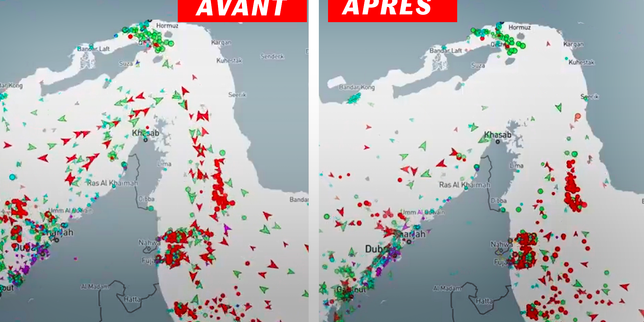
The war in Ukraine has complicated this math even further. After decoupling from Russian gas, Europe is in a state of permanent energy anxiety. While they cannot openly buy Iranian oil due to U.S. sanctions, they are acutely aware that removing Iranian barrels from the global market—or an Iranian blockade of the Strait of Hormuz—would send energy prices to levels that would trigger a continental depression.
Washington, now a net exporter of energy, views oil prices through a domestic political lens. Europe views them through a lens of survival. This creates a friction point where American calls for "maximum pressure" are seen in Paris and Berlin as a form of economic sabotage. The irony is thick: the U.S. wants Europe to stand firm against Russia, but its Iran policy threatens the very industrial stability Europe needs to sustain that stand.
The Proxy Maze
The conflict isn't just about centrifuges; it is about the map. Iran’s network of proxies—the "Axis of Resistance"—extends from Lebanon to Yemen. The U.S. strategy has been to strike these proxies individually. Europe, particularly the French, has maintained that these groups are woven into the political fabric of their respective countries. You cannot "defeat" Hezbollah without destroying the Lebanese state, a state France considers within its sphere of influence.
This leads to a fundamental disagreement on counter-terrorism. Where the U.S. sees a target, Europe often sees a stakeholder. This is frustrating for American commanders who want clear lines of engagement. In the Red Sea, for instance, European naval missions have often operated under different rules of engagement than the U.S.-led "Operation Prosperity Guardian." The Europeans are careful to frame their presence as purely defensive, terrified of being pulled into a regional escalatory spiral.
The Nuclear Deal as a Zombie Policy
The Joint Comprehensive Plan of Action (JCPOA) is technically dead, yet Europe refuses to bury it. This "zombie" diplomacy serves a specific purpose. As long as the paperwork for a deal exists, there is a legal and diplomatic framework to prevent a total "snapback" of UN sanctions. Europe uses the ghost of the JCPOA as a shield to prevent the U.S. from forcing a global embargo that would necessitate a military enforcement mechanism.
They are playing for time. The hope in Brussels is that they can contain Iran’s nuclear ambitions through "soft" warnings and minor concessions until a different political climate emerges in Washington. It is a high-stakes gamble. Every day the deal remains in limbo, Iran inches closer to weapons-grade enrichment. The Americans see this as a policy of appeasement; the Europeans see it as the only alternative to a third Gulf War.
The Intelligence Disconnect
There is a growing divide in how the two sides of the Atlantic interpret Iranian intent. American intelligence focuses on "capabilities"—what Iran can do. European intelligence focuses on "intent"—what Iran wants to do. The European assessment often suggests that Tehran is a rational actor seeking regime survival above all else. They believe that by providing the regime with a "golden bridge" to retreat, a conflict can be avoided.
The U.S. establishment, burned by the failures of "engagement" with other adversaries, increasingly views Iranian rationalism as a myth. They see a messianic regime that will only be stopped by force. When these two worldviews clash in the Situation Room or at NATO headquarters, the result is a strategic paralysis that benefits only Tehran.
The Israel Factor
The shifting relationship between Europe and Israel adds another layer of complexity. While the U.S. remains Israel’s primary security guarantor, Europe has become increasingly critical of Israeli military actions in Gaza and Lebanon. This makes it politically impossible for European leaders to sign on to a U.S.-Israeli plan for military action against Iran.
In 2003, the "Coalition of the Willing" was built on the idea that the West was exporting democracy. No such illusion exists today. Any move against Iran is seen by the European public as an entanglement in a regional religious and ethnic war that has no clear end state. European politicians are not willing to spend their limited political capital on a war that their voters believe is being fought for someone else's interests.
The Cost of Divergence
The real danger is not that Europe will side with Iran. The danger is that the West will be so divided that it loses the ability to deter any actor. If Iran perceives that the U.S. cannot rally its allies, Tehran will feel emboldened to push the envelope on enrichment and regional subversion. We are entering a period where the "West" exists as a financial entity, but no longer as a coherent military or diplomatic bloc.
This fragmentation is a gift to Moscow and Beijing. They watch the transatlantic bickering over Iran and see a blueprint for how to neutralize American power in other theaters. If the U.S. cannot convince its oldest allies to support a policy against a mid-sized power like Iran, its ability to lead a global coalition against a peer competitor is non-existent.
The fracture is deep, and it is hardening. Washington’s insistence on a pre-2003 style of leadership is meeting a Europe that has been permanently transformed by the failures of that era. The Americans want a sheriff; the Europeans want a committee. In the gap between those two desires lies the potential for a regional conflagration that neither side is prepared to handle.
Stop looking for a unified "Western" policy on Iran. It doesn't exist, and it isn't coming back. The next time a crisis erupts in the Persian Gulf, don't look at the carrier groups—look at the silence coming from Paris and Berlin.
Check the current enrichment levels reported by the IAEA and compare them against the 2015 baseline to see exactly how much leverage has been lost during this diplomatic stalemate.