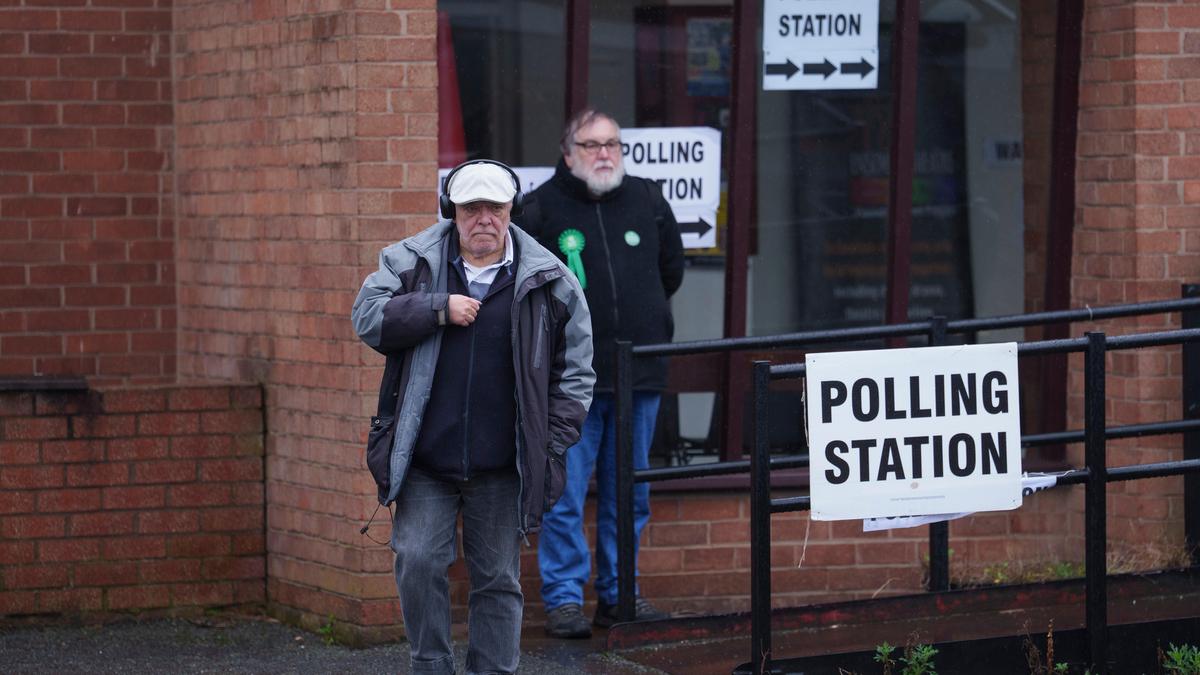
The collapse happened in the dark. By the time the ballot boxes from Gorton and Denton were emptied onto the counting tables in Manchester on Friday morning, the result was no longer a question of if, but of how much blood would be left on the floor. For Keir Starmer, the answer was a terminal volume. The Labour Party did not just lose a seat it had held for nearly a century; it was relegated to a humiliating third place, trailing behind a surging Green Party and a predatory Reform UK. This was the thirty-eighth safest Labour seat in the country. Now, it is a tombstone for the project known as Starmerism.
Within the first few hours of the count, it became clear that the progressive coalition that carried Labour to its 2024 landslide has fractured beyond repair. Hannah Spencer, a local councillor and plumber running for the Greens, secured 40.7% of the vote. Matt Goodwin, representing Reform, took 28.7%. Labour, the party of government, limped home with a measly 25.4%. This is not a mid-term "bloody nose." It is a structural heart attack.
The Burnham Blockade and the Mandelson Shadow
To understand why Gorton and Denton fell, you have to look at the tactical arrogance of 10 Downing Street. This was a self-inflicted wound. When the seat became vacant, the local favorite was undoubtedly Andy Burnham, the Mayor of Greater Manchester. Burnham represents a brand of Labour that still speaks to the northern working class—populist, emotive, and unapologetically local.
Starmer’s inner circle, fearing Burnham as a leadership challenger, blocked him from the ballot. They opted instead for a loyalist, Angeliki Stogia, believing the "Labour" brand alone would carry the day. It was a miscalculation of historic proportions. By denying the voters the man they wanted, the Prime Minister turned the by-election into a referendum on his own centralized, often clinical style of leadership.
The timing could not have been worse. The arrest of Peter Mandelson, Starmer’s hand-picked envoy to Washington, over resurfaced links to the Jeffrey Epstein scandal has cast a sleaze-colored pall over the administration. While the Prime Minister attempts to project an image of "Starmer 2.0"—a more authentic, combative leader willing to trade blows with billionaires like Jim Ratcliffe—the public sees a government increasingly detached from the reality of the doorstep.
The New Math of British Discontent
The fragmentation of the British electorate has reached a tipping point where the old rules of "safe seats" no longer apply. The Gorton and Denton result proves that the First-Past-The-Post system is no longer a shield for the big two; it is a trap.
| Party | General Election 2024 (%) | By-Election 2026 (%) | Swing/Shift |
|---|---|---|---|
| Labour | 56.2% | 25.4% | -30.8% |
| Green | 13.1% | 40.7% | +27.6% |
| Reform | 12.4% | 28.7% | +16.3% |
| Conservative | 11.2% | 1.9% | -9.3% |
This table illustrates a total evaporation of the center-left's dominance. The Green victory was not just about environmentalism; it was a vessel for Gaza-related protest, public sector anger, and a general sense that Labour has become "Tory-lite." Meanwhile, Reform continues to cannibalize the remnants of the working-class vote that Starmer promised to protect. Nigel Farage’s party is no longer just a fringe nuisance; they are the second force in urban Manchester.
A System Creaking Under Multi-Party Reality
The House of Commons still operates as if the world is divided between red and blue. But with five Green MPs and eight Reform MPs, the reality on the ground is a chaotic multi-party landscape. Voters in Gorton and Denton did not vote for a plumber because they suddenly became radical environmentalists. They voted for her because she was the only one in the race who didn't sound like a Westminster script.
The "sectarian" labels being thrown around by Nigel Farage and some Labour insiders are a desperate attempt to explain away a simple truth: the duopoly is dead. When a seat shifts by 27 points to the Greens while the far-right takes nearly 30%, you aren't looking at a protest vote. You are looking at a realignment.
The upcoming local elections in May now loom like a guillotine. Scottish Labour leader Anas Sarwar has already signaled that the party is in "survival mode." If the Gorton and Denton pattern repeats in the English councils and the devolved parliaments, the eighty signatures required for a leadership challenge against Starmer will materialize by midsummer.
Labour’s claim to be the natural home for progressive voters has been shredded in the Manchester rain. The party found out the hard way that when you take your heartlands for granted, they eventually find someone else to love. The plumber from the Green Party didn't just win a seat; she exposed the fact that the Prime Minister is standing on a foundation of sand.
Would you like me to analyze the specific demographic shifts in the Manchester voter base that led to this Labour collapse?