In the quiet, wood-panneled halls of diplomacy, there was once a ghost of a belief that a signature on a piece of parchment meant safety. It was the idea that if you played by the rules, stayed loyal to the bloc, and kept your word, the global machinery would protect you when the gears started to grind.
That belief is currently bleeding out on the floor. Meanwhile, you can explore other developments here: The Calculated Silence Behind the June Strikes on Iran.
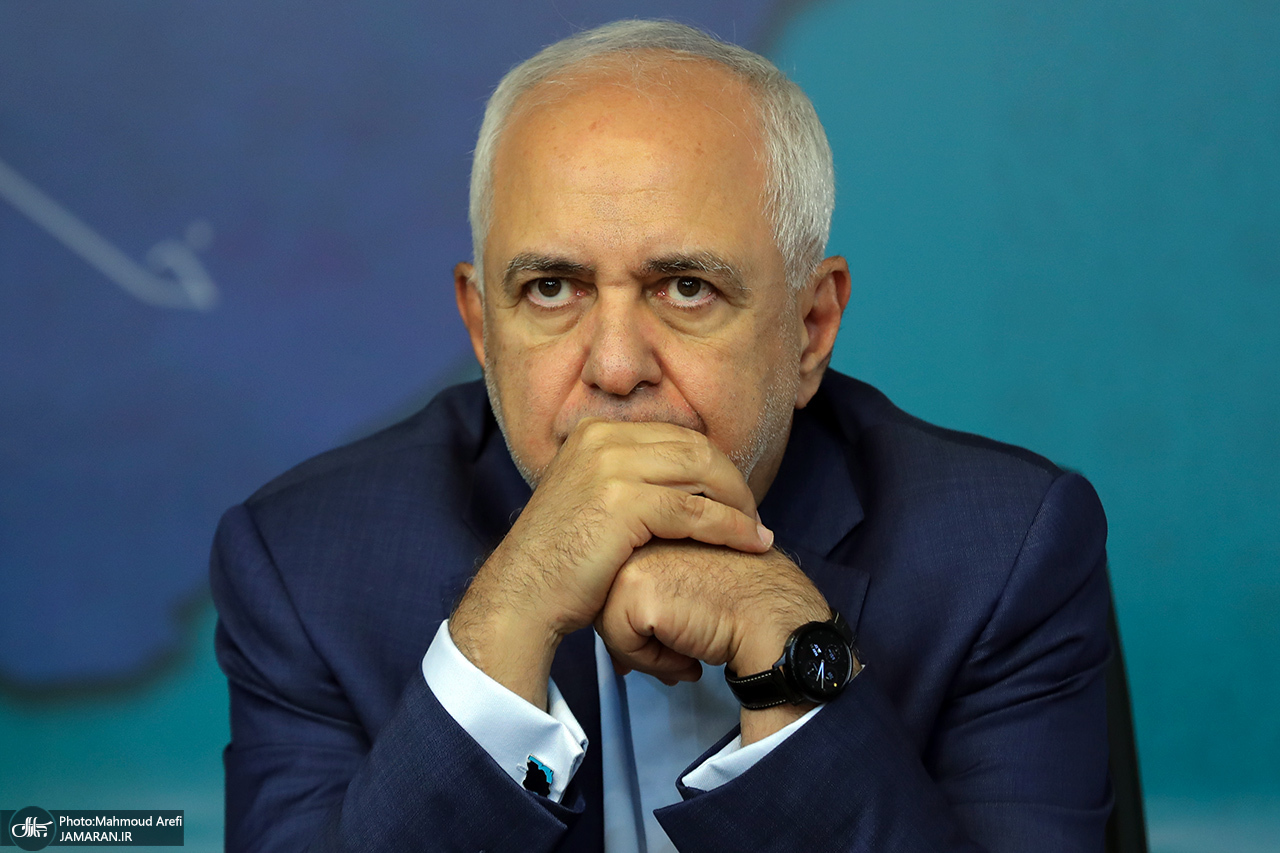
Mohammad Javad Zarif, the man who spent years trying to bridge the chasm between Tehran and the West, isn’t just talking about policy anymore. He is describing a world where the old maps have been burned. During a recent address at the University of Tehran, the former Foreign Minister didn't just critique current events; he signaled the end of an era. The age of loyalty is dead. We have entered the age of the transaction.
The Venezuelan Ghost
To understand what Zarif is mourning, you have to look at Caracas. To see the complete picture, check out the recent analysis by BBC News.
Imagine a state official in Venezuela, sitting in a darkened office as the power flickers. For decades, the global order was built on a series of "if/then" statements. If you align with a superpower, then you are shielded. If you follow the dictates of a global financial system, then you have access to your own wealth.
Then came the freezing of assets. The sudden, surgical removal of a nation from the circulatory system of global trade.
Zarif points to Venezuela not as a defense of their specific government, but as a terrifying case study in the new volatility. When the wind shifted, the "loyalty" Venezuela thought it had purchased with its oil and its historical alignments evaporated. The bank accounts were locked. The recognition of sovereignty was retracted. In the eyes of the new global order, a country is only as legitimate as its most recent utility.
This isn't just a headache for politicians. It is a fundamental shift in how human beings perceive safety. When a superpower can simply decide that your national currency no longer exists in the digital ledger, the concept of a "global community" starts to feel like a polite fiction.
The Twelve Day Mirror
Then there is the "12-day war." Zarif isn't just referencing a timeline; he is referencing a psychological breaking point.
When conflict flares and the international community watches from the sidelines—measuring its response in tweets and delayed sanctions rather than decisive mediation—the lesson for those in the crosshairs is brutal. The lesson is: You are on your own.
Consider a family in a basement, listening to the whistle of incoming fire. They aren't thinking about the nuances of the UN Charter. They are thinking about the fact that the "rules-based order" they were told would keep the peace has a response time that is measured in weeks, while the missiles are measured in seconds.
Zarif’s argument is that the world has seen this play out too many times. Iran has watched as agreements were signed, celebrated with champagne, and then discarded with a single stroke of a pen by a successor who didn't feel like honoring the "loyalty" of the previous administration.
The Iranian nuclear deal—the JCPOA—was Zarif’s life’s work. He lived the betrayal of that loyalty. He sat in those rooms. He smelled the expensive coffee. He felt the firm handshakes. And then he watched as the world moved on, leaving the promises to rot.
The Rise of the Mercenary State
What replaces loyalty?
Fear. And math.
When you can no longer trust that a long-term alliance will protect you, you stop making long-term sacrifices. You become a mercenary state. You shop for the best deal in the moment. You pivot from East to West and back again, not out of a lack of principle, but out of a desperate need for survival.
This is the invisible cost of the current global friction. We are losing the ability to build anything that lasts longer than an election cycle.
Zarif is essentially warning that we are returning to a state of nature. In this environment, the small and the medium-sized players are looking at the big powers—the US, Russia, China—and they aren't seeing leaders. They are seeing sharks. And in a sea of sharks, you don't look for a friend. You look for a cage.
The Human Toll of the Transactional
We often talk about these shifts in terms of "geopolitics," a word so cold it practically numbs the brain. But geopolitics is just a fancy way of saying "how many people will starve or die this year because of a decision made three thousand miles away."
When loyalty dies, the human element is the first thing to be sacrificed. Transactions don't care about the history of a people. Transactions don't care about the cultural ties between nations. A transaction only cares about the "now."
If it is more profitable today to abandon an ally of fifty years, the transactional order says: Do it.
If it is more politically expedient to crush a nation’s economy into the dirt to win a domestic debate, the transactional order says: Proceed.
Zarif’s somber reflection isn't just an Iranian grievance. It is a eulogy for the idea that human beings can cooperate on a global scale for the greater good. He is telling us that the "greater good" has been replaced by the "immediate gain."
The New Map
The map of the future doesn't have borders defined by ideology. It has borders defined by leverage.
Zarif’s mention of the 12-day war serves as a reminder that power is now measured in the ability to endure. If you can survive the first twelve days of a crisis without the world coming to save you, you might just survive. If you can’t, you are a footnote.
It is a terrifying way to run a planet.
It forces every nation to become an island. It encourages the stockpiling of weapons instead of the building of schools. It turns every diplomatic meeting into a poker game where everyone has a derringer hidden under the table.
We are watching the infrastructure of trust crumble in real-time. Zarif is simply the one standing in the rubble, pointing at the cracks. He knows that once the era of loyalty is gone, you can't just wish it back into existence. You can't rebuild trust with a press release.
The handshake is dead. The ink is dry. And the only thing left is the cold, hard calculation of who has the most to lose.
In a world where no one owes anyone anything, the only thing you can count on is the weight of the steel in your hand and the speed of the flight out of town.
The lights are flickering in Caracas. The echoes of the twelve days are still ringing in the ears of the survivors. And the rest of the world is realizing that the safety net they thought was under them was never actually there at all. It was just a shadow.
And shadows don't catch you when you fall.